There are some aspects of Dickinson’s life with which you may be familiar. She spent most of her life in seclusion in her family home. She developed a taste for white clothing. She was considered an eccentric by many. She wrote 1800 poems and hand-sewed them into books. The many deaths that Dickinson witnessed among her family and friends affected her deeply, as is apparent in her poetry. Taking care of her mother for many years, and therefore house-bound, she eventually preferred her situation and rarely left the house. She went so far as only to talk to people through a door. That she must have been a person of extreme sensitivity is also evident in her poetry.
Dickinson died in Amherst in 1886. After her death her family members found her hand-sewn books, or “fascicles.” These fascicles contained nearly 1,800 poems. The first selection of her poems was published in 1890, with normalizing of her punctuation and capitalization, supposedly to make it more comprehensible. A complete volume did not appear until 1955, still bearing the editorial so-called corrections. It was not until the Franklin version of Dickinson’s poems appeared in 1998 that her word order, unusual punctuation, and spelling choices were completely restored.
We will be studying a version of the poem with the original punctuation and capitalization. Dickinson used dashes of varying lengths, as well as frequent capitalization, which are not reproduced in most collections, though the Franklin edition does represent them.
Just as iconoclastic as her poetic structure are her ideas. While Dickinson probably is most well-known for her short and quotable poems (“Hope” is the thing with feathers,” “I’m Nobody! Who are you?,” “A Bird came down the Walk”), a longer, startling poem like “I cannot live with You,” indicates a more expansive, subversive side. It posits transformative love as being outside conventional boundaries of society and faith.
I cannot live with You – It would be Life – And Life is over there – Behind the Shelf
The Sexton 1keeps the Key to – Putting up Our Life – His Porcelain – Like a Cup –
Discarded of the Housewife – Quaint – or Broke – A newer Sevres pleases – Old Ones crack –
I could not die – with You – For One must wait To shut the Other’s Gaze down – You – could not –
And I – could I stand by And see You – freeze – Without my Right of Frost – Death’s privilege?
Nor could I rise – with You – Because Your Face Would put out Jesus’ – That New Grace
Glow plain – and foreign On my homesick Eye – Except that You than He Shone closer by –
They’d judge Us – How – For You – served Heaven – You know, Or sought to – I could not –
Because You saturated Sight – And I had no more Eyes For sordid excellence As Paradise
And were You lost, I would be – Though My Name Rang loudest On the Heavenly fame –
And were You – saved – And I – condemned to be Where You were not – That self – were Hell to Me –
So We must meet apart – You there – I – here – With just the Door ajar That Oceans are – and Prayer – And that White Sustenance – Despair –
“I cannot live with You–.” The first line is simple, declarative, and direct. (It is worth noting here that Dickinson’s poetry is just as likely to be complex, symbolic, and oblique, as we shall see; not always an easy read, which is why many of her most famous poems are the “easier” ones.) It is a straightforward declaration of intention, not meant to be combative or confrontational, but the mostly monosyllabic words and the abrupt dash at the end of the line are clearly assertive.
The answer to why in Lines 2-4 is not a conventional and perhaps expected statement of her lover’s shortcomings, but a commentary on her own inability to participate in general Life, capitalized, bound as she is by the constraints of her singular life. For her, Life is hidden behind a shelf, inaccessible. In an extended simile, she compares her life to a quaint or broken teacup that has been discarded as useless: A newer Sevres 2pleases, Old Ones crack.
“I could not die–with You–.” Again simple, declarative, and direct. The reason is a beautiful, heartbreaking intimation both of the depth of their love and the despair of separation. One of the lovers has to survive the other to perform the rite of closing the eyelids. “You–could not–.” And she could not stand by and watch him die (freeze) without her own death (Right of Frost).
“Nor could I rise–with You–.” Even if mutual death were possible, they could not go to heaven together, expressed in a hyperbolic, perhaps shocking way: her lover’s face would outshine Jesus’ face (a synecdoche 3for face representing the entire being). As ever, Dickinson does not hesitate to be iconoclastic: her lover would be judged because he had served heaven–though even here she is a doubter–“or sought to”–while she could not serve because, again, her lover out-shone (“saturated”) Paradise, absorbing all her vision. About as unusual and startling a statement as can be found in nineteenth century poetry. (The hyperbole here might lead us to ask: is this love obsessive? self-destructive? It certainly is limiting, preventing her even from reaching Salvation. And consuming: all of the emotions of the poem are reduced at the very end to a single word: Despair. Is she better or worse off for it?)
“And were You lost, I would be–.” Even if she were renowned in heaven, her profound connection to her lover would cause her to be lost as well.
“And were You–saved–.” Since her “worship” of her lover precluded her being saved, even if he were, their separation “would be hell itself. “were Hell to me.”
Perhaps the most unsettling aspect of “I cannot live with You” is that it actually is a love poem. Love poems are generally expected to be gentle, even lovely, at least tender in some way. This poem is forceful, unyielding, intense. Yet it expresses a love that is ineffable, profound, transcendent. Tragic?
“So We must meet apart–.” The paradox underscores the contradictory, inevitable, heart-rending nature of their relationship. “You there (pause) I (pause) here (pause),” the dashes in this case mercilessly suggesting the difficulty of making this bald, painful statement. Their situation only allows the smallest of physical spaces (“Door ajar”). But that containment engenders an Ocean of hopelessness and pain–Despair.
**
A church officer responsible for building maintenance and groundskeeping.. ↩︎
Historic porcelain manufactory producing exquisite, highly collectible ceramics since the 18th century. ↩︎
A figure of speech in which a part is made to represent the whole. ↩︎
***
Subscribing only means that you will receive a notice when I publish a new post.
(Note: My Poetry Recordings Playlist: At the very bottom of the post Is a recording. To view my entire playlist of poetry recordings, hover over “1/18” in the upper right corner, then click on ‘My Poetry Recordings Playlist:´and make selection.)
***
Scroll down for comments. **Remember that comments are public. Enter your Comment below.**
If you would like to further investigate any poets or poems, an excellent source is Poetry Foundation. Use the search bar at the top of the site's page.
We are going to close out the seminar with two great poems of the Twentieth Century, one by T.S. Eliot, and one by William Butler Yeats. Both are still famous, both very, very highly regarded. I often refer to Yeats as one of the greatest poets ever, and the greatest in the Twentieth Century. (Just my opinion, of course.)
The poetry of both at times can be somewhat inaccessible, but it is always worth the effort (well, I’m still not convinced about Eliot’s “The Wasteland.”)
We’re going to look at poems without any biographical background. Just the words. In Eliot’s case, there also are many allusions, as in most of his poems, but I am going to point out only the most significant.
And perhaps the most significant reference is the opening quote, which is from Dante’s “LL’Inferno,” which Dante wrote in terza rima as I am sure you remember, as is apparent here. Keep this passage in mind as we go through the poem. Loosely, it translates as: “If I thought my answer were to one who could return to the world, I would not reply, but as none ever did return alive from this depth, without fear of infamy I answer thee.” The poet, who is on a journey through hell, questions various sinners. In this particular case, the sinner is saying that if he ever thought that the poet could go back in the world and relate what he was told, the sinner would never speak to him. But because he knows no one who enters hell ever leaves, he will speak.
The Love Song Of J. Alfred Prufrock
S’io credesse che mia risposta fosse
A persona che mai tornasse al mondo,
Questa fiamma staria senza piu scosse.
Ma perciocche giammai di questo fondo
Non torno vivo alcun, s’i’odo il vero,
Senza tema d’infamia ti rispondo.
Let us go then, you and I,
When the evening is spread out against the sky
Like a patient etherised upon a table;
Let us go, through certain half-deserted streets,
The muttering retreats
Of restless nights in one-night cheap hotels
And sawdust restaurants with oyster-shells:
Streets that follow like a tedious argument
Of insidious intent
To lead you to an overwhelming question …
Oh, do not ask, “What is it?”
Let us go and make our visit.
In the room the women come and go
Talking of Michelangelo.
The yellow fog that rubs its back upon the window-panes,
The yellow smoke that rubs its muzzle on the window-panes
Licked its tongue into the corners of the evening,
Lingered upon the pools that stand in drains,
Let fall upon its back the soot that falls from chimneys,
Slipped by the terrace, made a sudden leap,
And seeing that it was a soft October night,
Curled once about the house, and fell asleep.
And indeed there will be time
For the yellow smoke that slides along the street,
Rubbing its back upon the window-panes;
There will be time, there will be time
To prepare a face to meet the faces that you meet;
There will be time to murder and create,
And time for all the works and days of hands
That lift and drop a question on your plate;
Time for you and time for me,
And time yet for a hundred indecisions,
And for a hundred visions and revisions,
Before the taking of a toast and tea.
In the room the women come and go
Talking of Michelangelo.
And indeed there will be time
To wonder, “Do I dare?” and, “Do I dare?”
Time to turn back and descend the stair,
With a bald spot in the middle of my hair—
[They will say: “How his hair is growing thin!”]
My morning coat, my collar mounting firmly to the chin,
My necktie rich and modest, but asserted by a simple pin—
[They will say: “But how his arms and legs are thin!”]
Do I dare
Disturb the universe?
In a minute there is time
For decisions and revisions which a minute will reverse.
For I have known them all already, known them all:—
Have known the evenings, mornings, afternoons,
I have measured out my life with coffee spoons;
I know the voices dying with a dying fall
Beneath the music from a farther room.
So how should I presume?
And I have known the eyes already, known them all—
The eyes that fix you in a formulated phrase,
And when I am formulated, sprawling on a pin,
When I am pinned and wriggling on the wall,
Then how should I begin
To spit out all the butt-ends of my days and ways?
And how should I presume?
And I have known the arms already, known them all—
Arms that are braceleted and white and bare
[But in the lamplight, downed with light brown hair!]
It is perfume from a dress
That makes me so digress?
Arms that lie along a table, or wrap about a shawl.
And should I then presume?
And how should I begin?
Shall I say, I have gone at dusk through narrow streets
And watched the smoke that rises from the pipes
Of lonely men in shirt-sleeves, leaning out of windows?…
I should have been a pair of ragged claws
Scuttling across the floors of silent seas.
And the afternoon, the evening, sleeps so peacefully!
Smoothed by long fingers,
Asleep … tired … or it malingers,
Stretched on the floor, here beside you and me.
Should I, after tea and cakes and ices,
Have the strength to force the moment to its crisis?
But though I have wept and fasted, wept and prayed,
Though I have seen my head [grown slightly bald] brought in upon a platter,
I am no prophet—and here’s no great matter;
I have seen the moment of my greatness flicker,
And I have seen the eternal Footman hold my coat, and snicker,
And in short, I was afraid.
And would it have been worth it, after all,
After the cups, the marmalade, the tea,
Among the porcelain, among some talk of you and me,
Would it have been worth while,
To have bitten off the matter with a smile,
To have squeezed the universe into a ball
To roll it toward some overwhelming question,
To say: “I am Lazarus, come from the dead,
Come back to tell you all, I shall tell you all”—
If one, settling a pillow by her head,
Should say: “That is not what I meant at all.
That is not it, at all.”
And would it have been worth it, after all,
Would it have been worth while,
After the sunsets and the dooryards and the sprinkled streets,
After the novels, after the teacups, after the skirts that trail along the floor—
And this, and so much more?—
It is impossible to say just what I mean!
But as if a magic lantern threw the nerves in patterns on a screen:
Would it have been worth while
If one, settling a pillow or throwing off a shawl,
And turning toward the window, should say:
“That is not it at all,
That is not what I meant, at all.”
No! I am not Prince Hamlet, nor was meant to be;
Am an attendant lord, one that will do
To swell a progress, start a scene or two,
Advise the prince; no doubt, an easy tool,
Deferential, glad to be of use,
Politic, cautious, and meticulous;
Full of high sentence, but a bit obtuse;
At times, indeed, almost ridiculous—
Almost, at times, the Fool.
I grow old … I grow old …
I shall wear the bottoms of my trousers rolled.
Shall I part my hair behind? Do I dare to eat a peach?
I shall wear white flannel trousers, and walk upon the beach.
I have heard the mermaids singing, each to each.
I do not think that they will sing to me.
I have seen them riding seaward on the waves
Combing the white hair of the waves blown back
When the wind blows the water white and black.
We have lingered in the chambers of the sea
By sea-girls wreathed with seaweed red and brown
Till human voices wake us, and we drown.
You and I?
“Prufrock and a friend?”
“Prufrock and the reader?”
Either interpretation could be argued, and I would add, Prufrock and himself.
“The first and second lines sound like they are the beginning of a love poem, but then that killer simile of a patient etherised upon a table. Everything feels drugged.”
“And the following lines contain really depressing expressions, like ‘half-deserted streets,’ ‘muttering retreats,’ ‘restless nights,’ ‘one-night cheap hotels,’ etc.
Those last expressions build up to an overwhelming question. Then there is some ambiguity. Is Prufrock saying, “Don’t ask the question,” as if he doesn’t want to deal with it, whatever it is. Or is he saying , ”Don’t ask what the question is.”
“What about his name?”
Knowing Eliot, we expect this to be an allusion, but actually he has said that he just tried to create a name that seemed appropriate to his character.
“Where are they going?”
Anyone?
“To a party, kind of?”
What kind of party?
“A party where people talk about famous artists. Not our kind of party.”
Well, in part, remember when this was written-1915. And these aren’t teenagers.
“So, like a cocktail party.”
That’s fair to say.
Then?
“An extended metaphor comparing the fog to a cat?”
Yes. And more unpleasant images, with the repetition of the word, “yellow,” and other words like drains and soot.
“And the cat falls asleep, like the patient at the beginning. Everything is lifeless.”
What is he saying in the next section?
“That in this druggy world there will always be time to do something, which I think suggests that he puts things off. We all say stuff like that.”
Right, and that’s supported by the line “and for a hundred visions and revisions.” Never quite making final decisions. Why toast and tea?
“It sounds like a scene from Masterpiece Theater, all very proper and stuffy. This is what his life is like.”
More societal conversation. Then, following the lines about decisions, he asks, “Do I dare?”
“Dare to get involved in the party? Or should he turnaround and go back.”
“The next lines almost made me cry, they’re so, like, pathetic. If he does turnaround and go back down the stairs, they can see the top of his head, his bald spot, and he’s afraid they will comment on it in a negative way. That’s so sad.”
Pathetic is a good word here, although now it almost always is negative. In its original meaning, pathos meant to comprehend what another person is going through. We feel it so strongly because the poem is in the form of a dramatic monologue, one person revealing his or her thoughts and feelings.
“Like a soliloquy.”
Yes, but it stands alone and isn’t attached to a play or novel. He is so afraid of what others think that he wonders if can dare even to talk to them. Yet, in the poem, he is confiding the most intimate thoughts. This could support the idea that he is talking to himself, or to an anonymous reader.
“Well, pathos is sure continued when he describes his proper clothes, but is worried about people commenting on his skinny arms and legs.”
“And the really sad lines, ‘Do I dare disturb the universe?’ As if his little life has any significance in the universe.”
“That’s a great word to use. He feels he is insignificant.”
“But I think we also identify with him, in a way, and that upsets us. Most everyone has been in the position of feeling inadequate, afraid to ask someone out, afraid to try out for sports, afraid to take a poetry class. We don’t like him verbalizing our own fears.”
You make a terrific point. We really do feel his pain. He is damaged, as we would say today, and it’s painful to hear.
In the next section is the famous line, “I have measured out my life with coffee spoons,” again emphasizing his insignificance, as if cups of coffee are the momentous times in his life. And since he is so insignicant, how should he be presumtuous enough to start a conversation, etc.
Next section?
“This is brutal. He compares hiself to an insect that has been pinned to a wall while still alive. Only the pin is people’s eyes that pin you down with some judging phrase, like ‘He’s a loser.’”
“Even if he could talk to people, all he could talk about are the burned out–cigarette butts–parts of his life. So why bother?”
Next section?
“Ok, this is a little creepy. Bare arms, downed with light brown hair? Who looks at a woman that way? I guess I’m generalizing, but that’s how I see it.”
I agree that it is a little strange.
“And to say the perfume smell is from a dress instead of from a person. Again, a little strange.”
Okay. And then he asks, should I presume to talk to someone? And, if so, how should I begin.
“Should he begin describing lonely men like himself?”
“Not exactly the greatest introductory topic. No wonder he keeps silent.”
What’s the metaphor in the next two lines?
“He should have been a crab?”
Ever notice how a crab moves?
“Away?”
Backward and sideways, never forward. A perfect metaphor for Prufrock, scuttling away from any direct contact.
“Then again the etherized imagery. You know, many of the images, negative and all, are pretty beautiful. It’s as if Prufrock could say something worth hearing, if he had the guts.”
But he doesn’t have the guts, the inner strength to force the moment to its crisis. And though he has wept and fasted and prayed and imagined himself beheaded for a cause, in the last analysis he is no John the Baptist, and his life is no great matter. He has seen his life’s peak come and then go, and he didn’t seize the opportunity.
“Is the ‘eternal Footman’ death?”
Most probably. As in Dickinson’s “I could not stop for death.” A footman was responsible for various tasks around the household. Here he takes Prufrock’s coat, and Prufrock hears him snicker at Prufrock’s appearance. Even a footman has no respect for him. He finally comes out with it and states what keeps holding him back: fear.
Next section?
“Again he wonders if it would be worth the risk–the equal for him of rolling the universe into a ball–of coming back from his dead self–like Lazarus who Jesus brought back from the dead–yeah, I looked it up–would it be worth the risk of telling everything about himself, getting intimate, if the woman should say, ‘You misinterpreted our relationship,’ which is a huge blow to any guy’s ego. On our level, how many teenagers go through this all the time, wondering whether to ask somebody out. He has no self-confidence, so how can he ever get up the nerve? Poor guy.”
Wow, that was pretty terrific.
Next?
“He goes through more examples of what makes up his life, but sort of stammers and says, I can’t really explain it all.”
And then he uses the image of the magic lantern, an early form of a slide projector, throwing a picture of his nerves, his being really, on a wall for the woman to see. Is it worth the risk of baring his soul this way, if, once again, she says that he misinterpreted their relationship. Turning toward the window, as if she is turning her back on him. A devastating rejection. He just isn’t up to that risk.
Why would he think about comparing himself to Hamlet?
“Hamlet was also unable to make decisions about killing his uncle.”
And the last words in that line?
“Referring to Hamlet’s ‘to be or not to be’ soliloquy?”
Yes, only Prufrock doesn’t have Hamlet’s tragic life. Prufrock’s is mundane. So instead he identifies with a lesser character. Like?
“Rosencranz and Guildenstern.”
They aren’t really an attendant lord.
“Polonius!”
Yes, an easy tool, deferential, glad to be of use, politic, cautious, meticulous, full of high sentence, a bit obtuse, ridiculous, The Fool. Imagine describing yourself with these words. Of course Prufrock tries to create some distance for himself by saying that these are Polonius’ traits, but he identifies with Polonius, so the distancing doesn’t work.
“I thought the rhythm in the last two lines of that stanza was terrific. ‘At times [pause] indeed [pause] almost ridiculous [pause] almost [pause] at times [pause] The Fool. [end]’ It’s as though he’s stammering again because these words are too painful; he has to force them out.”
You got it. You all should take some time to read this out loud, so you can really feel the power of Eliot’s word choice.
“And line choice.”
Yes.
“In the next two lines, why would he wear his cuffs rolled up?”
Well, the usual interpretation is that he wants to look younger, more jaunty. But I feel that since this follows the “I grow old line,” there is also an undertone of growing shorter as we age, so he will have to roll up his cuffs to compensate.
There is the same ambiguity in the next sentence. The usual interpretation is that parting one’s hair behind was considered a little daring at that time. I again feel that aging undertone in that he wants to cover his bald spot.
“’Do I dare to eat a peach?’ First off, how daring is it to eat a peach. But also, maybe he is implying that his daring is not comparable to Adam and Eve eating an apple in the Garden of Eden, so he reduces the fruit to a peach.”
The next line supports the foremost interpretation of the earlier lines, in that he will try to look more daring and youthful by wearing white flannel trousers.
Mermaids?
“The sirens?”
How does that work?
“Well, the sirens were mermaids who sang to people traveling on the sea, in hopes of drawing them onto the rocks and wrecking their ships. I don’t know if I’m right, but I think he’s saying that he has heard the mermaids singing, but only to each other. He considers himself to be so insignificant, that even the sirens won’t bother to sing to him. Again, really sad.”
Final stanza?
“I think that this stanza supports the idea that he is talking to himself, since ‘we drown.’ This wouldn’t make sense if he was talking to another person.”
I would agree.
Meaning of these lines?
“In his fantasies, he dreams of being in the ocean, crowned by sea-girls–with red and brown seaweed, though, not green, the best. But while he’s daydreaming, people near him start talking, and that wakes him up while he’s underwater, so symbolically, he drowns.”
Yes, while he’s daydreaming he can escape the real world and live in his fantasies. But when his dreaming world is interrupted by the voices from the real world, he wakes up to the real world, where he cannot survive, symbolically, and he drowns.
I would like you to read the poem to yourselves now, when all the interpretive elements are lodged in your brain.
“Awesome.”
Well put. [grin] Next session we look at our final poem of the semester, as close to sonnet perfection as you can get, Yeats’ “Leda and the Swan.”
***
Subscribing only means that you will receive a notice when I publish a new post.
(Note: My Poetry Recordings Playlist: At the very bottom of the post Is a recording. To view my entire playlist of poetry recordings, hover over “1/18” in the upper right corner, then click on ‘My Poetry Recordings Playlist:´and make selection.)
***
Scroll down for comments. **Remember that comments are public. Enter your Comment below.**
Walt Whitman is probably the one poet, besides Shakespeare, that you all have heard of. That is a testimony to his poetry because he hoped to reach out to everyone–not just academics–with his verse. As a result, he made it as accessible as possible, not just eliminating rhyme, but also eliminating meter, which we call free verse. I would like to emphasize that this does not mean, as is sometimes thought, that you can just write down words in random fashion, and it’s poetry. There has to be a reason for every punctuation mark, for every line-ending. Thus spake the teacher.
Whitman’s great work is “Leaves of Grass,” 2,315 lines of verse, which he worked on for fifty years until his death in 1892. 1,336 lines consist of the poem, “Song of Myself.” Unfortunately, we can only look at a few excerpts, but I hope you will make the time, at your own pace, of course, to read through all of “Leaves of Grass.”
Whitman’s point of view is all-encompassing and unilaterally democratic. As a result, he took all of human experience as his province, including sexuality. And as a result of that, some called his work obscene according to the conservative sexual atmosphere of the day. This stigma still persists to some degree, not only because of the frank descriptions of the human body, but also because of the sometimes homoerotic nature of his concept of comradeship. Whitman never admitted to being a homosexual, and the controversy continues, lacking any definitive proof in either direction. On the one hand is Whitman’s declaration that he fathered six children out of wedlock, and on the other Oscar Wilde’s contention that Whitman definitely was homosexual, adding that he still had the taste of Whitman’s kiss on his lips. There is no doubt, however, that he found much to admire in the male physique. Okay, enough about that.
Let’s look at some of the excerpts from “Song of Myself,” including the first lines.
I celebrate myself, and sing myself,
And what I assume you shall assume,
For every atom belonging to me as good belongs to you.
I loafe and invite my soul,
I lean and loafe at my ease observing a spear of summer grass.
My tongue, every atom of my blood, form’d from this soil, this air,
Born here of parents born here from parents the same, and their parents the same,
I, now thirty-seven years old in perfect health begin,
Hoping to cease not till death.
If you remember back to the beginning of “Paradise Lost,” we talked about the invocation to the muse which traditionally begins epic poetry; in Milton’s case he invoked The Holy Spirit, saying, “Sing, Heavenly Muse.” A famous Roman epic, “The Aeneid,” by Virgil, begins, loosely, “I sing of War and a Man…. O Muse, the causes and the crimes relate.” It is very indicative of Whitman’s point of view that he does not invoke any heavenly being. Instead he celebrates and sings himself. He is his own epic hero. We will learn that this is not egotism, of course; quite the opposite since throughout the poem he identifies himself with everyone else. Here he states that every atom belonging to him as well belongs to you. And notice that he is directly addressing the reader. All of this is typical of what makes Whitman completely unique.
“I love that he loafs. The craziness of civilization is not for him. Like the Romantics, Nature is his inspiration. Just a blade, or leaf, of grass is enough for him. How great it must be to really feel this way.”
“And he seems modern, in a way, for the first time, talking of how all matter is constant, the atoms just rearrange themselves.”
And ironically he doesn’t stop working on “Leaves of Grass” until death stops him.
==============================
Houses and rooms are full of perfumes, the shelves are crowded with perfumes,
I breathe the fragrance myself and know it and like it,
The distillation would intoxicate me also, but I shall not let it.
The atmosphere is not a perfume, it has no taste of the distillation, it is odorless,
It is for my mouth forever, I am in love with it,
I will go to the bank by the wood and become undisguised and naked,
I am mad for it to be in contact with me.
“There’s the nature versus society theme again, using nature’s atmosphere versus man-made perfume.”
“He gets pretty extreme: It is for my mouth forever, I am in love with it.”
“He really wants to join nature, as if it’s a lover, no? He wants to drop his human disguise of clothing and–I don’t know. Saying he wants to have sex with Nature is pretty strong, but he is obsessed with having contact with it.”
I think that’s a fair interpretation.
=======================================
Have you reckon’d a thousand acres much? have you reckon’d the earth much?
Have you practis’d so long to learn to read?
Have you felt so proud to get at the meaning of poems?
Stop this day and night with me and you shall possess the origin of all poems,
You shall possess the good of the earth and sun, (there are millions of suns left,)
You shall no longer take things at second or third hand, nor look through the eyes of the dead, nor feed on the spectres in books,
You shall not look through my eyes either, nor take things from me,
You shall listen to all sides and filter them from your self.
That’s every teacher’s goal, to have students become self-reliant, able to make judgments–filter–on their own. I have said a number of times that you guys have become so good that I become useless. This is what I mean.
=======================================
Stout as a horse, affectionate, haughty, electrical,
I and this mystery here we stand.
Clear and sweet is my soul, and clear and sweet is all that is not my soul.
….
Welcome is every organ and attribute of me, and of any man hearty and clean,
Not an inch nor a particle of an inch is vile, and none shall be less familiar than the rest.
“Again, he seems so modern, talking about knowing and admiring every inch of his body. He’s writing at the same time as the Victorian Period in England, right. From what we studied of that in Western Civilization, he couldn’t be more different from them.”
As I will keep saying, he is unique.
=======================================
A child said What is the grass? fetching it to me with full hands;
How could I answer the child? I do not know what it is any more than he.
I guess it must be the flag of my disposition, out of hopeful green stuff woven.
Or I guess it is the handkerchief of the Lord,
A scented gift and remembrancer designedly dropt,
Bearing the owner’s name someway in the corners, that we may see and remark, and say Whose?
Or I guess the grass is itself a child, the produced babe of the vegetation.
Or I guess it is a uniform hieroglyphic,
And it means, Sprouting alike in broad zones and narrow zones,
Growing among black folks as among white,
Kanuck, Tuckahoe, Congressman, Cuff, I give them the same, I receive them the same.
And now it seems to me the beautiful uncut hair of graves.
Tenderly will I use you curling grass,
….
What do you think has become of the young and old men?
And what do you think has become of the women and children?
They are alive and well somewhere,
The smallest sprout shows there is really no death,
And if ever there was it led forward life, and does not wait at the end to arrest it,
And ceas’d the moment life appear’d.
All goes onward and outward, nothing collapses,
And to die is different from what any one supposed, and luckier.
What does Whitman mean when he says that to die is luckier than we suppose?
“I guess he’s assuming there is no heaven afterlife, right.”
So these lines seem to suggest.
“Then for people who don’t believe in Heaven, they think there is nothing after death. They’ve run out of luck. But through our death we are back in the soil, back in nature, and will cause other things to grow, and on and on. We’re luckier than we think.”
All goes onward and upward, nothing collapses.
=======================================
Twenty-eight young men bathe by the shore,
Twenty-eight young men and all so friendly;
Twenty-eight years of womanly life and all so lonesome.
She owns the fine house by the rise of the bank,
She hides handsome and richly drest aft the blinds of the window.
Which of the young men does she like the best?
Ah the homeliest of them is beautiful to her.
Where are you off to, lady? for I see you,
You splash in the water there, yet stay stock still in your room.
Dancing and laughing along the beach came the twenty-ninth bather,
The rest did not see her, but she saw them and loved them.
The beards of the young men glisten’d with wet, it ran from their long hair,
Little streams pass’d all over their bodies.
An unseen hand also pass’d over their bodies,
It descended tremblingly from their temples and ribs.
The young men float on their backs, their white bellies bulge to the sun,
“Wow, erotic much?”
Okay, how so.
“Naked men, a peeping, um, tom-girl, roaming hands, water running over bodies, bulging bellies.”
“Am I right that this is all in her imagination?”
Yes. She is separated from this kind of natural life by the restrictions of her fine house and clothes and morals.
“Okay, I don’t mean to be stereotypical, but have any of the straight poets–I mean straight in their poetry–described men the way Whitman does. ‘Little streams passed all over their bodies.’ You have to be looking pretty close and liking what you see in order to write that.”
“I know he does this pretty often with men, but I suppose you could say he just as in love with all of life, with no exceptions. And he does also include an erotic description of the female, with her trembling hand caressing the men’s bodies.”
“Yes, but it’s not an erotic picture of her. I still think it is the poet imagining with her what it would be like to caress the men.”
“And I don’t know about anybody else, but when he mentions the men floating on their backs, with bellies bulging, that word is awfully suggestive.”
Let me interject here. In another part of this section, he uses the word “erect” to describe the young woman. It’s possible that just as he is crossing all social classes here, he is also crossing gender. Well, this passage has generated lots of discussion, from Whitman until now, especially over why there are specifically twenty-eight men, with no general agreement, so we’ll pass over that.
=======================================
What is commonest, cheapest, nearest, easiest, is Me,
That pretty much says it all. No pretensions, no masks, no fences. He’s just out there.
=======================================
The lunatic is carried at last to the asylum a confirm’d case,
(He will never sleep any more as he did in the cot in his mother’s bed-room
The jour printer with gray head and gaunt jaws works at his case,
He turns his quid of tobacco while his eyes blurr with the manuscript;
The malform’d limbs are tied to the surgeon’s table,
What is removed drops horribly in a pail;
I have included this passage for biographical reasons. Remember that Whitman calls this “The Song of Myself,” so the self must be providing at least some of the material. In the first instance, Whitman did have to commit one of his brothers to an insane asylum–which doesn’t even bear thinking. And in the second instance, Whitman labored as a volunteer nurse during the carnage that is known as our Civil War, and we can’t imagine what he saw then; the limb dropping horribly into a pail is only one example.
“I hate to say it, but with no anesthesia.”
“Really, did you have to say that?”
“Yes, it’s just one more example of what civilization has done to people.”
=======================================
As for the title of the poem:
And these tend inward to me, and I tend outward to them,
And such as it is to be of these more or less I am,
And of these one and all I weave the song of myself.
Like the leaves of grass. Earlier he said the grass was the hopeful green stuff of his disposition, or personality.
=======================================
This is the grass that grows wherever the land is and the water is,
This the common air that bathes the globe.
With music strong I come, with my cornets and my drums,
I play not marches for accepted victors only, I play marches for conquer’d and slain persons.
Have you heard that it was good to gain the day?
I also say it is good to fall, battles are lost in the same spirit in which they are won.
….
I will not have a single person slighted or left away,
The kept-woman, sponger, thief, are hereby invited,
The heavy-lipp’d slave is invited, the venerealee is invited;
There shall be no difference between them and the rest.
He removes all societal distinctions, and includes everyone in his song.
=======================================
I exist as I am, that is enough,
If no other in the world be aware I sit content,
And if each and all be aware I sit content.
One world is aware and by far the largest to me, and that is myself,
And whether I come to my own to-day or in ten thousand or ten million years,
I can cheerfully take it now, or with equal cheerfulness I can wait.
….
I am the poet of the woman the same as the man,
And I say it is as great to be a woman as to be a man,
And I say there is nothing greater than the mother of men.
….
I am not the poet of goodness only, I do not decline to be the poet of wickedness also.
….
Walt Whitman, a kosmos, of Manhattan the son,
Turbulent, fleshy, sensual, eating, drinking and breeding,
No sentimentalist, no stander above men and women or apart from them,
No more modest than immodest.
Unscrew the locks from the doors!
Unscrew the doors themselves from their jambs!
Whoever degrades another degrades me,
And whatever is done or said returns at last to me.
Through me the afflatus surging and surging, through me the current and index.
I speak the pass-word primeval, I give the sign of democracy,
By God! I will accept nothing which all cannot have their counterpart of on the same terms.
….
I do not press my fingers across my mouth,
I keep as delicate around the bowels as around the head and heart,
Copulation is no more rank to me than death is.
I believe in the flesh and the appetites,
Seeing, hearing, feeling, are miracles, and each part and tag of me is a miracle.
Divine am I inside and out, and I make holy whatever I touch or am touch’d from,
The scent of these arm-pits aroma finer than prayer,
This head more than churches, bibles, and all the creeds.
….
I dote on myself, there is that lot of me and all so luscious,
Each moment and whatever happens thrills me with joy,
I cannot tell how my ankles Bend, nor whence the cause of my faintest wish,
Nor the cause of the friendship I emit, nor the cause of the friendship I take again.
That I walk up my stoop, I pause to consider if it really be,
A morning-glory at my window satisfies me more than the metaphysics of books.
“Man, if he really felt this way, he was one lucky guy. How many of us take the time to look at one flower enough to feel satisfied with life.”
“Yeah, but how many of us can take the time. Apparently, Whitman’s life allowed him to do this.”
“But he built his life, right? He made his own choices, as much as he could. I bet he never took a desk job.”
Actually, he did, out of necessity, but he was not ambitious or driven and never held an “important” position of note.
=======================================
I have instant conductors all over me whether I pass or stop,
They seize every object and lead it harmlessly through me.
I merely stir, press, feel with my fingers, and am happy,
To touch my person to some one else’s is about as much as I can stand.
“While I was reading this, I tried to come up with a word to describe his state of mind in these situations, and the one I came up with is ‘ecstatic.’ I remembered the lines from Keats about the Nightingale pouring its soul out in ecstasy. That’s what Whitman is doing.”
Terrific connection. And Whitman is singing, just as the Nightingale was. Imagine being so connected to everyone that just touching them is almost unbearably wonderful.
“I want to marry this guy.”
“I just want to meet him.”
=======================================
I believe a leaf of grass is no less than the journey-work of the stars,
And the pismire is equally perfect, and a grain of sand, and the egg of the wren,
And the tree-toad is a chef-d’œuvre for the highest,
And the running blackberry would adorn the parlors of heaven,
And the narrowest hinge in my hand puts to scorn all machinery,
And the cow crunching with depress’d head surpasses any statue,
And a mouse is miracle enough to stagger sextillions of infidels.
Agonies are one of my changes of garments,
I do not ask the wounded person how he feels, I myself become the wounded person,
My hurts turn livid upon me as I lean on a cane and observe.
I am the mash’d fireman with breast-bone broken,
Tumbling walls buried me in their debris,
Heat and smoke I inspired, I heard the yelling shouts of my comrades,
I heard the distant click of their picks and shovels,
They have clear’d the beams away, they tenderly lift me forth.
“What’s a pismire?”
An ant. You might know a word that derives from this, pissant, meaning an insignificant person. It’s often confused with puissant, which is just the opposite, meaning powerful, related to the word potent.
“Chef dover?”
A masterpiece.
“To be able to see a mouse as a miracle.”
“And to actually feel the pain of someone in pain. This guy is too much.”
=======================================
My lovers suffocate me,
Crowding my lips, thick in the pores of my skin,
Jostling me through streets and public halls, coming naked to me at night,
Crying by day Ahoy! from the rocks of the river, swinging and chirping over my head,
Calling my name from flower-beds, vines, tangled underbrush,
Lighting on every moment of my life,
Bussing my body with soft balsamic busses,
Noiselessly passing handfuls out of their hearts and giving them to be mine.
“I give up. Just one knockout line after another. Noiselessly–like Donne and his wife–passing handfuls out of their hearts. This is even kind of religious. Like the Sacred Heart of Jesus.”
I don’t know that Whitman intended that allusion, but the general meaning is the same: unequivocal love.
=======================================
I teach straying from me, yet who can stray from me?
I follow you whoever you are from the present hour,
My words itch at your ears till you understand them.
….
I have said that the soul is not more than the body,
And I have said that the body is not more than the soul,
And nothing, not God, is greater to one than one’s self is,
….
I hear and behold God in every object, yet understand God not in the least,
Nor do I understand who there can be more wonderful than myself.
Why should I wish to see God better than this day?
I see something of God each hour of the twenty-four, and each moment then,
In the faces of men and women I see God, and in my own face in the glass,
I find letters from God dropt in the street, and every one is sign’d by God’s name,
And I leave them where they are, for I know that wheresoe’er I go,
Others will punctually come for ever and ever.
….
Do I contradict myself?
Very well then I contradict myself,
(I am large, I contain multitudes.)
These are among the most famous lines from Whitman. They are often quoted to explain someone’s encompassing views, different from seeing everything as this or that; to Whitman, everything is this and that.
=======================================
The spotted hawk swoops by and accuses me, he complains of my gab and my loitering.
I too am not a bit tamed, I too am untranslatable,
I sound my barbaric yawp over the roofs of the world.
Also very famous lines. Barbaric yawp is frequently used in reference to Whitman, both in a positive and negative way.
=======================================
I depart as air, I shake my white locks at the runaway sun,
I effuse my flesh in eddies, and drift it in lacy jags.
I bequeath myself to the dirt to grow from the grass I love,
If you want me again look for me under your boot-soles.
You will hardly know who I am or what I mean,
But I shall be good health to you nevertheless,
And filter and fibre your blood.
Failing to fetch me at first keep encouraged,
Missing me one place search another,
I stop somewhere waiting for you.
And I would say the most famous lines from “Song of Myself”: “I bequeath myself to the dirt to grow from the grass I love, if you want me again look for me under your boot-soles.”
To some—many?—people, Whitman’s world-view is a comfort for dealing with all the “big” questions. Who am I? Why am I? Who are you? What comes after death? Etc. It’s up to you to decide if this has meaning for you as well.
***
Subscribing only means that you will receive a notice when I publish a new post.
(Note: My Poetry Recordings Playlist: At the very bottom of the post Is a recording. To view my entire playlist of poetry recordings, hover over “1/18” in the upper right corner, then click on ‘My Poetry Recordings Playlist:´and make selection.)
***
Scroll down for comments. **Remember that comments are public. Enter your Comment below.**
On to the triumvirate–Byron, Shelley, Keats (that’s only my term, by the way), starting with Byron.
She Walks in Beauty
She walks in beauty, like the night
Of cloudless climes and starry skies;
And all that’s best of dark and bright
Meet in her aspect and her eyes;
Thus mellowed to that tender light
Which heaven to gaudy day denies.
One shade the more, one ray the less,
Had half impaired the nameless grace
Which waves in every raven tress,
Or softly lightens o’er her face;
Where thoughts serenely sweet express,
How pure, how dear their dwelling-place.
And on that cheek, and o’er that brow,
So soft, so calm, yet eloquent,
The smiles that win, the tints that glow,
But tell of days in goodness spent,
A mind at peace with all below,
A heart whose love is innocent!
This is arguably Byron’s most famous poem, but it is impossible to choose just one that characterizes the poet. It does, though, characterize a love poem of the period, more direct and metaphor-free than some of those we have read previously. That, of course, is a generalization, but it’s one that often applies.
There is so much to Byron’s life, and so much of it that is typical of Romanticism, that I will include more details than usual.
The most flamboyant and notorious of the major English Romantic poets, George Gordon, Lord Byron, was likewise the most fashionable poet of the early 1800s. He created an immensely popular Romantic hero—defiant, melancholy, haunted by secret guilt—for which, to many, he seemed the model. He is also a Romantic paradox: a leader of the era’s poetic revolution, ; a worshiper of the ideal, he never lost touch with reality; a deist and freethinker, he retained from his youth a Calvinist sense of original sin; a peer of the realm, he championed liberty in his works and deeds, giving money, time, energy, and finally his life to the Greek war of independence. In his dynamism, sexuality, self-revelation, and demands for freedom for oppressed people everywhere, Byron captivated the Western mind and heart as few writers have, stamping upon 19th-century letters, arts, politics, even clothing styles, his image and name as the embodiment of Romanticism.
George Gordon Noel Byron was born, with a clubbed right foot, in London on January 22, 1788.
From 1801 to 1805, he attended the Harrow School. He formed the first of those passionate attachments with other, chiefly younger, boys that he would enjoy throughout his life; before reaching his teen years he had been sexually initiated by his maid. There can be little doubt that he had strong bisexual tendencies, though relationships with women seem generally, but not always, to have satisfied his emotional needs more fully.
In the summer of 1803 he fell so deeply in love with his distant cousin, the beautiful-and engaged-Mary Chaworth of Annesley Hall, that he interrupted his education for a term to be near her. Years later he told Thomas Medwin that all his “fables about the celestial nature of women” originated from “the perfection” his imagination created in Mary Chaworth.
Byron attended Trinity College, Cambridge, intermittently. Intellectual pursuits interested him less than such London diversions as fencing and boxing lessons, the theater, demimondes, and gambling. Living extravagantly, he began to amass the debts that would bedevil him for years.
T
Anxious to set down the myriad experiences the trip afforded him, Byron began an autobiographical poem in Ioannina, Greece, on October 31, 1809, wherein he recorded the adventures and reflections of Childe Burun (a combination of the archaic title for a youth of noble birth and an ancient form of his own surname); he subsequently renamed the hero Harold.
In January 1812 Byron resumed his seat in the House of Lords, allying himself with the Liberal Whigs. On April 21, he made a plea for Catholic emancipation, the most controversial issue of the day.
On March 10, 1812 Murray published Childe Harold’s Pilgrimage, Cantos I and II. 500 quarto copies, priced at 30 shillings each, sold out in three days. An octavo edition of 3,000 copies at 12 shillings was on the market within two days. Shortly after Childe Harold appeared, Byron remarked, “I awoke one morning and found myself famous.”
In June 1813 Byron began an affair with his 29-year-old half sister, Augusta.
and XVI. The Literary Gazette pronounced them “destitute of the least glimmering of talent” and a “wretched” “piece of stuff altogether.”
On April 9, having been soaked by a heavy rain while out riding, Byron suffered fever and rheumatic pains. By the 12th he was seriously ill. Repeated bleedings further debilitated him. On Easter Sunday, he entered a comatose state. At six o’clock on the evening of Easter Monday, April 19, 1824, during a violent electrical storm, Byron died.
In memorial services throughout the country, he was proclaimed a national hero of Greece. His death proved effective in uniting Greece against the enemy and in eliciting support for its struggle from all parts of the civilized world. In October 1827 British, French, and Russian forces destroyed the Turkish and Egyptian fleets at Navarino, assuring Greek independence, which was acknowledged by the sultan in 1829.
Byron’s body arrived in England on June 29, and for two days lay in state in a house in Great George Street, London. On Friday, 16 July 1824, Lord Byron was buried in the family vault Beneath the chancel of Hucknall Torkard Church near Newstead Abbey.
The fame to which Byron awoke in London in 1812 was spread rapidly throughout Europe and the English-speaking world by scores of translations and editions. His influence was pervasive and prolonged. Alfred de Musset was his disciple in France, Alexander Pushkin in Russia, Heinrich Heine in Germany, Adam Mickiewicz in Poland. His poetry inspired musical compositions by Hector Berlioz, Robert Schumann, and Pyotr Ilyich Tchaikovsky; operas by Gaetano Donizetti and Giuseppe Verdi; and paintings by J.M.W. Turner, John Martin, Ford Madox Brown, and Eugène Delacroix.
Philosophically and stylistically, Byron stands apart from the other major Romantics. He was the least insular, the most cosmopolitan of them. Poetic imagination was not for him, as for them, the medium of revelation of ultimate truth.
“I was born for opposition,” Byron proclaimed in Don Juan, Canto XV. The outstanding elements of his poetry both support his self-analysis and insure his enduring reputation. As a major political and social satirist, he repeatedly denounces war, tyranny, and hypocrisy. As an untiring champion of liberty, he firmly believed that “Revolution / Alone can save the earth from hell’s pollution”, a tenet he defended with his life.
Whew. Rather lengthy, I know, but the pervasive and iconic influence of the Byronic Hero cannot be overstated, still obvious well into the 21st century.
OK, back to his poetry, and his most lyrical poem, “Apostrophe to the Ocean.”
Excerpt
CLXXVIII.
There is a pleasure in the pathless woods,
There is a rapture on the lonely shore,
There is society where none intrudes,
By the deep Sea, and music in its roar:
I love not Man the less, but Nature more,
From these our interviews, in which I steal
From all I may be, or have been before,
To mingle with the Universe, and feel
What I can ne’er express, yet cannot all conceal.
CLXXIX.
Roll on, thou deep and dark blue Ocean—roll!
Ten thousand fleets sweep over thee in vain;
Man marks the earth with ruin—his control
Stops with the shore;—upon the watery plain
The wrecks are all thy deed, nor doth remain
A shadow of man’s ravage, save his own,
When for a moment, like a drop of rain,
He sinks into thy depths with bubbling groan,
Without a grave, unknelled, uncoffined, and unknown.
CLXXX.
His steps are not upon thy paths,—thy fields
Are not a spoil for him,—thou dost ariseAnd shake him from thee; the vile strength he wields
For earth’s destruction thou dost all despise,
Spurning him from thy bosom to the skies,
And send’st him, shivering in thy playful spray
And howling, to his gods, where haply lies
His petty hope in some near port or bay,
And dashest him again to earth:—there let him lay.
CLXXXI.
The armaments which thunderstrike the walls
Of rock-built cities, bidding nations quake,
And monarchs tremble in their capitals.
The oak leviathans, whose huge ribs make
Their clay creator the vain title takeOf lord of thee, and arbiter of war;
These are thy toys, and, as the snowy flake,
They melt into thy yeast of waves, which mar
Alike the Armada’s pride, or spoils of Trafalgar.
CLXXXII.
Thy shores are empires, changed in all save thee—Assyria, Greece, Rome, Carthage, what are they?
“I love not Man the less, but Nature more.” What better way to begin a Romantic poem than placing Nature above Civilization.
“The opposite of the dark sides of society in some of Blake’s and Wordsworth’s poems. “
“The meter is great in: Roll on, thou deep and dark blue Ocean—roll! The up and down of the iambic feet mimics the waves of the ocean, especially with the words mostly being monosyllabic. Very onomatopoetic.”
Yes.
“And the fact that there is no contest between man and ocean is made clear in the hopelessness of man in a wrecking storm, when the dead from the ship sink into the ocean “Without a grave, unknelled, uncoffined, and unknown,” so separated from society that they cannot even be buried.”
CLXXX, CLXXXI, CLXXXII further demonstrate the ocean’s dominance over man.
CLXXXIII
“Thou glorious mirror, where the Almighty’s form Glasses itself.” But it no only reflects God, it also takes on his characteristics, in the three gorgeous and famous words: boundless, endless, and sublime.”
“‘The image of eternity.’ Again characteristics that we normally only attribute to God. I know it’s easy to be overwhelmed when I am at the ocean and think about how enormous it is. My family would tease me because I would be the only one afraid to go in.”
CLXXXIV
The last stanza?
“The tone shifts from fear of the ocean’s destructive power to love of its nurturing powers: loved, joy, youthful, borne like thy bubbles, boy, wantoned, delight, freshening, pleasing, child, trusted, laid my hand upon they mane (as one trusts a horse).
“Such a beautiful, beautiful poem. Why we’re lucky Romanticism happened, I f that’s not too nerdy a think to say.”
Hey, we’re in a Poetry Class; emotion is allowed.
***
Shelley wrote many apostrophes as well, mostly to the moon and to the stars, once again indicating the Romantics’ affinity with nature. The following poem indicates that affinity as well, but also the concern for how civilization can thwart Nature.
Summer And Winter.
It was a bright and cheerful afternoon,
Towards the end of the sunny month of June,
When the north wind congregates in crowds
The floating mountains of the silver clouds
From the horizon – and the stainless sky
Opens beyond them like eternity.
All things rejoiced Beneath the sun; the weeds,
The river, and the corn-fields, and the reeds;
The willow leaves that glanced in the light breeze,
And the firm foliage of the larger trees.
It was a winter such as when birds die
In the deep forests; and the fishes lie
Stiffened in the translucent ice, which makes
Even the mud and slime of the warm lakes
A wrinkled clod as hard as brick; and when,
Among their children, comfortable men
Gather about great fires, and yet feel cold:
Alas, then, for the homeless beggar old!
“Killer last line.”
Indeed. Shelley leads us through the joys of summer and the pains of winter, but then presents an idyllic portrait of a happy home, so we are prepared for a positive resolution. Instead we get that bruiser of a last line. Once again we have the contrast between Nature and civilization, or society, or whatever we want to call it. Remember that the dates of the Romantic Period are just after the revolutions in the United States and France; the Romantics keenly felt these attempts at throwing off the perceived despotism of tyrants. A famous quote from one of their greatest influences, the Eighteenth Century philosopher Jean-Jacques Rousseau states: “Man is born free, and everywhere he is in chains.” Those chains are both literal and symbolic.
Perhaps most famous of Shelley’s poems is Ozymandias, a variation on the sonnet form, and, to me, one of the great works of the period.
I met a traveller from an antique land,
Who said—“Two vast and trunkless legs of stone
Stand in the desert. . . . Near them, on the sand,
Half sunk a shattered visage lies, whose frown,
And wrinkled lip, and sneer of cold command,
Tell that its sculptor well those passions read
Which yet survive, stamped on these lifeless things,
The hand that mocked them, and the heart that fed;
And on the pedestal, these words appear:
My name is Ozymandias, King of Kings;
Look on my Works, ye Mighty, and despair!
Nothing beside remains. Round the decay
Of that colossal Wreck, boundless and bare
The lone and level sands stretch far away.”
What’s the rhyme scheme?
“abab?acdc…I’m lost.”
“ecefef. Whew.”
We will see more and more loosening of the poetic “rules,” so to speak, as we progress through time. Poets feel free to experiment.
What’s the meter?
“Iambic pentameter, sort of. At least in the second and third lines.”
Meter, too, becomes less fixed. This is a difficult poem to scan. If the first line is spoken with today’s cadence, it could read: “I met a trav-ler from an an-tique land,” which has only four feet. To make it five feet would be, “I met a trav-ler from an an-que land”; or is it trav-el-er from an an-tique land, with an anapest”? Line three?
“Begins with a stress, trochee.”
Effect?
“Stops us short, so, we, too, have to stand, sort of.”
Good. Where does this same thing happen again?
“Line 6, with ‘Tell’?”
Agreed. To say “Tell that” would be awkward, and would undermine the emphasis of the internal rhyme, “tell” and “well.” Next instance is tricky. Anyone?
[pause]
“’Stamped’?”
I would agree. Otherwise, you would have to say, “stamped on,” which would be artificial. Also, sound and sense?
“’Stamped’ needs to be ‘stamped,’ hard.”
Yes. Next?
“’Look.’”
Then?
“’Nothing.’”
“’Round.’”
“’boundless.’”
What sonnet type would you say this is a variation of?
“Italian because the lines organize into an octet and a, uh, sextet.”
Close enough. Sestet. Good.
So much for sound. Now on to sense. What’s the central image?
“A huge statue of a king, broken in half.”
What’s the difference between saying, “two vast legs,” and “two vast and trunkless legs?”
“Well, the trunk would contain the organs, all part of a living person. Without them, the legs are just, well, legs, not a person.”
And then.
“The onomatopoeia here is awesome. I kept reading it over and over. ‘sunk’ sinks. ‘shattered’ shatters. ‘frown’ frowns. ‘wrinkled’ wrinkles. ‘sneer’ sneers. And ‘cold command’ is pretty frosty. You just can’t say these words without the sound sounding like the meaning. Really great.”
Really great yourself!
Then on the pedestal–an arrogant king must have a pedestal–are those devastating words of the sestet. This is irony at its greatest.
“Really. King of Kings, of course. But who was Ozymandias?”
His name is an ancient Greek transliteration of one of the titles used by Rameses, or Ramses, King of Egypt. In other words, it’s how the Greeks expressed the Egyptian title in their own language.
What about “Despair?”
“Talk about irony. Ozymandias is saying that anyone who thinks he is mighty should look at this huge statue and despair at ever being as mighty as him. The irony is that anyone who thinks he is mighty should look at this wreck and despair that his mightiness won’t last with time.”
The next line is devastating. “Nothing beside remains.”
“Genius here again–me, I mean! It took me a while, but then I realized it can be read two ways. Nothing is left of the statue but these parts he mentions. But also, nothing of the king’s mightiness remains but these broken pieces of stone.”
And genius in that short line of heavy stresses. The finishing lines?
“What I thought it means is that not only is Ozymandias no longer anything, but his kingdom has also disappeared. All that’s left are the endless, empty, lonely, level sands of the desert, stretching away for miles.”
Sound and sense?
“’Wreck,’ ‘boundless and bare,’ ‘lone and level,’ ‘sands streeeeetch,’ ‘faaaaar awaaaaaay.’”
A great poem.
Shelley and other poets would often challenge each other to a poetry competition based on the same subject. Horace Smith also wrote an “Ozymandias.”
In Egypt’s sandy silence, all alone,
Stands a gigantic Leg, which far off throws
The only shadow that the Desert knows:—
“I am great OZYMANDIAS,” saith the stone,
“The King of Kings; this mighty City shows
“The wonders of my hand.”— The City’s gone,—
Nought but the Leg remaining to disclose
The site of this forgotten Babylon.
We wonder,—and some Hunter may express
Wonder like ours, when thro’ the wilderness
Where London stood, holding the Wolf in chace,
He meets some fragment huge, and stops to guess
What powerful but unrecorded race
Once dwelt in that annihilated place.
“A not as great poem.”
Why.
“Oh come on. ‘Stands a gigantic capital-L Leg.’ It just sounds like a kid wrote it. Like I wrote it. He might just as well have said, ‘Stands a really big leg.’”
“’The City’s gone.’ ‘Nought but the Leg remaining.’ Instead of using imagery to convey the meaning of the lost city as Shelley does, Smith just tells us. The entire sestet might just as well be a prose paragraph.”
Okay. You get the idea. Glad to see all this discernment.
Back to Shelley.
One of the problems in conducting a very brief survey like this–aside from the many significant poets not included–is that long poems can’t be covered, and long poems are common in the Romantic Period. That is why I am including them as extra reading. In that light, please read Shelley’s Ode to a Skylark.
“What exactly is an ode?”
There really isn’t an “exact” definition: “a lyric poem, typically addressed to a particular subject, with lines of varying lengths and complex rhythms.”
Next: Keats.
Keats is the tragic figure among the Triumvirate. Contracting tuberculosis after nursing his brother who had the disease, growing weaker and thinner, feeling that he was dying just as he was hitting his stride as a poet–going so far as to ask for euthanasia. Dying at twenty-four. Twenty-four! As his poetry stands, he is one of the greatest of all English-speaking poets, able to tear your heart out with his imagery. What more might he have accomplished. It hurts to think about it, as with, in our time, the AIDS victims who died so young, before they could fully realize their potential.
“There wasn’t any cure for tuberculosis?”
No, doctors were still practicing things like blood-letting with leeches, which we now know would make their patients even weaker. It was pretty much a death-sentence. It’s hard to imagine now, but in Keats’ time, one in four deaths in Europe was the result of tuberculosis, commonly referred to as consumption, due to the weight loss that accompanies it. Strides were made in controlling it, but in the Nineteen-Eighties a completely drug-resistant strain appreared. It is estimated that about 1/3 of the world’s population has been infected with tuberculosis, though it is dormant and non-commnicable in ninety-to-ninety-five percent of the cases. Unsurprisingly, it is most common in third-world and developing countries. Okay, sorry for that long digression, but it is difficult to over-emphasize the effect t.b. had on the Eighteen Hundreds.
Ok. Let’s look at Keats’ “Solitude.”
O Solitude! if I must with thee dwell,
Let it not be among the jumbled heap
Of murky buildings: climb with me the steep,
Nature’s observatory, whence the dell,
In flowery slopes, its river’s crystal swell,
May seem a span; let me thy vigils keep
‘Mongst boughs pavilioned, where the deer’s swift leap
Startles the wild bee from the foxglove bell.
But though I’ll gladly trace these scenes with thee,
Yet the sweet converse of an innocent mind,
Whose words are images of thoughts refined,
Is my soul’s pleasure; and it sure must be
Almost the highest bliss of human-kind,
When to thy haunts two kindred spirits flee.
“Like everything I’ve read by Keats so far, this is beautiful. It’s such a wake-up to see how an image can be so amazingly powerful with a great poet. ‘Where the deer’s swift leap startles the wild bee from the foxglove bell.’ It might as well be a painting, the visual image is so strong and clear.”
“And ‘swift leap startles’ is a perfect combination of sound and sense.”
“This is an apostrophe, right?”
Right. “O, Solitude,” directly addressing an abstract as if it were a person. Also, personification, of course.
“And the typical Romantic thing of getting away from society, ‘the jumbled heap of murky buildings.’”
“But what’s really neat to me is that Nature by itself is not enough for him. He feels that being in Nature with a kindred spirit would make the experience even more deep. He uses some pretty strong words to express his feeling, like ‘my soul’s pleasure,’ and ‘highest bliss of human-kind.’ I’d like to meet this guy.”
Great discussion.
And now, a masterpiece. Yes, I am putting judgments before you, but I hope you are now secure enough in your own perceptions to agree or disagree as you see fit. “Ode to a Nightingale” is, to me, what poetry is all about.
Three words set a melancholic, forlorn tone the suffuses the poem.
“’My heart aches.’ Not only is ‘aches’ onomatopoetic, but the three(?) stressed syllables emphasize the heaviness of the speaker’s feeling. This drugged-type state is continued in the rest of that line and the three following it. ‘Drowsy numbness’ is perfect as though he is in a stupor, but then the word ‘pains’ jolt him and us out of feeling nothing. Even in this state, he, unfortunately can still feel pain.”
“He feels as though he has taken a large quantity of opium, and has sunk toward the Greek underground river of forgetfulness, the Lethe. Pains, drunk, drains, sunk. Ow.”
“The next part is a little strange with him saying that his heart aches not because he envies the skylark and his song, but because for some reason the happiness he feels in hearing the song is too happy. Hard to understand exactly.”
Try looking at it metaphorically.
“Well, the bird sings, um, creates a song, like an artist right? Maybe Keats in hearing the stirring song feels inadequate as a poet; he can’t ‘sing’ as well?”
I would consider that a valid approach, especially considering the words, “full-throated ease.” Keep your eye on that for the rest of the poem.
“To drown his sorrows he wants wine which figuratively tastes of Summer, or some water of the Hippocrene spring, which supposedly gave inspiration to poets.”
“This becomes so sad. He wants to die alone, ‘unseen.’ ‘Fade far away—all those A sounds—‘dissolve,’ which never occurred to me before is onomatopoetic—and ‘forget.’ Now we get to at least part of the problem, the Romantics’ disgust with contemporary society. Weariness, fever, fret.”
“And the fact that in old age we begin to have the shakes. ‘A few, sad, last grey hairs’ is so painful. This is what we have to look forward to.”
“And maybe worse is that youth is no better off. I think he must be thinking of his consumptive brother in the last lines, where youth grows pale, and ghost-thin, then dies. Youth fades just as Keats wants to. And he’s so young himself. Hard to take.”
“And maybe worse worse, for him just thinking is depressing because the thoughts are all of sorrow and despair.”
“And Beauty and Love don’t last.”
“Are you sure this is good for our mental-health?”
No. In fact I’ve been worrying about it because so many of your comments are do empathetic. I seriously am going to make a concerted effort to add some joy to our class, when we get to Whitman, next.
“ I think we can handle it. We know we’re reading poetry, not living it.”
I know. But I want to be sure I’m not helping you dwell on it. However, that’s not going to stop me from sharing this gorgeous poem with you. Let’s move on.
“He wants to join the nightingale in flight, though not through wine (Bacchus), but on the wings of poetry.”
“Then he pictures himself there, with the nightingale, and the night is tender and the moon is out.”
“But if I’m reading this right, he comes crashing down to earth, in his state seeing darkness as the absence of light.”
“Not seeing the flowers at his feet is symbolic of the darkness inside of him that prevents him from seeing happiness.”
“And using the word, ‘embalmed’ says it all. It’s as if he’s in his grave and can only imagine all the nature above him.”
“He gets to that image again later.”
Darkling means, “growing dark.”
“Well, that would mean the same thing as his fading.”
[sudden silence]
[after a long pause, ]
I assume we’re all quiet for the same reason, yes? The next stanza is pretty unbearable.
“Can’t we talk about baseball, or something?”
To me, the second line is one of the saddest in all of poetry. “And for many a time, I have been half in love with easeful death.” He’s in his early twenties; when did he start thinking this way? How young was he? For me, “have” and “half” are exhalations of exhaustion. And you just cannot read this line except in a quiet voice, as though he is making a confession. And it may just be the teacher in me, but when I imagine a young person saying this, it breaks my heart. To think of death as “easeful.”
“It just gets more and more painful. ‘Quiet breath,’ as though he is too weak to be heard. ‘It seems rich to die.’ No one would say that who isn’t clinically depressed. But to express his pain in such beautiful ways: ‘To cease upon the midnight with no pain.’
“Okay, I’m going out on a limb here. But doesn’t the pace of the next lines seem sexual, ending in ‘ecstasy?’”
Personally, I would agree. It was not uncommon in European figurative language to associate death with orgasm, for obvious reasons. And not to put too fine a point on it, the rocking motion of the iambs in “now more than ever seems it rich to die”–followed by the end-stop comma–then back rocking again with “to cease upon the midnight with no pain,”–followed by the end-stop of the comma–followed by the open sounds of pour, forth, soul, abroad–all building–slight pause at end of line, then release: “In such an ecstasy.” Exclamation point. That’s as far as I’ll go.
“Yeah, but, just in case we get too excited, so to speak , whether it’s sex, or poetry, or love, or whatever, if it’s human, it has an end-point, but the nightingale continues to sing. Even when the poet is dead and can no longer hear the nightingale’s song, having deteriorated into the earth.”
“I need a drink.”
The next stanza continues, considering the timelessness of the Nightingale’s song, as though this Nightingale represents all those nightingales that were heard throughout history.
But when he mentions the word,”Forlorn,” it stops his reveries and poetic fancies. “Forlorn! The very word is like a bell to toll me back from thee to my sole self!” And in tolling him back, it makes him realize that poetry does not offer comfort as she is famed to do. So he bids adieu to the nightingale, faced with his truth that song, poetry, cannot compensate for the pain of life.
“The next lines are totally awesome. Anthem fades, past, over, up, and now buried deep. The meter imitates the flight of the bird as it fades into the distance, first past the near meadow, then over the still stream, then up the hillside, then gone. I mean, either you have it or you don’t. And Keats has it.”
And now he is left in a confused state, between sleep and wakefulness, life and death. Did he even see a Nightingale?
That was a terrific session, by the way. You guys are terrific.
For a truly special way to end this discussion, treat yourself to listen to Benedict Cumberbatch’s (Star Trek, Dr. Strange, The Imitation Game, Sherlock Holmes) magnificent reading of “Nightingale,” at YouTube, with over a million views: https://www.youtube.com/watch?v=TdphtMWjies.
Since the reading for Walt Whitman is so lengthy, we’ll stop here.
Okay, go do something that makes you laugh.
a river in Greek mythology’s underworld, Hades, whose waters induce total forgetfulness, symbolizing oblivion ↩︎
a tree nymph or spirit from Greek mythology, intrinsically linked to a specific tree, especially oaks, with the word itself meaning “oak” ↩︎
(Note: My Poetry Recordings Playlist: At the very bottom of the post Is a recording. To view my entire playlist of poetry recordings, hover over “1/18” in the upper right corner, then click on ‘My Poetry Recordings Playlist:´and make selection.)
***
Scroll down for comments. **Remember that comments are public. Enter your Comment below.**
Coleridge, in addition to being a poet, was a literary critic, philosopher, and theologian. Famous for launching the Romantic Movement, along with Wordsworth, for the collection, “Lyrical Ballads,” his life embodied that period with his debilitating illnesses and opium addiction. Most well known for “Rime of the Ancient Mariner” and “Kubla Khan.”
“Rime of the Ancient Mariner” begins with an “Argument,” or precis, of the story elements:
How a Ship having passed the Line was driven by storms to the cold Country towards the South Pole; and how from thence she made her course to the tropical Latitude of the Great Pacific Ocean; and of the strange things that befell; and in what manner the Ancyent Marinere came back to his own Country.
The poem consists of four-line stanzas with an abcb rhyme scheme, which ties the entire (long) poem together.
It is an ancient Mariner,
And he stoppeth one of three.
‘By thy long grey beard and glittering eye,
Now wherefore stopp’st thou me?
But it is the meter that establishes the reciting, story-telling nature of the poem. What is the meter?
“Iambic, but with variations?”
What kind of line?
“Lines one and three are tetrameter and lines two and four are trimeter, but they don’t uniformly consist of eight syllables and six syllables. “
Example?
“Line two: ‘And he stop-peth one of three.'” That’s seven syllables.
Does it sound wrong?
“No.”
Why not?
“Well the first line already clearly establishes iambic feet, so you are musically “prepped”‘ for that. It’s ready for all iambs. But it’s still wrong, isn’t it?”
Try reading it with the seven syllables.
“It’s unnatural.”
Right. When you read it in a natural voice, you automatically (unconsciously) compensate for that extra syllable. This is very common in poetry, where a syllable is so weak that it doesn’t count, so to speak. “And he,” two syllables, becomes “And’he,” one syllable. When a weak syllable or sound is ignored or dropped in poetry, it’s often called elision. In this case the “h” sound is omitted, so it is pronounced like andee, with the very weak ee sound ignored. The two syllable elision is repeated at the beginning of line 3, with , “By-thy,” and there is a syllabic omission in “glit’ring.” If a weak sound at the end of a line is ignored, it is called catalexis.
“Rime,” typical of Romantic poetry, particularly stresses imagery.
And now there came both mist and snow,
And it grew wondrous cold:
And ice, mast-high, came floating by,
As green as emerald.
And through the drifts the snowy clifts
Did send a dismal sheen:
Nor shapes of men nor beasts we ken—
The ice was all between.
The ice was here, the ice was there,
The ice was all around:
It cracked and growled, and roared and howled,
Like noises in a swound!
“A powerful rendition of entrapment. Claustrophobic, and dangerous. Vision impaired by mist and snow. Huge icebergs floating by.”
“No signs of life. Just a sheen.”
“Surrounded by ice. The famous lines: The ice was here, the ice was there,/The ice was all around, again intensifying the claustrophobia.”
Then one figure of speech after another. First the ice is personified as a monster, with frightening sound: the hard “k” sounds in cracked, the threatening guttural sounds in growled, the throat-wide-open bellowing of roar, the aspirated shriek of howled. Like noises in fainting fit (swound).
The tone of the poem shifts when the ancient mariner kills an albatross for no particular reason. The ship is then beset with punishment until all the men die-except for the mariner. His punishment is separation, isolation: “Alone, alone, all, all alone,/Alone on a wide wide sea!” There is desperation in the open-throated Oh’s and a kind of tongue-tying in the el sounds, all emphasized by repetition. Many famous lines appear, culminating in his expiation at the end:
He prayeth well, who loveth well
Both man and bird and beast.
He prayeth best, who loveth best
All things both great and small;
For the dear God who loveth us,
He made and loveth all.
Ok, we move from a long, sprawling straightforward narrative to a short, intense “trip” (or “A Vision in a Dream”), “Kubla Khan.”
“According to Coleridge’s preface to ‘Kubla Khan.’ the poem was composed one night after he experienced an opium-influenced dream after reading a work describing Xanadu, the summer capital of the Yuan dynasty of China founded by Kublai Khan. Upon waking, he set about writing lines of poetry that came to him from the dream until he was interrupted by “a person on business.” The poem could not be completed according to its original 200–300 line plan as the interruption caused him to forget the lines. He left it unpublished and kept it for private readings for his friends until 1816 when, at the prompting of Lord Byron, it was published.
There is some meter and rhyme, but it’s very irregular.
The somewhat obscure references in the first line introduce a note of mystery. “A stately dome’ adds to the mystery and piques our interest. What do some of the following words suggest?
“Alph (alpha, the beginning) suggests some kind origin, “sacred” in nature, a river that runs through innumerable caverns down to an underground sea (sunless). There seems to be a mystical element here, no?”
I agree, and already we feel we are in some sort of vision.
The grounds of the dome are fabulous and mythical, with walls and towers, fertile (origin again) ground, gardens, winding brooks (sinuous rills), blossoming trees (incense-bearing>mystical), ancient forests, sunlit green swards. This is no ordinary landscape.
“Hardly! In fact it’s unsettling. What words/images contribute to this feeling?
“That there is a chasm, not just a valley. And there is no more doubt after, “A savage place!” And it is holy and enchanted.”
Right. This is not a typical pastoral scene, In fact it it somewhat hallucinatory.
“And dangerous? waning, haunted, wailing, demon-lover. “Wailing” is such a great word here, being onomatopoetic, with the wide open “wail.” And demon-lover seals it!”
Coleridge’s mastery with language is astonishing in phrases like “seething (onomotopoetic); ,the spondaic meter of “in fast [slight pause] thick [slight pause] pants[slight pause] ; swift half–intermitted burst; and the onomatopoetic “huge fragments vaulted.”
“It was a miracle of rare device, /a sunny pleasure-dose with cave of ice!”
The net stanza begins with a type of volta (turning point), similar to such a location in a sonnet
A damsel with a dulcimer
In a vision once I saw:
The speaker now introduces an element of art in to the poem, identifying the dulcimer player as his muse. If only he could revive her level of artistry (her symphony and song)in himself, he, too, with music loud and long, would build a .sunny dome with caves of ice.
“So the first stanza ?with all of the origin imagery is really about creation?”
Yes, building a new scene from an old scene. Or a new poem. (The opium has now taken effect.) All of the creation/origin “hints” now become clearer. And the vision becomes hallucinatory and ecstatic. He has become possessed, frightening to observers. The poet as seen by observers? Always somewhat mad? Again, possessed, maybe a threat?
And all should cry, Beware! Beware!
His flashing eyes, his floating hair!
Weave a circle round him thrice,
And close your eyes with holy dread
For he on honey-dew hath fed,
And drunk the milk of Paradise.
The honey-dew and milk of paradise are the sustenance of his inspiration, the drugs, so to speak, to his vision.
“So he is high when he is writing this?”
Yes, but not in an artificial sense. He is infused with the power of creation, with the overwhelming drive of inspiration.
“Romanticism?”
Absolutely, this is when poets became separate beings, not “just like us” but outside our ken, the mad poets. Even literally. Think of their deaths. But remember that this is only one aspect of Romanticism. In the next poets we shall see works of ineffable beauty, joy, tenderness, love.
the summer capital of the Yuan dynasty of China ↩︎
Kublai Khan (1215-1294) was the first non-Han ruler to conquer and unify all of China in 1279, establishing his capital in modern-day Beijing (Khanbalik). ↩︎
a fictional river, symbolizing the creative power of the human imagination; see alpha, the first letter of the Greek alphabet ↩︎
(Note: My Poetry Recordings Playlist: At the very bottom of the post Is a recording. To view my entire playlist of poetry recordings, hover over “1/18” in the upper right corner, then click on ‘My Poetry Recordings Playlist:´and make selection.)
***
Scroll down for comments. **Remember that comments are public. Enter your Comment below.**
After Blake, the Romantic period goes into full swing. It’s an intense, but short life, usually with the dates 1800-1850, the year of Wordsworth’s death. However, Wordsworth and Coleridge ushered in the period with their joint collection of poems, Lyrical Ballads in 1798. In the Preface to that work, Wordsworth defined good poetry as “the spontaneous overflow of powerful feelings.” Every word in that statement is in direct contrast to what we have seen in the Age of Reason. In the same Preface, Coleridge spoke of “the willing suspension of disbelief” that the reader must bring to poetry. Both men came to be seen by the triumvirate of Byron, Shelley and Keats as conservative in their later years.
The latter three men became the touchstone of Romanticism, though they did not apply that term to themselves; it was adopted later in the Nineteenth Century to describe them. Their lives were as passionate and emotional as their work. Keats died of tuberculosis in 1821 at the age of 25, in part becoming the paradigm of the thin, starving poet. Shelley died in 1822 at the age of 29 as the result of a boating accident, and Byron and others built a funeral pyre for him on the beach. Byron died in 1824 of a fever at the age of 36 while assisting the Greeks in their attempt at independence from the Ottomans.
One of the most defining episodes of Romanticism occurred when Shelley, Byron and others were at a villa in Switzerland and were kept indoors by incessant rain. They decided to pass the time by reading and writing fantastical stories. Out of this exercise came Mary Godwin’s (later to be Shelley’s wife) “Frankenstein” and Polidori’s ”The Vampyre,” the forerunner of the vampire genre.
“Wow, they were really out there.”
Yup. Add to that Byron’s sexual escapades–he was omnisexual; he was rumored to have an affair with his half-sister–and, well, you get the idea. Emotion, individualism, freedom, passion, intensity, affinity with Nature, etc.
It’s difficult to decide what to include in a survey of this period. Since these poets have continued their hold on our imaginations, so many of their poems are still famous. We’ll begin with a theme that we’ve seen in Blake and which carried through the period.
The World Is Too Much with Us
William Wordsworth
The world is too much with us; late and soon,
Getting and spending, we lay waste our powers;—
Little we see in Nature that is ours;
We have given our hearts away, a sordid boon!
This Sea that bares her bosom to the moon;
The winds that will be howling at all hours,
And are up-gathered now like sleeping flowers;
For this, for everything, we are out of tune;
It moves us not. Great God! I’d rather be
A Pagan suckled in a creed outworn;
So might I, standing on this pleasant lea,
Have glimpses that would make me less forlorn;
Have sight of Proteus rising from the sea;
Or hear old Triton blow his wreathèd horn.
[teacher waits]
“Petrarchan Sonnet form.”
“Um, abba, abba, cd, cd,…cd.”
“Okay, Proteus and Triton?”
Proteus was a sea god in classical mythology, and Triton a son of Poseidon/Neptune, using a seashell trumpet. My turn to ask questions: first two lines?
“They’re terrific. The world is too much with us is a great way to say that we’ve become too attached to civilization at the expense of our feelings toward nature.”
“He could be writing this today, as a ‘green’ person.”
“’We have given our hearts away.’ I’m going to be quoting that. That says it all. Everything is politics, religion, beliefs, differences, and nothing is about the heart and love.”
“Come on, don’t get too mushy.”
“You come on. She’s right. For Nature, ‘we are out of tune.’ Who can argue that? Global warming, oil drilling, fracking, cutting down rain forests, you name it. We’re in trouble.”
“I thought ‘It moves us not’ was really cool. Four stresses, two spondees I guess, that move us not, I mean, they slow us down so we can’t move along quickly in the poem.”
Who needs a teacher? Well maybe for the sestet. Ideas?
[silence for a while]
“Um, the pagans were closer to nature?”
In Wordsworth’s opinion, yes. Their gods included ones associated with many aspects of nature, which kept them close to it. He would rather be one of them if it could repair his heart. And note the irony of his beginning the sestet with the fulcrum, “My God.”
And from Wordworth, lines that convey as well as any other the Romantics’ connection with Nature:
well pleased to recognise
In nature and the language of the sense,
The anchor of my purest thoughts, the nurse,
The guide, the guardian of my heart, and soul
Of all my moral being.
On a more positive note, providing a balance to some of the darker aspects we have seen in Blake and Wordsworth, Wordsworth’s other work contains some of the most beautiful sentiments in poetry. We just saw one example. Those lines were from “Lines Composed a Few Miles above Tintern Abbey.” The following is from the same poem, and would be, in my opinion, a great mantra for the whole world.
But oft, in lonely rooms, and ‘mid the din
Of towns and cities, I have owed to [Nature]
In hours of weariness, sensations sweet,
Felt in the blood, and felt along the heart;
And passing even into my purer mind,
With tranquil restoration: feelings too
Of unremembered pleasure: such, perhaps,
As have no slight or trivial influence
On that best portion of a good man’s life,
His little, nameless, unremembered, acts
Of kindness and of love.
What a sentiment: that best portion of a good man’s life, his little, nameless, unremembered, acts of kindness and of love. Your assignment: to commit five acts of kindness and of love by tomorrow. Oh well, I wish I could make such an assignment.
Please read “Tintern Abbey.”
Ok, next session, on to Byron, Keats, and Shelley.
***
Subscribing only means that you will receive a notice when I publish a new post.
(Note: My Poetry Recordings Playlist: At the very bottom of the post Is a recording. To view my entire playlist of poetry recordings, hover over “1/18” in the upper right corner, then click on ‘My Poetry Recordings Playlist:´and make selection.)
***
Scroll down for comments. **Remember that comments are public. Enter your Comment below.**
The pendulum is going to swing from reason to emotion once again. From Neo-Classical to Romantic. But there is an intermediary poet who can’t be overlooked: William Blake. He wrote during the transition from the Eighteenth to the Nineteenth Century, and represents the transition from Neo-Classical to Romantic.
But he is generally thought of as unique. Quote: “a man not forestalled by predecessors, nor to be classed with contemporaries, nor to be replaced by known or readily surmisable successors.” He is often called a visionary, and he emphasized the imagination as being the most important element of human existence. He was sometimes considered mad.
Again I’ll use pictures to convey meaning. His illustrations are as famous as his poetry, and as beautifully imaginative.
“Wow.”
If you are moved, be sure to go to the library and browse the books of his illustrations.
Blake’s ideas were very controversial at the time; they still would be controversial to some. He abhorred slavery; he resented any kind of “manacles” (handcuffs), including the joined union of marriage; championed sexual freedom of all kinds; and insisted on the individual freedom of the spirit.
“The Little Black Boy”
My mother bore me in the southern wild,
And I am black, but O! my soul is white;
White as an angel is the English child:
But I am black as if bereav’d of light.
My mother taught me underneath a tree
And sitting down before the heat of day,
She took me on her lap and kissed me,
And pointing to the east began to say.
Look on the rising sun: there God does live
And gives his light, and gives his heat away.
And flowers and trees and beasts and men receive
Comfort in morning joy in the noon day.
And we are put on earth a little space,
That we may learn to bear the beams of love,
And these black bodies and this sun-burnt face
Is but a cloud, and like a shady grove.
For when our souls have learn’d the heat to bear
The cloud will vanish we shall hear his voice.
Saying: come out from the grove my love & care,
And round my golden tent like lambs rejoice.
Thus did my mother say and kissed me,
And thus I say to little English boy;
When I from black and he from white cloud free,
And round the tent of God like lambs we joy:
I’ll shade him from the heat till he can bear,
To lean in joy upon our father’s knee.
And then I’ll stand and stroke his silver hair,
And be like him and he will then love me.
His most famous work is a collection of poems called “Songs of Innocence and Experience showing the Two Contrary States of the Human Soul.” Two of the most famous poems are ones with which you probably are familiar: “The Lamb,” symbolizing the innocence of childhood and the gentler nature of religion’s influence; and “The Tyger,” symbolizing the darker, inexplicable forces of existence.
“The Lamb”
Little Lamb who made thee
Dost thou know who made thee
Gave thee life & bid thee feed.
By the stream & o’er the mead;
Gave thee clothing of delight,
Softest clothing wooly bright;
Gave thee such a tender voice,
Making all the vales rejoice!
Little Lamb who made thee
Dost thou know who made thee
Little Lamb I’ll tell thee,
Little Lamb I’ll tell thee!
He is called by thy name,
For he calls himself a Lamb:
He is meek & he is mild,
He became a little child:
I a child & thou a lamb,
We are called by his name.
Little Lamb God bless thee.
Little Lamb God bless thee.
***
“The Tyger”
Tyger Tyger, burning bright,
In the forests of the night;
What immortal hand or eye,
Could frame thy fearful symmetry?
In what distant deeps or skies.
Burnt the fire of thine eyes?
On what wings dare he aspire?
What the hand, dare seize the fire?
And what shoulder, & what art,
Could twist the sinews of thy heart?
And when thy heart began to beat,
What dread hand? & what dread feet?
What the hammer? what the chain,
In what furnace was thy brain?
What the anvil? what dread grasp,
Dare its deadly terrors clasp!
When the stars threw down their spears
And water’d heaven with their tears:
Did he smile his work to see?
Did he who made the Lamb make thee?
Tyger Tyger burning bright,
In the forests of the night:
What immortal hand or eye,
Dare frame thy fearful symmetry?
While “The Lamb” is fairly straightforward, “The Tyger” is very symbolic. As a result there are many different interpretations of it. One obvious aspect, however, is the blacksmith imagery and the concept of forging something in the smithy’s furnace. The trochaic feet, with the emphasis on the first of two syllables, emphasize the meaning. The multiple interpretations arise from what is the tiger and who is the smithy. Is the tiger the frightening aspects of industrialism or is it artistic creation, or ??? Was the tiger created by God, Satan, the Artist? For our purposes we’ll assume that since Blake included “The Lamb” in “Songs of Innocence” and “The Tyger” in “Songs of Experience,” they are meant to contrast each other and represent differing aspects of the human condition: the gentle, meek aspect of the lamb, and the intense, fierce aspect of the tiger.
One of the burgeoning concepts of the Nineteenth Century was criticism of what civilization has done to nature. This becomes a predominant theme throughout the century. Many of the Romantic poets focused on London as a symbol of degradation and corruption. London visually represented this dark approach through its soot-blackened buildings and smoggy gas-lit streets. Coal was the main source of fuel and the main source of pollution. Let’s look at Blake’s “London.”
“London”
I wander thro’ each charter’d street,
Near where the charter’d Thames does flow.
And mark in every face I meet
Marks of weakness, marks of woe.
In every cry of every Man,
In every Infants cry of fear,
In every voice: in every ban,
The mind-forg’d manacles I hear
How the Chimney-sweepers cry
Every black’ning Church appalls,
And the hapless Soldiers sigh
Runs in blood down Palace walls
But most thro’ midnight streets I hear
How the youthful Harlot’s curse
Blasts the new-born Infants tear
And blights with plagues the Marriage hearse.
Why does Blake repeat the word “Charter’d”?
“Does he mean ‘charted’? That would work, meaning that man has measured out everything, even the Thames, something that should be natural.”
I hear that meaning as well. The first meaning, though, may literally be “chartered.” What does “chartered” imply?
“Some kind of permission given? Like the Magna Carta was the Great Charter. Or when you charter a boat. Blake focused on individual freedom, but here you have to have permissions to travel the streets or the river.”
That sounds right to me. Well done. What about “mind-forged manacles”?
“Cool image. Manacles are handcuffs or chains, and they tie up mankind. Blake doesn’t mean actual prison. He means mental manacles that chain our spirits and individualism.”
How about the last stanza?
“Really sad. Since the prostitute doesn’t live a ‘normal’ life with marriage and kids, she curses all the newborn babies. I’m not sure about the next part.”
Plagues?
“STD’s?”
Marriage hearse?
“Oxymoron? The marriage car (?) should be carrying the bride and groom to the beginning of their new life together and the beginning of their children’s lives. But the STD’s caught from the prostitutes will cause death instead of life.”
***
“The Chimney Sweeper”
When my mother died I was very young,
And my father sold me while yet my tongue
Could scarcely cry ” ‘weep! ‘weep! ‘weep! ‘weep!”
So your chimneys I sweep & in soot I sleep.
There’s little Tom Dacre, who cried when his head
That curled like a lamb’s back, was shaved, so I said,
“Hush, Tom! never mind it, for when your head’s bare,
You know that the soot cannot spoil your white hair.”
And so he was quiet, & that very night,
As Tom was a-sleeping he had such a sight!
That thousands of sweepers, Dick, Joe, Ned, & Jack,
Were all of them locked up in coffins of black;
And by came an Angel who had a bright key,
And he opened the coffins & set them all free;
Then down a green plain, leaping, laughing they run,
And wash in a river and shine in the Sun.
Then naked & white, all their bags left behind,
They rise upon clouds, and sport in the wind.
And the Angel told Tom, if he’d be a good boy,
He’d have God for his father & never want joy.
And so Tom awoke; and we rose in the dark
And got with our bags & our brushes to work.
Though the morning was cold, Tom was happy & warm;
So if all do their duty, they need not fear harm.
“They really used kids to go down chimneys, literally?”
Yes, obviously, they were the “best fit.”
“But isn’t coal dust dangerous?”
Yes. But these were poor children, so to the enfranchised classes, they were expendable. This is from Wikipedia:
“It was generally agreed that six was a good age to train a boy. A master sweep would have many apprentices, they would start the morning by roaming the streets calling out ‘Soot -Oh, Sweep’ or another cry to let the house-owners know they were around–this would remind the owners of the dangers of un-swept chimneys. When engaged, the master sweep would fix a cloth over the fireplace, and the climbing boy would take off his boots and any excess clothes, then get behind it. The flue would be as tall as the house and twist several times, and its dimensions would be 14in by 9in. [Think about that.] He would pull his cap down over his face and hold a large flat brush over his head, and wedge his body diagonally in the flue. Using his back, elbows and knees, he would shimmy up the flue in the manner of a caterpillar and use the brush to dislodge loose soot, which would fall over him and down to the bottom; and a scraper to chip away the solid bits, as a smooth chimney was a safe chimney. Having reached the top he would slide back down to the floor and the soot pile. It was now his job to bag up the soot and carry it back to the master sweep’s cart or yard.
An apprentice would do four or five chimneys a day. When they first started they scraped their knees and elbows, so the master would harden up their skin by standing them close to a hot fire and rubbing in strong brine using a brush. This was done each evening until the skin hardened. The boys got no wages but lived with the master, who fed them. They slept together on the floor or in the cellar under the sacks and the cloth used during the day to catch the soot. This was known as “sleeping black.” The boy would be washed by the mistress in a tub in the yard; this might happen as often as once a week, but rarely. One sweep used to wash down his boys in the Serpentine River. Another Nottingham sweep insisted they washed three times a year, for Christmas, Whitsun and the Goose Fair. Sometimes, a boy would need to be persuaded to climb faster or higher up the chimney, and the master sweep would light either a small fire of straw or a brimstone candle, to encourage him to try harder. This is the origin of our expression, ‘To light a fire under someone.’ Another method which also helped stop them from ‘going off’ was to send another boy up behind him to prick pins into the soles of his feet or buttocks.
“Chimneys varied in size. The common flue was designed to be one and a half bricks long by one brick wide, though they often narrowed to one brick square, that is 9 inches by 9 inches or less. Often the chimney would still be hot from the fire, and occasionally it would actually be on fire. Careless climbing boys could get stuck with their knees jammed against their chins. The harder they struggled the tighter they became wedged. They could remain in this position for many hours until they were pushed out from below or pulled out with a rope. If their struggling caused a fall of soot they would suffocate. Dead or alive the boy had to be removed and this would be done by removing bricks from the side of the chimney. If the chimney was particularly narrow the boys would be told to ‘buff it,’ that is to do it naked; otherwise they just wore trousers, and a shirt made from thick rough cotton cloth.
Chimney sweep’s cancer, also called Soot wart, is a squamous cell carcinoma of the skin of the scrotum. It has the distinction of being the first reported form of occupational cancer, and was initially identified in 1775. It was initially noticed as being prevalent amongst chimney sweeps. Warts caused by the irritation from soot particles, if not excised, developed into a scrotal cancer. This then invaded the dartos, enlarged the testicle, and proceeded up the spermatic cord into the abdomen where it proved fatal.
Child chimney sweeps were finally outlawed in 1875.”
I’m sorry to subject you to these descriptions, but they serve as a potent example of what the Romantic poets denounced in their poetry pertaining to the state of civilization, especially in London. These are not small-r romantic notions. They are reactions to what society caused to happen in its march toward progress. Blackened buildings, smog-filled air, soot-coated children.
***
Subscribing only means that you will receive a notice when I publish a new post.
(Note: My Poetry Recordings Playlist: At the very bottom of the post Is a recording. To view my entire playlist of poetry recordings, hover over “1/18” in the upper right corner, then click on ‘My Poetry Recordings Playlist:´and make selection.)
***
Scroll down for comments. **Remember that comments are public. Enter your Comment below.**
From the Sixteenth Century to the Nineteenth Century we can see a kind of seesawing in conceptions of what constitutes artistic viewpoint. One of the best ways to do this is to view paintings from the various periods. I am handing out a sheet of examples.
Look at the first two. What are your impressions?
“The first one is pretty; the second one isn’t.”
How is the first one pretty?
“It’s all organized. And it’s all organized around a beautiful woman.”
Ok. What do you mean that the second one is ugly?
“Well, the subject matter is ugly. The painting itself is great.”
“Where the first one is all light, the second one is all dark. Well, not all dark, but the white skin really shows up against the black background.”
From your observations we could say that the first one is very balanced, and the second one is very contrastive. Now to compare them to the poetry we have read. The first one is from the Renaissance, and we could say it displays balance the way Shakespeare’s sonnets do. The second one is from the Baroque period, and it displays the strong contrasts that we saw in Donne’s poetry. Now what about the second group?
“It’s kind of the same thing. The first one is more balanced. The second one is more contrast.”
Agreed. The first one is from the Enlightenment, or Age of Reason. The second one is from the same time period, though late, and foreshadows the Romantic Period, which is more dramatic and emotional. These are the next two periods we will be studying in English Literature: The Age of Reason, or the Enlightenment, or the Augustan Age, or the Neo-Classical Period–whew; and Romanticism. Put in the simplest of terms, use the keywords Reason and Emotion to differentiate them. It might help to remember that our Constitutional Fathers lived in the same time period as the Age of Reason.
One of the foremost poets of the Age of Reason was Alexander Pope. And probably the most famous poem of the period is Pope’s “Sound and Sense.” It actually is part of a much longer poem called “An Essay on Criticism.” That a poem should also be an essay is very indicative of the Age of Reason. Here Pope tells us how a poem should be written; pretty sure of himself, no? Most of “An Essay on Criticism” is written in what is called heroic couplets, two rhymed lines in iambic pentameter.
“Not very modern, that’s for sure. We tend to think of inspiration rather than artistry, don’t we?”
“Yeah. You sit there until something hits you. You don’t start by thinking, hm, what form should I use.”
Well, that’s a bit overstated. But I take your point. A common belief is that we don’t write by a set of rules anymore; poets can be as unique in form as in content. And actually, remember Milton and blank verse; Milton was writing before Pope, but foreshadowed the loosening of rules.
It’s in line four that Pope sets down his most famous decree: “The sound must seem an echo to the sense.” In large part, this is how we have been studying poetry so far in class. And one could argue that “good” poetry does just that. The form should support the sense, not just be random. Otherwise, why is it poetry. Okay, so let’s see if Pope practices what he preaches.
Soft is the strain when Zephyr gently blows,
And the smooth stream in smoother numbers flows
“Lots of s’s, m’s, and n’s. Very smooth flowing, as he says.”
“What’s Zephyr?”
The classical god of the west wind. Characterized as a gentle, mild breeze.
But when loud surges lash the sounding shore,
The hoarse, rough verse should like the torrent roar;
“Lots of hard sounds: loud, surges, lash, hoarse, rough, torrent, roar.”
“And very cool how he throws in a spondee 5in ‘The hoarse, rough verse’ to slow things down and contrast them with the smoothness of the previous two lines.”
Great observation.
When Ajax strives some rock’s vast weight to throw,
The line too labors, and the words move slow;
“Talk about spondees!–I can’t believe I’m actually talking about spondees–But anyway, these lines are full of two stressed syllables next to each other, which really is ponderous. ‘The line too labors’ is like a funeral poem or something, and the words sure do move slow.”
“Okay, I’ll bite. Who’s Ajax?”
One of the combatants in the Trojan War, famous for his strength.
Flies o’er the unbending corn, and skims along the main.
“Okay, lots of s’s and m’s again to move things along. But I also noticed that he adds a foot in the second line; it’s hexameter instead of pentameter. So it stretches out the sense.”
Do you hear yourselves? The level of comprehension you’re at? You’re really wowing me. Ok, don’t want your heads to burst and mess up the room.
Camilla, by the way, was a female warrior in classical Roman mythology.
Hear how Timotheus’ varied lays surprise,
And bid alternate passions fall and rise!
“Timotheus?”
A classical Greek poet and musician. Notice by the way that the terms that you asked about here have all been related to classicism. Just as the Renaissance was a rebirth of the classics, so, too, is Neo-Classicism.
“’Fall and rise’ falls and rises.”
You all did a great job of deconstructing the sounds here.
I’m beginning to think we’ve entered a new phase in this class. We’re a seminar now, with everyone joining in on exchanging information and presenting the lesson. It’s pretty wonderful.
(Note: My Poetry Recordings Playlist: At the very bottom of the post Is a recording. To view my entire playlist of poetry recordings, hover over “1/18” in the upper right corner, then click on ‘My Poetry Recordings Playlist:´and make selection.)
***
Scroll down for comments. **Remember that comments are public. Enter your Comment below.**
The Seventeenth Century in England was one of turmoil, in large part due to a Civil War between the Cavaliers ,or Royalists ,who supported King Charles the First and Second, and the Roundheads, or Parliamentarians, who supported Parliament. It wasn’t primarily about who should rule–such as so many wars involving multi-contenders to the throne–but how the State should be governed.
“Roundheads?”
A derogatory term used by the Cavaliers because of the opposition wearing their hair cut short. If you note the time-period, it is congruent with the colonization of America, Puritans being the mainstay of the Parliamentary opposition.
Briefly, the Roundheads won in 1651, executed Charles the First and forced Charles the Second into exile. England then was without a monarchy for nine years, during which time there was the Commonwealth and then the Protectorate–some would say dictatorship–of Oliver Cromwell and his son. It was inevitable, of course, that this would affect the arts, and poetry is no exception. Of the Cavaliers we have Lovelace and Suckling, and of the Parliamentarians we have Milton. The best way to characterize the poetry of the Cavaliers is to look at two of their foremost poets. We’ll start with an example from Sir John Suckling, “Out upon it,” in its normalized version. The “Sir” in his name indicates his political leanings.
Out upon it, I have loved
Three whole days together;
And am like to love three more,
If it prove fair weather.
Time shall moult away his wings,
Ere he shall discover
In the whole wide world again
Such a constant Lover.
But the spite on’t is, no praise
Is due at all to me:
Love with me had made no stays,
Had it any been but she.
Had it any been but she,
And that very face,
There had been at least ere this
A dozen dozen in her place.
First, anything about it sound familiar.
“Yes, ‘The Flea’. Same sleazy-male type.”
Okay. One way of putting it. The Cavalier Poets were influenced by the Metaphysical Poets, especially in terms of wit and the themes of love, beauty, and loyalty.
Paraphrase?
“He’s saying that he would not be so loyal–three whole days–if it were not for his lover. All the praise should go to her for holding him this long because otherwise there would have been 144 others in her place in that time. Please.”
Love, beauty, and loyalty expressed with wit. Very Cavalier. In fact, we often use the word “cavalier” to mean “thoughtless,” or “condescending.” Much like “The Flea.” But Cavaliers could also express more profound thoughts, more like “Valediction.” Like Lovelace’s “To Althea, from Prison.”
When Love with unconfined wings
Hovers within my gates,
And my divine Althea brings
To whisper at the grates;
When I lie tangled in her hair,
And fetter’d to her eye,
The gods, that wanton in the air,
Know no such liberty.
When flowing cups run swiftly round
With no allaying Thames,
Our careless heads with roses bound,
Our hearts with loyal flames;
When thirsty grief in wine we steep,
When healths and draughts go free,
Fishes, that tipple in the deep,
Know no such liberty.
When (like committed linnets) I
With shriller throat shall sing
The sweetness, mercy, majesty,
And glories of my king;
When I shall voice aloud how good
He is, how great should be,
Enlarged winds, that curl the flood,
Know no such liberty.
Stone walls do not a prison make,
Nor iron bars a cage;
Minds innocent and quiet take
That for an hermitage;
If I have freedom in my love,
And in my soul am free,
Angels alone that soar above,
Enjoy such liberty.
The first stanza contains some very beautiful images. Love hovering at his prison bars. Althea whispering at the grates. And?
“In his imagination, he lies tangled in her hair. That is so beautiful. ‘Tangled’ is a perfect word choice.”
Yes, onomatopoetic. And perfectly contrasted to the entanglements of prison.
“I looked up ‘fettered,’ and it means ‘chained.’ So he is chained to her eyes, but unlike his prison chains, these set him free.”
Such wonderful words. And typical seventeenth century use of paradox: being entangled and fettered to his love sets him free.
In the next two stanzas he gives further examples of freedom even in prison, his loyalty to his King. The intensity of his loyalty (our hearts with loyal flames; the sweetness, mercy, majesty, and glories of my king; voice aloud how good he is) indicate the fervor of his commitment, the shared commitment that led to civil war.
Then we come to some of the most famous lines in all of poetry.
Stone walls do not a prison make,
Nor iron bars a cage.
His concepts of persecutors’ not being able to imprison the freedoms of love and soul (minds innocent and quiet take that for an hermitage) are as widely discussed today as they were then, which is why the lines have become so famous.
If I have freedom in my love,
And in my soul am free,
Angels alone that soar above,
Enjoy such liberty.
These same qualities are just as evident in another of his famous poems, “To Lucasta, on Going to the Wars.”
TELL me not, Sweet, I am unkind,
That from the nunnery
Of thy chaste breasts, and quiet mind,
To war and arms I fly.
True, a new mistress now I chase,
The first foe in the field;
And with a stronger faith embrace
A sword, a horse, a shield.
Yet this inconstancy is such,
As you too shall adore;
I could not love thee, Dear, so much,
Loved I not honour more.
“Well, I know those last two lines are pretty famous, but when I look at them for meaning, not sound, I again hear that male-oriented world. Unlike “Valediction,” in which the speaker truly expresses his love for his wife, here the speaker is saying that he loves honor more than he loves her. Obviously, this isn’t wit; he’s sincere. And I know it grows out of his sense of duty to the King, him being a soldier and all, but I don’t know that I, as a woman, would like to hear that.”
That was then. But love vs. duty has been the subject of literature for thousands of years.
“There doesn’t need to be the comparison. The loved one can recognize the necessity of there having to be soldiers to fight a just war and wouldn’t like it, but would accept it. But that would mean the loved one also considers it a just war.”
“I agree. Sure, if I thought it was necessary, I would give my full support. But if I thought it was not just, as with many wars today, I wouldn’t, so there would be trouble between us. I mean, how about the loved ones left behind when soldiers died for invading a country to find weapons of mass destruction that weren’t there? I can’t even think about it.”
“But if the soldier feels they have to do this, then they have to do it.”
Okay, I’m glad the poem provoked thought, but we’re getting on shaky ground here, with political opinions, so let’s get back to the poetry.
Now we come to a true giant. A poet many thought to be greater even than Shakespeare. I don’t think we need to make that comparison, but I will state my prejudice up front, that I think Milton was a genius, and “Paradise Lost” is one of the greatest poems in the English language. So let’s look at some of the most wondrous words in poetry, the beginning of Book I of “Paradise Lost.” Hopefully, as I read the lines, they will become clearer to you, if you have had any trouble with the constructs.
Of Mans First Disobedience, and the Fruit
Of that Forbidden Tree, whose mortal tast
Brought Death into the World, and all our woe,
With loss of Eden, till one greater Man
Restore us, and regain the blissful Seat,
Sing Heav’nly Muse,
Considering this is the 17th century, notice anything unusual?
“No typical format?”
Good. Anything else?
“No rhyme.”
Correct. The poem is written in blank verse, unrhymed iambic pentameter.
Milton was a civil libertarian, which put him on the side of the Roundheads. He wrote essays in support of personal freedoms; one of these essays has become a basic reference for freedom of speech, or more accurately in his case, condemnation of pre-publication censorship: Areopagitica.
“What does that mean?”
Areopagus is a hill–literally, the hill of Ares–in Greece that an Ancient Greek writer chose to use for his title because it was a site for council meetings. Milton chose it after him. One of the most telling lines from “Areopagitica,” and a good way to remember who Milton was as an individual, is: “Give me the liberty to know, to utter, and to argue freely according to conscience, above all liberties.” The Supreme Court to this day continues to refer to “Areopagitica” in arguments relating to freedom of speech. It is important to keep this in mind as we explore “Paradise Lost.” In fact, the absence of rhyme was a type of freedom that Milton deliberately used. He is often considered to be the major originating force of blank verse in Western poetry.
Returning to the first lines: try reading them.
“It’s a run-on sentence. Whew.”
And it runs on for another eleven lines.
Since they are all subordinate clauses or phrases, they add a weight of anticipation until we finally reach the main verb, “Sing.” Very effective.
The invocation to the muse is very common at the beginning of Western epic poems.
“What is an epic, exactly?”
It’s a lengthy poem, usually with a hero at the center, which often describes a journey or test, with great deeds or circumstances. Tolkien’s “Lord of the Rings” is a spot-on example of an epic.
So the poet invokes the muse–in this case Milton later identifies her as Urania, the classical muse of astronomy, and thus the heavens–to help him relate the story of Adam and Eve’s fall and expulsion from the Garden of Eden. In lines 15-16 he states that his “adventurous song” pursues things unattempted yet in prose or rhyme.”
And chiefly Thou O Spirit, that dost prefer
Before all Temples th’ upright heart and pure,
Instruct me, for Thou know’st; Thou from the first
Wast present, and with mighty wings outspread
Dove-like satst brooding on the vast Abyss
And mad’st it pregnant:
Sound familiar?
“It’s almost exactly the same as the last lines of Hopkins’ ‘God’s Grandeur.’”
Right. Hopkins was heavily influenced by Milton, though, as a Catholic priest, he condemned Milton’s Protestant free-thinking. It’s interesting to note the difference between Milton’s direct narration and Hopkins’ fervent religiosity.
What in me is dark
Illumine, what is low raise and support;
Also familiar?
[silence]
Think of the contrasts.
“Metaphysical Poets?”
Right. Remember that Milton and the Metaphysical Poets both were writing in the Seventeenth Century.
That to the highth of this great Argument
I may assert th’ Eternal Providence,
And justifie the wayes of God to men.
A pretty serious undertaking no? to justify the ways of God to man. And some would say, presumptuous.
…say first what cause
Mov’d our Grand Parents in that happy State,
Favour’d of Heav’n so highly, to fall off
From their Creator, and transgress his Will
For one restraint, Lords of the World besides?
What was the one restraint?
“That they not eat the fruit of the forbidden tree.”
[teacher nods]
Who first seduc’d them to that fowl revolt?
Th’ infernal Serpent; he it was, whose guile
Stird up with Envy and Revenge, deceiv’d
The Mother of Mankind
..and with ambitious aim
Against the Throne and Monarchy of God
Rais’d impious War in Heav’n and Battel proud
With vain attempt.
So far, we mostly have had just exposition, setting the stage, so to speak. Now Milton invokes the power of imagery.
Him the Almighty Power
Hurld headlong flaming from th’ Ethereal Skie
With hideous ruine and combustion down
To bottomless perdition, there to dwell
In Adamantine Chains and penal Fire,
Who durst defie th’ Omnipotent to Arms.
“Powerful alliteration in ‘hurled headlong’ and ‘flaming from’.”
Yes.
Nine times the Space that measures Day and Night
To mortal men, he with his horrid crew
Lay vanquisht, rowling in the fiery Gulfe
…now the thought
Both of lost happiness and lasting pain
Torments him; round he throws his baleful eyes
Could this imagery be any more exact? Picture movies in which a character or animal is trapped and can hardly move. They twist their heads, wide-eyed, looking for help or escape. Movies especially use this effect for monsters. And Satan is a monster.
No light, but rather darkness visible
This oxymoron is one of the most famous in poetry. What is oxymoron?
“A contradiction that is somehow true?”
A good definition.
“And very Seventeenth Century, so to speak.”
Very.
O how unlike the place from whence they fell!
There the companions of his fall, o’rewhelm’d
With Floods and Whirlwinds of tempestuous fire,
He soon discerns, and weltring by his side
One next himself in power, and next in crime,
Long after known in Palestine, and nam’d
Beelzebub. To whom th’ Arch-Enemy,
And thence in Heav’n call’d Satan, with bold words
Breaking the horrid silence thus began.
If thou beest he; But O how fall’n! how chang’d
From him, who in the happy Realms of Light
Cloth’d with transcendent brightnes didst outshine
Myriads though bright…
From what highth fal’n, so much the stronger provd
He with his Thunder: and till then who knew
The force of those dire Arms? yet not for those
Nor what the Potent Victor in his rage
Can else inflict do I repent or change,
[This begins the fierce characterization of Satan.]
Though chang’d in outward lustre; that fixt mind
And high disdain, from sence of injur’d merit,
That with the mightiest rais’d me to contend,
And to the fierce contention brought along
Innumerable force of Spirits arm’d
That durst dislike his reign, and me preferring,
His utmost power with adverse power oppos’d
In dubious Battel on the Plains of Heav’n,
And shook his throne. What though the field be lost?
All is not lost; the unconquerable Will,
And study of revenge, immortal hate,
And courage never to submit or yield:
And what is else not to be overcome?
“Wait! This reminds me of ‘To Althea, from Prison.’ So the same kind of idea of freedom of mind from both Cavalier and Roundhead, right? But this is where I kind of got confused. If this is an epic, is Satan the hero? ‘And courage never to submit or yield.’” Those are pretty heroic words.
That’s a huge question, and there’s no easy answer. Today we would call him an anti-hero. The center of the epic, but not in an exalted way. Quite the opposite. Critics have also argued that Adam or God is the hero. For our study of lines from Book I, let’s use the modern term, anti-hero.
That Glory never shall his wrath or might
Extort from me. To bow and sue for grace
With suppliant knee, and deifie his power
Who from the terrour of this Arm so late
Doubted his Empire, that were low indeed,
That were an ignominy and shame Beneath
This downfall….
“When you read this, the hatred that Satan has for God is so clear in the words, ‘To bow and sue for grace with suppliant knee.’ You–I mean anyone-couldn’t read this without a sneer. That’s pretty awesome.”
I’m happy you felt that. How is the sense supported by the sound?
“’Bow’ and ‘sue’ and ‘knee’ all end in drawn-out vowels, which makes it easy to sneer. Saying ‘to Bend down and plead’ wouldn’t cut it. And I’ll say it before you do, that’s what makes Milton a genius of a poet.”
The meter directly emphasizes the meaning here. “To bow and sue ,” all single syllables, iambic, the alternating short and long syllables creating an up-and-down movement, like kneeling to worship. “with suppliant knee.” I’ll say it: Wow.
Okay, so Satan now is in Hell, having lost his battle with God, but still heroically defiant. These are sentiments we generally admire in heroes, so, again, it goes to the question of just how we should feel about Satan.
since by Fate the strength of Gods
And this Empyreal substance cannot fail,
Since through experience of this great event
In Arms not worse, in foresight much advanc’t,
We may with more successful hope resolve
To wage by force or guile eternal Warr
Irreconcileable…
These lines introduce for the first time the concept of Satan relying on guile to wage his war against God since he can’t defeat him by force. This is a bit of a strange analogy, but when I read these lines, I always think of the Colonial patriots out-witting the British through “guerilla warfare,” which relies on subverting the traditional trappings of war.
Beelzebub, unheroically, then sort of whines about their situation and its apparent hopelessness. To which Satan replies:
Whereto with speedy words th’ Arch-fiend reply’d.
Fall’n Cherube, to be weak is miserable
Doing or Suffering: but of this be sure,
To do ought good never will be our task,
But ever to do ill our sole delight,
As being the contrary to his high will
Whom we resist.
This is another standard element of many epics, wherein the hero exhorts his troops to battle. Some of you have taken the Shakespeare class and hopefully remember Henry the Fifth’s brilliant exhortation before the Battle of Agincourt.
One of Milton’s defining traits is inversion, in which the typical order of syntax is reversed, placing a stronger emphasis on the sentence parts due to their unexpected placement. For instance, we typically might say, “Being weak in deed or suffering is miserable,” but by inverting the syntax, Milton creates a sense of heroic diction in Satan’s words. The same is true of “But ever to do ill our sole delight,” which we would typically say as, “Our sole delight will be always to do ill.”
We are then introduced to Satan’s reasoning which will motivate him to seduce Adam and Eve.
If then his Providence
Out of our evil seek to bring forth good,
Our labour must be to pervert that end,
And out of good still to find means of evil;
Which oft times may succeed, so as perhaps
Shall grieve him…
Here we have narrative again, and again it is followed by intense imagery.
Thus Satan talking to his neerest Mate
With Head up-lift above the wave, and Eyes
That sparkling blaz’d, his other Parts besides
Prone on the Flood, extended long and large
Lay floating many a rood, in bulk as huge
As whom the Fables name of monstrous size,
I’m sure everyone has their particular monster image here.
The next lines contain what, to me, are some of the most powerful images in poetry.
Forthwith upright he rears from off the Pool
His mighty Stature;
Could this image be made any more effective?
“When I read this, I felt that all four syllables of the first two words are stressed–I forget what that is called–“
A spondee is a foot with two stresses.
“Which make them really heavy, showing how he rises from the pool of fire, rearing his huge bulk up, like some enormous animal; the word ‘rears’ is usually used for animals, right?”
Exactly. And I read those first two words the same way, as I hope you just heard. As you may or may not know, Milton was blind by the time he wrote “Paradise Lost.”
“What?!”
Maybe his memories of vision were so intense that they translated into these intense images.
“How could he write if he was blind?”
He had assistants, like his daughters.
The cinematic images continue:
on each hand the flames
Drivn backward slope their pointing spires, and rowld
In billows, leave i’th’ midst a horrid Vale.
Then with expanded wings he stears his flight
Aloft, incumBent on the dusky Air
That felt unusual weight, till on dry Land
He lights, if it were Land that ever burn’d
With solid, as the Lake with liquid fire…
“Oxymorons again!”
Right. Now another exhortation, so powerful in its delivery that it is still quoted after 350+ years.
Is this the Region, this the Soil, the Clime,
Said then the lost Arch Angel, this the seat
That we must change for Heav’n, this mournful gloom
For that celestial light? Be it so, since he
Who now is Sovran can dispose and bid
What shall be right: fardest from him is best
Whom reason hath equald, force hath made supream
Above his equals. Farewel happy Fields
Where Joy for ever dwells: Hail horrours, hail
Infernal world, and thou profoundest Hell
Receive thy new Possessor: One who brings
A mind not to be chang’d by Place or Time.
The mind is its own place, and in it self
Can make a Heav’n of Hell, a Hell of Heav’n.
What matter where, if I be still the same,
And what I should be, all but less then he
Whom Thunder hath made greater? Here at least
We shall be free; th’ Almighty hath not built
Here for his envy, will not drive us hence:
Here we may reign secure, and in my choyce
To reign is worth ambition though in Hell:
Better to reign in Hell, then serve in Heav’n.
This could be the tagline for any aspiring despot. “Better to reign in Hell, then serve in Heav’n.” Remember Milton’s own words: “Give me the liberty to know, to utter, and to argue freely according to conscience, above all liberties.” In a hero we would admire the stength of character it would take to turn a negative into a positive, as Satan does here: “The mind is its own place, and in it self can make a Heav’n of Hell, a Hell of Heav’n. What matter where, if I be still the same.”
“’To Althea’.”
Yes, fiery hell does not a prison make…. And then what would be an unforgettable speech by any hero–or demagogue–“Hail horrours, hail infernal world, and thou profoundest Hell receive thy new possessor: one who brings a mind not to be chang’d by place or time.” So powerful. If someone asked you to write some dialog for Satan, imagine how difficult it would be to keep from sounding, I don’t know, cheesy. But here it is glorious.
“Sorry to bring us back to earth, so to speak, but what’s a demagogue?”
demagogue. Someone who can manipulate people’s emotions and prejudices in order to gain power and popularity. Think of Hitler. And to that definition we could add, someone who seduces people, and Satan is one of the great Seducers, as we know what will happen in the Garden.
I hope that this brief introduction to Milton will inspire you to read all of “Paradise Lost,” or at least the major books. We’ll close with another one of the most moving passages in poetry: Adam’s reaction when he realizes Eve has been seduced by Satan, which means they have offended God and will lose Paradise. First we have an edenic scene of Adam awakening and gazing at his Love:
Now Morn her rosie steps in th’ Eastern Clime
Advancing, sow’d the Earth with Orient Pearle,
When Adam wak’t, so customd, for his sleep
Was Aerie light, from pure digestion bred,
And temperat vapors bland, which th’ only sound
Of leaves and fuming rills, Aurora’s fan,
Lightly dispers’d, and the shrill Matin Song
Of Birds on every bough; so much the more
His wonder was to find unwak’nd Eve
With Tresses discompos’d, and glowing Cheek,
As through unquiet rest: he on his side
Leaning half-rais’d, with looks of cordial Love
Hung over her enamour’d, and beheld
Beautie, which whether waking or asleep,
Shot forth peculiar Graces; then with voice
Milde, as when Zephyrus on Flora breathes,
Her hand soft touching, whisperd thus. Awake
My fairest, my espous’d, my latest found,
Heav’ns last best gift, my ever new delight,
Awake, the morning shines, and the fresh field
Calls us…
The gorgeous imagery, highlighted by the picture of Adam leaning on his side, half raised, gazing with love at the beauty of Eve, and whispering gently to awaken her. But there is a fly in the ointment–or rather, a serpent in the garden–because Satan has begun his seduction by entering Eve’s dream and filling her head with troubling thoughts. Eve has “tresses discomposed” and “glowing cheek,” the result of the enticing dream. The enticement is Knowledge. Eve eats the fruit of the tree, then finds and addresses Adam:
Thou therefore also taste, that equal Lot
May joyne us, equal Joy, as equal Love;
Least thou not tasting, different degree
Disjoyne us, and I then too late renounce
Deitie for thee, when Fate will not permit.
Thus Eve with Countnance blithe her storie told;
But in her Cheek distemper flushing glowd.
On th’ other side, Adam, soon as he heard
The fatal Trespass don by Eve, amaz’d,
Astonied stood and Blank, while horror chill
Ran through his veins, and all his joynts relax’d;
From his slack hand the Garland wreath’d for Eve
Down drop’d, and all the faded Roses shed.
Exquisite is the only word. When he hears what Eve has done, first he is amazed, astonished, and blank. Astonied stood. The alliteration emphasizes Adam’s paralysis at hearing such devastating news. A cold horror runs through his veins. Finally, realizing they are lost, his whole body goes slack in defeat. And from his relaxed hand the garland he had woven for Eve “down drop’d, and all the faded Roses shed.” I’ve yet to read a more moving account of the fall from innocence.
***
Subscribing only means that you will receive a notice when I publish a new post.
(Note: My Poetry Recordings Playlist: At the very bottom of the post Is a recording. To view my entire playlist of poetry recordings, hover over “1/18” in the upper right corner, then click on ‘My Poetry Recordings Playlist:´and make selection.)
***
Scroll down for comments. **Remember that comments are public. Enter your Comment below.**
We start our survey with the English Poetry of the Seventeenth Century. We could start our study with Shakespeare, of course, but we have already studied some of his poems, so we will begin with four very different poets: Donne, Lovelace, Suckling, and Milton. And, yes, Lovelace and Suckling are their real names.
John Donne is often categorized as a Metaphysical Poet: “The hallmark of their poetry is the metaphysical conceit (a figure of speech that employs unusual and paradoxical images), a reliance on intellectual wit, learned imagery, and subtle argument.” That’s a pretty reliable description, considering how abstract the term “metaphysical” can be. Look it up in a dictionary or Wikipedia and you’ll see what I mean. Another definition of conceit is “the style of extended and heightened metaphor,” “extended” meaning the metaphor may be carried throughout much or all of a poem; heightened meaning intensified. Of course the best way to understand these concepts is in the poetry itself. We already studied Donne’s “Death be not proud.” Now let’s take a look at “Valediction: Forbidding Mourning.” You’re familiar with the term Valediction, meaning…
“A farewell speech?”
So the title sets the concept. How would you paraphrase it?
“A farewell speech that says that there should be no sadness.”
“A farewell speech to someone, telling them not to mourn the speaker’s leaving.”
Ok. We’re going to read the poem in its original form so that you can see what spelling and punctuation were like during Donne’s time. English usage and spelling were still somewhat fluid, as also evidenced in Shakespeare. Note also that what is printed here as an “f” is actually what’s called a long “s” and appears at the beginning or in middle of words.
Donne may have written this to his wife when he was about to leave for a long stay on the continent. It’s a perfect example of what T. S. Eliot said, “[the Metaphysical Poets’] work fuses reason with passion; it shows a unification of thought and feeling.”
Keeping in mind the title of the poem, how would you paraphrase the first stanza?
“Um, good men die so quietly that their friends can’t tell when they actually die.”
“If they whisper to their souls to go, doesn’t ‘go’ mean go to heaven?”
Great. It introduces the concept that their separation is sacred, just as the soul leaves the body at death.
Second stanza?
“As a couple, they should melt quietly, not loudly weeping and moaning.”
“And he refers again to the sacredness of their love by saying that carrying on would be profaning their love by making a loud display in front of the laity, regular people, I guess.”
Well, just as the laity are those outside of the clergy, so the laity here are those outside of their love. Third stanza?
“Is ‘moving of the earth’ an earthquake?”
That’s a possible read, and it works well with the tear-floods and sigh-tempests of the previous stanza. It may also refer to the cosmology of the time which envisioned that the planets relate to each other in harmony. Any disturbance to this balance would result in harms; men’s fears would try to interpret what it meant.
Next?
[silence]
Think of what I just said about the planets.
“Doesn’t ‘trepidation’ mean shaking with fear?”
In Donne’s usage, it simply means “great movement.”
“Okay then, the movement of the planets is much more significant than an earthquake, yet it is not a problem.”
“In fact you mentioned before that the planets should be in harmony, right?, so when they are, all is well, like innocence.”
Right. Keep all of this cosmology in mind when you look at the next stanza.
“Earthly lovers, whose soul isn’t pure like the Donnes’, base their love on physical attraction, so when they are apart, the attraction disappears.”
“And it’s carried on in the next stanza where he describes how their love is different and doesn’t rely on just physical attraction.”
Right again. You’re all so brilliant, I don’t know why I’m here, truly. Oh, wait, maybe you’ll need me in the next stanzas. Read over stanzas four, five, and six, as Donne’s genius really shines through.
[long pause]
“Ok. I’m going to be a genius here. Not just brilliant. There are all kinds of references to the metal gold. I think he introduces–is this a conceit? [teacher nods]–this concept in the previous stanza with the word ‘elemented,’ then continues here with ‘refined’ and ‘gold to airy thinness beat.’ Just as gold is one of the most precious metals, so their love is of the most precious kind. And he refers to the–um–ductile quality of gold. That is, it can be stretched almost to be as thin as air. So it’s that quality that ties them together, no matter how far apart they are. Their souls–I guess?–can stretch as far as necessary.”
Okay, so maybe you don’t need me after all. But there is still an open issue up my sleeve, so I’ll ask an ambiguous, abstract question that no one can answer. What else is there in these lines?
Good, I’m still necessary. Okay, well to show how generous I am, I’ll give you a big hint: alchemy.
“Turning lead into gold?”
Yup.
[pause}
“Wow. . In stanza four when he’s comparing earthly love to their love, he uses the words ‘dull’ and ‘elemented.’ Is he referring to lead? ”
Wow, indeed. When Metaphysical characteristics are in the hands of a master, they work so well that they don’t seem forced. And then there’s the beauty of how the sound echoes the sense: Like gold–an open, round sound–to airy–which is an airy sound–thinness–which is a thin sound–beat–which is a long sound ending in a stop; onomatopoetic.
And now we come to what is probably the most famous conceit in poetry: stanzas seven, eight and nine.
If they be two, they are two fo
As ftiffe twin compaffes are two,
Thy foule the fixt foot, makes no fhow
To move, but doth, if the'other doe.
And though it in the center fit,
Yet when the other far doth rome,
It leanes, and hearkens after it,
And growes erect, as that comes home.
Such wilt thou be to mee, who muft
Like th'other foot, obliquely runne;
Thy firmnes makes my circle juft,
And makes me end, where I begunne.
What’s the conceit here?
“Comparing their love to a compass?”
Right.
Can someone come to the board and illustrate this?
And identify the “fixed foot” and “leans and harkens after it.”
I see you draw as well as I do. Circles and straight lines are killers. Not to mention perspective.
In other poetic hands, this may have been over-wrought. But Donne uses just the right words to make it work. “fixed foot,” “leans,” “erect,” are all onomatopoetic. And who wouldn’t be touched by this sentiment? What a wonderful way to express the two=one-ness of love. Not that he was away that often. They had twelve children.
“Ouch!”
Well, they followed the Bible’s bidding.
On very much the other hand, the Metaphysical Poet’s penchant for wit could lead to some quirky poetry. Another side of Donne is seen in “The Flea.” We’ll use the text’s normalized version.
Mark but this flea, and mark in this,
How little that which thou deny’st me is;
It sucked me first, and now sucks thee,
And in this flea, our two bloods mingled be;
Thou knowest that this cannot be said
A sin, nor shame, nor loss of maidenhead.
Yet this enjoys before it woo,
And pampered, swells with one blood made of two,
And this, alas, is more than we would do.
Oh stay, three lives in one flea spare,
Where we almost, yea, more than married are.
This flea is you and I, and this
Our marriage bed, and marriage temple is;
Though parents grudge, and you, we are met
And cloistered in these living walls of jet.
Though use make you apt to kill me,
Let not to that self murder added be,
And sacrilege, three sins in killing three.
Cruel and sudden, hast thou since
Purpled thy nail in blood of innocence?
Wherein could this flea guilty be
Except in that drop which it sucked from thee?
Yet thou triumph’st, and sayest that thou
Find’st not thyself, nor me, the weaker now.
‘Tis true, then learn how false fears be;
Just so much honor, when thou yieldst to me,
Will waste, as this flea’s death took life from thee.
Anyone?
“Now that’s an extended metaphor.”
Yes, this poem is almost as famous as “Valediction” due to its ribald humor.
“What’s ribbled?”
ribald
“Racy, vulgar?”
Right.
What’s the humor?
“Well, he’s trying to seduce his girlfriend by telling her that the flea that just bit them both has both their bloods, so they are joined already, why not make it in bed. Talk about giving someone a line.”
“I think the funniest part is that the girl smashes the flea, in other words, smashes his hopes. You go, girl.”
“But he has the last word, saying, well, see, even though we both joined in the flea, it’s dead but we are fine. So if you give in to me, we’ll join but come away from it just fine.”
And what’s the ribaldry?
“’sucked and sucks’.”
“’two bloods mingled be.’”
“’loss of maidenhead’.”
“’swells with blood.’ Glad my Mom’s not here.”
“Um, ‘that drop that it sucked from thee.’”
To those, I would add “purpled in blood of innocence.” I am also glad your Mom’s not here. And the general–nope, can’t use the word I was thinking–movement of the poem from anxious to urgent to climactic speaks for itself. The humor is also heightened by Donne’s/the speaker’s use of religious imagery throughout the poem: three lives in one—a reference to the Holy Trinity–marriage temple, cloistered, sacrilege, purpled.
“Why ‘purpled’?”
Purple dye was very expensive and was reserved in large part for religious robes; also for royalty.
You may have sensed the age difference in Donne when he wrote these poems: “Valediction” is obviously the work of a mature married man; Donne wrote “The Flea” when he was in college. It’s also historically interesting to note that the flea image isn’t something that Donne just thought up. It was a common image at the time. Apparently it started when some men observed a flea on a woman’s breast, and they thought this very amusing, so they wrote about it. It caught on in the patriarchal atmosphere of the times, and many poems and songs were written about it. It would be great to see a female counterpart to The Flea, but the major female authors were predominantly novel authors–great ones, of course, such as Mary Shelley, the Brontes, Austen, Eliot–of the 19th century, until Emily Dickinson, who remains one of the giants of American poetry. (Though, if interested, you might want to read the poetry of Anne Bradstreet, a 17th century American poet.)
(Note: My Poetry Recordings Playlist: At the very bottom of the post Is a recording. To view my entire playlist of poetry recordings, hover over “1/18” in the upper right corner, then click on ‘My Poetry Recordings Playlist:´and make selection.)
***
Scroll down for comments. **Remember that comments are public. Enter your Comment below.**
If you have read all or some of the previous nineteen posts, hopefully you now can tell the difference at least between really good poetry and not-so-good poetry. One of the best examples of this are the two poems that 19th Century poets Percy Bysshe Shelley and Horace Smith wrote in competition with each other over the same subject matter. I feel confident that, with all our studies swirling in your hearts and minds, you can easily spot the difference between, well, “Wow!,” and “Eww!”
Ozymandias
I met a traveller from an antique land,
Who said—“Two vast and trunkless legs of stone
Stand in the desert. . . . Near them, on the sand,
Half sunk a shattered visage lies, whose frown,
And wrinkled lip, and sneer of cold command,
Tell that its sculptor well those passions read
Which yet survive, stamped on these lifeless things,
The hand that mocked them, and the heart that fed;
And on the pedestal, these words appear:
My name is Ozymandias, King of Kings;
Look on my Works, ye Mighty, and despair!
Nothing beside remains. Round the decay
Of that colossal Wreck, boundless and bare
The lone and level sands stretch far away.”
***
Ozymandias
In Egypt’s sandy silence, all alone,
Stands a gigantic Leg, which far off throws
The only shadow that the Desert knows:—
“I am great OZYMANDIAS,” saith the stone,
“The King of Kings; this mighty City shows
“The wonders of my hand.”— The City’s gone,—
Nought but the Leg remaining to disclose
The site of this forgotten Babylon.
We wonder,—and some Hunter may express
Wonder like ours, when thro’ the wilderness
Where London stood, holding the Wolf in chace,
He meets some fragment huge, and stops to guess
What powerful but unrecorded race
Once dwelt in that annihilated place.
Obvious, yes?
I hope to see you on our next series, an historical survey and study of English poetry through the ages: Survey-Introduction.
***
Subscribing only means that you will receive a notice when I publish a new post.
(Note: My Poetry Recordings Playlist: At the very bottom of the post Is a recording. To view my entire playlist of poetry recordings, hover over “1/18” in the upper right corner, then click on ‘My Poetry Recordings Playlist:´and make selection.)
***
Scroll down for comments. **Remember that comments are public. Enter your Comment below.**
John Keats was the quintessential “Romantic” (of, characterized by, or suggestive of an idealized view of reality) Poet of the nineteenth century:
Wikipedia:
John Keats (31 October 1795 – 23 February 1821) was an English poet of the second generation of Romantic poets, along with Lord Byron and Percy Bysshe Shelley. His poems had been in publication for less than four years when he died of tuberculosis at the age of 25. They were indifferently received in his lifetime, but his fame grew rapidly after his death. By the end of the century, he was placed in the canon of English literature , strongly influencing many writers the Encyclopaedia Britannica of 1888 described his “Ode to a Nightingale” as “one of the final masterpieces”.
Keats had a style “heavily loaded with sensualities”, notably in the series of odes. Typically of the Romantics, he accentuated extreme emotion through natural imagery. Today his poems and letters remain among the most popular in English Literature.
a musical service or composition in honor of the dead ↩︎
grass and the layer of soil that’s just below it. ↩︎
the biblical figure Ruth gleaning in the fields of Boaz, symbolizing loneliness and displacement, a poignant image of longing for her homeland, much like the poem’s speaker feels for a lost world of beauty, ↩︎
side-hinged windows that swing open like a door ↩︎
something that sounds sad, mournful, or full of sorrow ↩︎
Keats sets the tone in the first three words: My heart aches. Sorrow is immediately invoked not only by the meaning of “aches,” but by the sound of the word, spoken like a soft cry. The word-choice through line four defines the “numbness” Keats (the poem is so personal that I will use “Keats” instead of “speaker”) is feeling, numbness brought on not by envy of the nightingale’s situation, but by being too happy for the bird’s song of summer. Keats’ aching heart seeks oblivion, a cessation of pain, by drinking a beaker “full of the warm South,” which would cause him to slowly leave this world and fade away into the forest with the nightingale. “Dissolve,” a troubling word suggesting passivity. And quite forget the beauty of nature which used to bring him joy but now brings sorrow.
Then some of the most painful words in poetry (remember this is not some old man on his deathbed, but a twenty-four year old); and for many a time, I have been half in love with easeful death. “Easeful, quiet breath” again a passive yielding. He desperately wants an end to his pain ( Now more than ever seems it rich to die,/To cease upon the midnight with no pain) and would be “rich” if he could do so while the nightingale sings, pouring out her soul in ecstasy, a stark contrast of self-assertion to Keats’ passivity, ecstatic life to Keats death and burial (sod),of the nightingales eternal song to Keats’ youthful transience.
But Keats is then drawn back out of his reverie to the real world by the word, “Forlorn20, his world of loneliness (sole) once again trumping escape through the imagination “fancy cannot cheat so well /As she is fam’d to do.” Bidding farewell, he hears the nightingale’s song fade (fades, past, over, up, buried deep), the words paralleling the bird’s flight. The last two lines question his consciousness, as he is left in a kind of drugged stupor. Now disconnected, did he experience a vision, or a dream, and is he now awake or asleep.
The poem is a great example of how poetry does not have to be “pretty” for it to be beautiful. The ideas can be depressing, even while the prosody is glorious. Both serve to indelibly imprint our minds and souls with Keats’ perception of his state of mind.
***
For a gorgeous, heart-rending reading of this poem, listen to Benedict Cumberbund here.
***
Subscribing only means that you will receive a notice when I publish a new post.
(Note: My Poetry Recordings Playlist: At the very bottom of the post Is a recording. To view my entire playlist of poetry recordings, hover over “1/18” in the upper right corner, then click on ‘My Poetry Recordings Playlist:´and make selection.)
***
Scroll down for comments. **Remember that comments are public. Enter your Comment below.**
After the prescriptive forms we have examined so far, Tone is much more subjective. It is the poet’s attitude or approach to their subject. This, of course, is a matter of interpretation and can lead to misunderstanding. Some of the poet’s tonal tools are expression, irony, and paradox (we discussed irony and paradox in an informal approach to poetry: 10-irony and paradox. Perhaps the best way to view expression is to compare two poems on the same subject but with different approaches.
A Winter Night
By Sara Teasdale
My window-pane is starred with frost,
The world is bitter cold to-night,
The moon is cruel, and the wind
Is like a two-edged sword to smite.
God pity all the homeless ones,
The beggars pacing to and fro,
God pity all the poor to-night
Who walk the lamp-lit streets of snow.
My room is like a bit of June,
Warm and close-curtained fold on fold,
But somewhere, like a homeless child,
My heart is crying in the cold.
***
A Winter Bluejay
By Sara Teasdale
Crisply the bright snow whispered,
Crunching Beneath our feet;
Behind us as we walked along the parkway,
Our shadows danced,
Fantastic shapes in vivid blue.
Across the lake the skaters
Flew to and fro,
With sharp turns weaving
A frail invisible net.
In ecstacy the earth
Drank the silver sunlight;
In ecstacy the skaters
Drank the wine of speed;
In ecstacy we laughed
Drinking the wine of love.
Had not the music of our joy
Sounded its highest note?
But no,
For suddenly, with lifted eyes you said,
“Oh look!”
There, on the black bough of a snow flecked maple,
Fearless and gay as our love,
A bluejay cocked his crest!
Oh who can tell the range of joy
Or set the bounds of beauty?
In the first poem, “A Winter’s Night,” Teasdale’s approach to her subject matter is very clear in her imagery and word-choice: frost, bitter cold, cruel, smite, pity, homeless, beggars, poor, homeless child, crying in the cold. In this case, she sees a Winter Night as a kind of pitiless scourger, causing pain and suffering to the poor and homeless. The speaker’s room is warm and protected, but she cannot enjoy that warmth while thinking of others’ hardship, and that thought causes her heart, like a homeless child, to cry in the cold.
Compare the images and word-choice of the second poem, “A Winter Bluejay”: crisply, bright snow whispered, danced, vivid blue, ecstacy, wine, love, music, joy, highest note, snow flecked, fearless and gay, range of joy, bounds of beauty. Once again Teasdale’s approach to winter is very clear, only this time it is ebullient, almost ecstatic. The images she presents in the first part of the poem are joyous: a wonderful walk; “flying” ice skaters; the earth drinking sunlight; the skaters drinking the wine of speed; she and her lover drinking the wine of love. This seem to her to be the highest note of joy. Then there is an abrupt fulcrum: “But no.” And she and her lover are transported by the sight of a bluejay outlined against a black bough flecked with snow, and their seeming fearlessness and gaiety in raising their crest. Just when life couldn’t seem any more wonderful, it is elevated by the startling image of the blue jay, and the speaker is left in wonder that there is no measurable range of joy, no boundaries to the effects of beauty. Quite the comparison to “A Winter’s Night.” The note we should take here is that the poet’s approach and expression should be at one with their subject matter.
For one of the greatest and most famous tonal poems, see the post, Ode to a Nightingale, by John Keats.
***
Subscribing only means that you will receive a notice when I publish a new post.
(Note: My Poetry Recordings Playlist: At the very bottom of the post Is a recording. To view my entire playlist of poetry recordings, hover over “1/18” in the upper right corner, then click on ‘My Poetry Recordings Playlist:´and make selection.)
***
Scroll down for comments. **Remember that comments are public. Enter your Comment below.**
Probably the most familiar of the poetic forms in English is the Sonnet. In Post 4, an informal approach to poetry: 4-stanza, we covered the structural elements of the sonnet. Let’s review:
There are two basic variations of the sonnet in English: The Italian, or PetrarchanSonnet, and the English, or ShakespeareanSonnet. A sonnet is a 14-line poem which usually expresses a single thought or feeling on the part of the poet. The Italian Sonnet is organized into an octave and a sestet; the English Sonnet employs three quatrains and a couplet. The Italian Sonnet rhyme-scheme is abbaabba cdecde, though the sestet varies considerably. The English Sonnet rhyme-scheme is abab cdcd efef gg. Both are typically in iambic pentameter.
Now let’s look at how the form augments the sense, first in the Italian Sonnet:
London, 1802
Milton! thou shouldst be living at this hour:
England hath need of thee: she is a fen
Of stagnant waters: altar, sword, and pen,
Fireside, the heroic wealth of hall and bower,
Have forfeited their ancient English dower
Of inward happiness. We are selfish men;
Oh! raise us up, return to us again;
And give us manners, virtue, freedom, power.
Thy soul was like a Star, and dwelt apart:
Thou hadst a voice whose sound was like the sea:
Pure as the naked heavens, majestic, free,
So didst thou travel on life’s common way,
In cheerful godliness; and yet the heart
The lowliest duties on herself did lay.
William Wordsworth
The rhyme-scheme here is typically Petrarchan: abba, abba, with a variable sestet, cddece. Also typical is the arrangement of ideas: the octet presents an issue, and the sestet resolves or comments on it.
Wordsworth begins the octet by invoking John Milton, the author of one of the greatest poems in the English language, “Paradise Lost.” To Wordsworth, Milton is the paradigm of all that is good in British values, and contrasts him with the current state of London in 1802, a materialistic, selfish society to Wordsworth. The first line of the sestet begins with a “turn” in idea, or the volta. In contrast to the mundane concepts in the octet, Milton was elevated: “Thy soul was like a Star.” Wordsworth now delineates the exalted virtues of Milton, again in contrast to London’s debased values in the octet.
In contrast, the English or Shakespearean Sonnet is structured with three quatrains and a concluding couplet, with the rhyme scheme: abab cdcd efef gg. This format gives rise to three variations and a concluding couplet; movement from introductory idea, to elaboration, to resolution, to concluding couplet. The most famous of English Sonnets are, of course, Shakespeare’s:
Sonnet XXX
When to the sessions of sweet silent thought
I summon up remembrance of things past,
I sigh the lack of many a thing I sought,
And with old woes new wail my dear time’s waste:
Then can I drown an eye, unused to flow,
For precious friends hid in death’s dateless night,
And weep afresh love’s long since cancell’d woe,
And moan the expense of many a vanish’d sight:
Then can I grieve at grievances foregone,
And heavily from woe to woe tell o’er
The sad account of fore-bemoaned moan,
Which I new pay as if not paid before.
But if the while I think on thee, dear friend,
All losses are restor’d and sorrows end.
The typical Shakespearean Sonnet format of three quatrain variations and a concluding couplet. In stanza one, Shakespeare introduces the concept of a sad “remembrance of things past,” and the sorrow accompanying his “dear time’s waste.” Stanza two is a variation on that theme, this time lamenting the passing of friends and of love. The third Stanza is like a dirge, with “heavy” words, such as grieve, forgone, heavily, woe, fore-bemoaned, and moan. However, the couplet begins with a very strong “turn”: “But.” We have an internal sense of the function of that word, a turning or rebuttal or reversal of sorts. In this case, the couplet represents a complete reversal of the tone and content of the quatrains. The somber and regretful tone of the quatrains are dispersed by the thought of his “dear friend.” “All losses are restor’d and sorrows end.” Three variations and a concluding couplet.
***
Subscribing only means that you will receive a notice when I publish a new post.
(Note: My Poetry Recordings Playlist: At the very bottom of the post Is a recording. To view my entire playlist of poetry recordings, hover over “1/18” in the upper right corner, then click on ‘My Poetry Recordings Playlist:´and make selection.)
***
Scroll down for comments. **Remember that comments are public. Enter your Comment below.**
The Ballad is another form that relies on repeating rhymes and meters, echoing its musical roots in the Old French balade, a song accompanying a dance. Though there are many variations, the most standardized version consists of quatrains, alternating iambic tetrameter and iambic trimeter, with an abcb rhyme scheme. It often tells a story, with vivid imagery. And bawdy ballads were and are abundant.
Emily Dickinson often wrote in the ballad form, one of the most famous being:
Because I could not stop for Death – (a)
He kindly stopped for me – (b)
The Carriage held but justOurselves – (c)
And Immortality. (b)
We slowly drove – He knew no haste
And I had put away
My labor and my leisure too,
For His Civility –
We passed the School, where Children strove
At Recess – in the Ring –
We passed the Fields of Gazing Grain –
We passed the Setting Sun –
Or rather – He passed us –
The Dews drew quivering and chill –
For only Gossamer, my Gown –
My Tippet – only Tulle –
We paused before a House that seemed
A Swelling of the Ground –
The Roof was scarcely visible –
The Cornice – in the Ground –
Since then – ‘tis Centuries – and yet
Feels shorter than the Day
I first surmised the Horses’ Heads
Were toward Eternity –
Try reading this poem aloud, and the musicality will become apparent.
The Ode is more difficult to define than the other forms since it is, well, less formal. It is defined more generally by its intent, which is to evoke emotions roused by the poet’s subject. In ancient Greece the most famous odes, by Pindar, were in celebration of athletes’ victories. In the Romantic Period of the 19th Century, odes were addressed to feelings or objects of nature or beauty: melancholy, autumn, a Grecian urn, a nightingale. The most common standardized form was a ten line stanza, with the rhyme scheme ababcdecde, though with some variation in the last six lines.
Many of the most famous odes in English are those written by John Keats, one of the “Romantics” of the 19th Century. The intensity of feeling and brilliance of images are profound and irreducible. Yes, I am making judgments here, but, well, it’s Keats. See for yourself. Read out loud for maximum effect.
Ode on a Grecian Urn
1. Thou still unravish’d bride of quietness, Thou foster-child of silence and slow time, Sylvan historian, who canst thus express A flowery tale more sweetly than our rhyme: What leaf-fring’d legend haunts about thy shape Of deities or mortals, or of both, In Tempe or the dales of Arcady? What men or gods are these? What maidens loth? What mad pursuit? What struggle to escape? What pipes and timbrels? What wild ecstasy?
2. Heard melodies are sweet, but those unheard Are sweeter; therefore, ye soft pipes, play on; Not to the sensual ear, but, more endear’d, Pipe to the spirit ditties of no tone: Fair youth, Beneath the trees, thou canst not leave Thy song, nor ever can those trees be bare; Bold Lover, never, never canst thou kiss, Though winning near the goal yet, do not grieve; She cannot fade, though thou hast not thy bliss, For ever wilt thou love, and she be fair!
3. Ah, happy, happy boughs! that cannot shed Your leaves, nor ever bid the Spring adieu; And, happy melodist, unwearied, For ever piping songs for ever new; More happy love! more happy, happy love! For ever warm and still to be enjoy’d, For ever panting, and for ever young; All breathing human passion far above, That leaves a heart high-sorrowful and cloy’d, A burning forehead, and a parching tongue.
4. Who are these coming to the sacrifice? To what green altar, O mysterious priest, Lead’st thou that heifer lowing at the skies, And all her silken flanks with garlands drest? What little town by river or sea shore, Or mountain-built with peaceful citadel, Is emptied of this folk, this pious morn? And, little town, thy streets for evermore Will silent be; and not a soul to tell Why thou art desolate, can e’er return.
5. O Attic shape! Fair attitude! with brede Of marble men and maidens overwrought, With forest branches and the trodden weed; Thou, silent form, dost tease us out of thought As doth eternity: Cold Pastoral! When old age shall this generation waste, Thou shalt remain, in midst of other woe Than ours, a friend to man, to whom thou say’st, “Beauty is truth, truth beauty,–that is all Ye know on earth, and all ye need to know.”
One initial premise runs throughout this poem. Since the artwork on the urn is static, the scenes depicted will never change, a blessing if positive, a curse if negative. Displayed lovers in love will always love; thwarted lovers will always be thwarted.
The last two lines have sparked a great deal of controversy over the years. Are they profound or facile? To me, I find that they do not touch my heart, which I think they should, considering the depth of emotion of the rest of the poem, so I find them unmoving and somewhat empty
***
Subscribing only means that you will receive a notice when I publish a new post.
(Note: My Poetry Recordings Playlist: At the very bottom of the post Is a recording. To view my entire playlist of poetry recordings, hover over “1/18” in the upper right corner, then click on ‘My Poetry Recordings Playlist:´and make selection.)
***
Scroll down for comments. **Remember that comments are public. Enter your Comment below.**
In addition to meter (or no meter), figures of speech, and imagery, a poet can consider form to enhance their intent.
A Limerick utilizes meter and rhyme in short form for humorous–sometimes ribald–effect. It usually relies on word-play and the element of surprise as well. It is often formalized as a five-line poem, with the first, second , and fifth lines having seven to ten syllables and the same rhyme and meter, and the third and fourth lines having five to seven syllables with the same rhyme and meter.
There was a young lady of Niger
Who smiled as she rode on a tiger;
They returned from the ride
With the lady inside,
And the smile on the face of the tiger.
The use of anapests (unstress, unstress, stress) provides a rollicking, musical tone, like the tiger bounding.
There was a young lady of Niger
The humor and the surprise here are typical of limericks, as is the following:
A bather whose clothing was strewed
By winds that left her quite nude
Saw a man come along
And unless we are wrong
You expected this line to be lewd.
There was an Old Man of Nantucket
Who kept all his cash in a bucket.
His daughter, called Nan,
Ran away with a man,
And as for the bucket, Nantucket.
On a more serious note, though not always, is the Haiku, a Japanese poetic form, consisting of three lines, with a format of five units, seven units, and five units. I say units because in Japanese these units are phonetic, but since we have nothing quite comparable in English, our tradition has altered the units to be syllables.
The most famous (not usually argued) haiku poet was Matsuo Basho, a Japanese poet of the 17th Century. Most of us can only know his work in translation, and the translators opt for either a literal translation, a poetic translation, or a formal translation. The following are two examples of poetic translations.
The winds of autumn
Blow: yet still green
The chestnut husks.
A flash of lightning:
Into the gloom
Goes the heron’s cry.
You may notice that haiku are generally intense images meant to convey a specific moment to your senses, not just photographic, but sensory, so you re-imagine the poet’s moment.
Modern poets, typically experimental, often forgo the syllable structure of haiku, and define their haiku only by the use of invocative images:
Birds singing
in the dark
—Rainy dawn.
Jack Kerouac
But the standard tradition still holds as well:
From across the lake,
Past the black winter trees,
Faint sounds of a flute.
– Richard Wright
Writing haiku gives us the opportunity to share our sensuous experiences, to have others ‘see’ the world as we see it.
The Villanelle is a somewhat complex 19-line poetic form, consisting of three tercets and a quatrain, with only two rhymes, and two lines that alternatively repeat at the end of each tercet and often as a couplet at the end of the quatrain. Whew. The rhyme scheme of each tercet is aba, with the quatrain variable. That’s a lot of form to adhere to while trying to convey intent and meaning.
Glory be to God for dappled things — For skies of couple-colour as a brinded cow; For rose-moles all in stipple upon trout that swim; Fresh-firecoal chestnut-falls; finches’ wings; Landscape plotted and pieced — fold, fallow, and plough; And áll trádes, their gear and tackle and trim.
All things counter, original, spare, strange; Whatever is fickle, freckled, (who knows how?) With swift, slow; sweet, sour; adazzle, dim; He fathers-forth whose beauty is past change: Praise him.
OK, Hopkins again. But if you are trying to present imagery and word-choice it is hard to avoid Hopkins. Besides, he’s my favorite.
The poem in form is a variation of the Petrarchan, but instead of fourteen lines (8+6), it has 11, with the rhyme scheme abcabc dbcdc.
Ever the man of religion, Hopkins begins the poem with a paean (song of praise), “Glory be to God,” immediately defines the source of praise, “dappled (patterned) things,” and then provides examples. That sounds rather prosaic, but it is the way he describes the examples that elevates the poem to greatness.
“skies couple-colored, like a brinded (more commonly brindled) cow): patterned
“for rose-moles”- Hopkins often hyphen-joins two words together to create intensity and sharply focus perception, in this case the rose-colored markings on a trout
“all in stipple (dotted or speckled),” as in stippling paint for a textured effect; the sound of stipple echoes its sense, being staccato
just as irony and allusion can be misunderstood or uncomprehended, so can compounding words, since the new compound creates new meaning, different from the meanings of the words that have been compounded. Hopkins is a master of compounding and uses it to brilliant, if not sometimes astonishing effect, heightening our perception. Sometimes the meaning isn’t evident and requires study. This always stumped my students. Here’s how I interpret it. “Fresh-firecoal chestnut falls” can be parsed as: “fresh firecoal”: the color variations produced by embers dropping to the hearth. The use of “falls implies both its verb and noun forms (a cascade, and the act of cascading, strong visual and kinetic imagery). (When a new meaning is created by actually joining two words together (as in firecoal; hotdog, mouthpiece, etc.) it is referred to as a “portmanteau” word, a portmanteau being the type of luggage that is in two halves that are then clasped together.
there then follows a series of alliterations (plotted pieced; fold, fallow; tackle and trim, which add a musical cadence to the poem, a dappled rhythm as it were.
This rhythm is intensely amplified by the meter that follows (note: Hopkins also is known for his originality in meter; he even developed and explained the original form of meter called Sprung Rhythm.) The “rocking” quality of the combination of stressed and unstressed syllables adds a musical, rhetorical element to the poem, a kind of excitement.
All things counter, original, spare, strange; Whatever is fickle, freckled, (who knows how?) With swift, slow; sweet, sour; adazzle, dim;
All of the alliterations also add to the song-like quality.
Finally, Hopkins closes the paean with an assertion of God’s perpetuity; unlike all the dappled things, God is immutable, “past change.”
And in a dazzling use of caesura–a break or pause in a sentence or line; in this case actually a break in the poem–with a semi-colon Hopkins brings the next to last line to an abrupt halt, preparing us for a revelation in the last line.
Praise him.
***
Subscribing only means that you will receive a notice when I publish a new post.
(Note: My Poetry Recordings Playlist: At the very bottom of the post Is a recording. To view my entire playlist of poetry recordings, hover over “1/18” in the upper right corner, then click on ‘My Poetry Recordings Playlist:´and make selection.)
***
Scroll down for comments. **Remember that comments are public. Enter your Comment below.**
The figurative language elements we have discussed so far are more or less tools that poets use to further their intent. They are parts of the larger picture. Our next topic actually uses “pictures” of a sort to contribute to overall meaning, word-pictures in the poem that create mental images in the reader. That is the function of imagery. Through the poems we have discussed so far, we have literally shared the poets’ visions: Daley’s opera, Dickinson’s snake in the grass, Lazarus’ Statue of Liberty, Dickinson’s hope-bird, Byron’s ocean, Hopkins’ autumn, Reed’s guns and gardens, Frost’s gold.
There was an actual Imagist movement in poetry at the start of the 20th century, and these imagists felt that poetic word-images convey experience more deeply than words that convey meaning. As Archibald MacLeish perfectly put it, “A poem should not mean, but be.”
One way of illuminating the power of imagery is to juxtapose two poems on the same subject to see how the poets use imagery to convey completely disparate visions, in this case, of Spring:
Gerard Manley Hopkins
Nothing is so beautiful as Spring –
When weeds, in wheels, shoot long and lovely and lush;
Thrush’s eggs look little low heavens, and thrush
Through the echoing timber does so rinse and wring
The ear, it strikes like lightnings to hear him sing;
The glassy peartree leaves and blooms, they brush
The descending blue; that blue is all in a rush
With richness; the racing lambs too have fair their fling.
What is all this juice and all this joy?
A strain of the earth’s sweet being in the beginning
In Eden garden. – Have, get, before it cloy,
Before it cloud, Christ, lord, and sour with sinning,
Innocent mind and Mayday in girl and boy,
Most, O maid’s child, thy choice and worthy the winning.
***
Spring
From T. S. Eliot’s, “The Waste Land”
APRIL is the cruellest month, breeding
Lilacs out of the dead land, mixing
Memory and desire, stirring
Dull roots with spring rain.
Winter kept us warm, covering
Earth in forgetful snow, feeding
A little life with dried tubers.
Could any two poems be more opposite? In “Spring,” Hopkins first stanza is ecstatic in its images of rebirth, beauty, and movement. As we saw earlier, Hopkins is a word-smith, and here he outdoes himself: the alliteration of the consonant sound “w” in “when weeds in wheels” and the combined sounds, “lo”, in “long and lovely”, and the continued “l” sound in “lush”/…”look little low.” Furthermore, in each case the sound echoes the sense: “weeds in wheels” describes the way ferns, say, start out as tight wheels; the “wee” in weeds and the “whee” in wheels are very tight sounding, and even tighten the mouth when pronouncing them. Then as if sprung from a gun, the wheels unravel rapidly–“shoot”–into graceful fronds that are “long and lovely and lush.” Hopkins sustains this ecstatic tone throughout the first stanza of this Petrarchan sonnet form.
One of the characteristics of a Petrarchan sonnet is what is called the volta, from Italian, “turn.” What the volta does in a Petrarchan sonnet is to “turn” its meaning around some way in the first line of the sestet. Hopkins does this brilliantly, with sound and sense. The intensity of “What is all this juice and all this joy” is palpable. And with this question, Hopkins, the poet/priest “turns” from natural to spiritual. The juice and joy and ecstasy we feel at springtime is “a strain,” a spiritual memory in all of us of the innocence Man felt “in Eden garden” “in the beginning,” i.e. before the Fall. Spring, regrowth, the Resurrection, rebirth. Poet and priest gloriously expressed.
To turn from this to T. S. Eliot’s opening lines of “The Wasteland”–the title alone reverses the mood–is almost painful.
APRIL is the cruellest month, breeding
Lilacs out of the dead land, mixing
Memory and desire, stirring
Dull roots with spring rain.
Winter kept us warm, covering
Earth in forgetful snow, feeding
A little life with dried tubers.
In Eliot’s poem, Spring only reawakens us to the the cruelty of life. He uses the word “breeding,” a clinical term, to express the awakening of lilacs. Instead of Hopkins’ juice and joy, we have “dead land” and “dull roots.” Life is pain, no joy, so even Winter is preferable to Spring since it covers us in snow, and in hibernation we are somewhat free of our memories, thoughts, pain.
Two image-masters, two divergent visions of the same subject.
Although we may tend to think of imagery as being visual, there are actually several types of imagery, depending on which of the senses is being addressed.
Sight: Visual imagery
Hearing: Auditory imagery
Smell: Olfactory imagery
Taste: Gustatory imagery
Touch: Tactile imagery
Movement: Kinetic imagery
Tension: Kinesthetic imagery
The first five are pretty familiar. The last one may be less so. For kinesthetic imagery, think of an Olympic runner in the starting blocks. You can see the strain in her muscles. That kind of tension.
For examples of imagery, we’ll turn to one of the first leading Imagists, Hilda Dolittle (also known as H. D.):
Orchard
I saw the first pear
as it fell—
the honey-seeking, golden-banded,
the yellow swarm
was not more fleet than I,
(spare us from loveliness)
and I fell prostrate
crying:
you have flayed us
with your blossoms,
spare us the beauty
of fruit-trees.
The honey-seeking
paused not,
the air thundered their song,
and I alone was prostrate.
O rough-hewn
god of the orchard,
I bring you an offering—
do you, alone unbeautiful,
son of the god,
spare us from loveliness:
these fallen hazel-nuts,
stripped late of their green sheaths,
grapes, red-purple,
their berries
dripping with wine,
pomegranates already broken,
and shrunken figs
and quinces untouched,
I bring you as offering.
The Imagists felt that poetry had to be direct and unencumbered by the “artificial” constructs of meter and rhyme; thus, they wrote in free verse, as we see here. The poem is replete with all types of imagery, almost assaulting our senses with their intensity, sometimes in combination as in the lines, “and I fell prostrate/crying”: visual/kinetic/kinesthetic/auditory. Some of the images are violent in their kinetic imagery: “you have flayed us”; “hazel-nuts,/stripped late of their green sheaths”; “pomegranates already broken,/and shrunken figs.” All of these examples are ways that Dolittle wants us to sense what she is sensing: the pain of “loveliness.” For those of us who never felt that loveliness could be painful, she engulfs us in a new experience; we witness the orchard through her hyper-sensitive perceptions, “seeing” it in a new way. Even the buzzing of bees is heightened, as though our hearing is magnified: “The honey-seeking/paused not,/ the air thundered their song.” That’s the power of imagery, as a poet, sharing your sense of experience with the reader. And the wonder of poetry for the reader is being introduced to another’s world, a world we may never have visited before.
An intensely personal poet, Walt Whitman lived through the American Civil War–attending wounded soldiers–and through the death of Abraham Lincoln, which profoundly affected him. In his poem, “When Lilacs Last in the Dooryard Bloomed,” he laments Lincoln’s death with a deep, personal poignancy:
In the door-yard fronting an old farm-house, near the white-wash’d palings,
Stands the lilac bush, tall-growing, with heart-shaped leaves of rich green,
With many a pointed blossom, rising, delicate, with the perfume strong I love,
With every leaf a miracle……and from this bush in the door-yard,
With delicate-color’d blossoms, and heart-shaped leaves of rich green,
A sprig, with its flower, I break.
In the swamp, in secluded recesses,
A shy and hidden bird is warbling a song.
Solitary, the thrush,
The hermit, withdrawn to himself, avoiding the settlements,
Sings by himself a song.
Song of the bleeding throat!
Death’s outlet song of life—(for well, dear brother, I know
If thou wast not gifted to sing, thou would’st surely die.)
Over the breast of the spring, the land, amid cities,
Amid lanes, and through old woods, (where lately the violets peep’d from the ground, spotting the gray debris;)
Amid the grass in the fields each side of the lanes—passing the endless grass;
Passing the yellow-spear’d wheat, every grain from its shroud in the dark-brown fields uprising;
Passing the apple-tree blows of white and pink in the orchards;
Carrying a corpse to where it shall rest in the grave,
Night and day journeys a coffin.
Coffin that passes through lanes and streets,
Through day and night, with the great cloud darkening the land,
With the pomp of the inloop’d flags, with the cities draped in black,
With the show of the States themselves, as of crape-veil’d women, standing,
With processions long and winding, and the flambeaus of the night,
With the countless torches lit—with the silent sea of faces, and the unbared heads,
With the waiting depot, the arriving coffin, and the sombre faces,
With dirges through the night, with the thousand voices rising strong and solemn;
With all the mournful voices of the dirges, pour’d around the coffin,
The dim-lit churches and the shuddering organs—Where amid these you journey,
With the tolling, tolling bells’ perpetual clang;
Here! coffin that slowly passes,
I give you my sprig of lilac.
The selection begins with the image of lilacs blooming in a door-yard–Lincoln died on April 15th–usually a symbol of rebirth in Spring, continues in the fifth stanza (“Over the breast of the spring”) with images of nature as though passing through them, then ends devastatingly with, “Carrying a corpse to where it shall rest in the grave,/Night and day journeys a coffin.” The shock of the abrupt shift from lilac/Spring/nature to death is made intense by the postponing of subject and verb until the last line of the stanza.
In stanza six we now see that the journey we perceived as a walk through nature is instead the journey of Lincoln’s coffin through the Country he served. The images are now the images of a Nation’s/Whitman’s mourning, culminating in the simple, heart-breaking lines, “Here! coffin that slowly passes/I give you my sprig of lilac.”
***
Subscribing only means that you will receive a notice when I publish a new post.
(Note: My Poetry Recordings Playlist: At the very bottom of the post Is a recording. To view my entire playlist of poetry recordings, hover over “1/18” in the upper right corner, then click on ‘My Poetry Recordings Playlist:´and make selection.)
***
Scroll down for comments. **Remember that comments are public. Enter your Comment below.**
Our final rhetorical device is allusion, from Latin, “alludere,” “to sport with,” in poetry an indirect reference to a piece of knowledge exterior to the poem itself. We use this figurative language in everyday speech when we say things like, “She’s richer than King Midas,” or “He’s as blood-thirsty as Dracula.” Just as I gave a warning about how paradox and irony could be misunderstood, another warning is that allusion is ineffective if it is not understood. For instance, if you don’t know who King Midas or Dracula are, the examples above would be meaningless to you. It all depends on how much the poet relies on the knowledge of their readers. One of the most provocative uses of allusion is T. S. Eliot’s 434 line poem, “The Waste Land,” which contains myriad allusions to Western culture, Buddhism, and the Hindu Upanishads (as well the use of many languages). Eliot limits his poem to such a small audience, that some/many feel that it defeats the purpose: if so few people can understand it, how is it valuable? Each poet who uses allusion has to decide on what type of audience they are seeking and how much “homework” they can expect. On the reader’s part, they must decide how much research they feels is justified by the poem. There are no easy judgments to be made.
Another possible complication with allusion is the passing of time, and with it the change in culture. An example is Emily Dickinson’s “Poem 234”:
You’re right—”the way is narrow”—
And “difficult the Gate”—
And “few there be”—Correct again—
That “enter in—thereat”—
‘Tis Costly—So are purples!
‘Tis just the price of Breath—
With but the “Discount” of the Grave—
Termed by the Brokers—”Death”!
And after that—there’s Heaven—
The Good Man’s—”Dividend”—
And Bad Men—”go to Jail”—
I guess—
The phrases quoted in the first stanza may be guessed at, but are obviously allusions. To the Bible reader/studier of Dickinson’s time, a major portion of her intended audience, the allusion to Matthew 7:13-14 would be more familiar than to today’s smaller audience of the same, due to the passage of time and changes in American culture. Thus, the effect of those quotes would be lessened for a reader not familiar with the Biblical allusion and not willing to research it.
In the King James Version of the Bible, Jesus speaks these words in His “Sermon on the Mount”:
13 :Enter ye in at the strait gate: for wide is the gate, and broad is the way, that leadeth to destruction, and many there be which go in thereat:
14: Because strait is the gate, and narrow is the way, which leadeth unto life, and few there be that find it.”
Now the poem is made clear. Someone is “sermonizing” to Dickinson, quoting the passage from Matthew. In the first stanza, Dickinson appears to be agreeing, “You’re right”, and “Correct again,” though the words she chooses seem a bit insincere. This suggestion is further supported by the somewhat sarcastic next line: “‘Tis Costly–So are purples!” (purple dyes were very expensive), as though to say, in modern parlance, “Give me a break!” We know now that we are in ironic mode when Dickinson refers to the Grave as a “‘Discount'” to life (“Breath”), prolonging the financial metaphor with the terms “Brokers” and “Dividend,” undercutting the seriousness of the sermonizer’s words to her, and probably shocking them by comparing Heaven–where a Good Man goes–to a Dividend, and hell–where Bad Men go–to Jail. She seems to be agreeing somewhat, though her word-choice is questionable. Any doubt is erased with the devastating last line, “I guess–,” as if Dickinson is shrugging her shoulders and saying, “Eh, there may be some truth to it,” completely undercutting the seriousness of the discussion.
For an example of an allusion deftly used and understood by many (most?) of his readers, we turn to Robert Frost’s, “Nothing Gold Can Stay”:
Nature’s first green is gold, Her hardest hue to hold.
Her early leaf’s a flower;
But only so an hour.
Then leaf subsides to leaf.
So Eden sank to grief,
So dawn goes down to day.
Nothing gold can stay.
Frost uses gold as a metaphor for things of beauty that cannot last. Flowers last (hyperbolically) only an hour, then give way to leaves inevitably falling. Frost intensifies the stark message of the poem with his allusion to Eden: “So Eden sank to grief.” What was a reference to Nature now takes on a much greater symbolic meaning: Man’s eventual death, brought about by the disobedience of Adam and Eve, an allusion common to a large audience. We are as frail as the flower.
For one of the most brilliant uses of sustained allusion, see the discussion of William Butler Yeats’ “Leda and the Swan,” which I will be analyzing in a future post”
***
Subscribing only means that you will receive a notice when I publish a new post.
(Note: My Poetry Recordings Playlist: At the very bottom of the post Is a recording. To view my entire playlist of poetry recordings, hover over “1/18” in the upper right corner, then click on ‘My Poetry Recordings Playlist:´and make selection.)
***
Scroll down for comments. **Remember that comments are public. Enter your Comment below.**
An eloquent and ironically lyrical contrast of war-machinery and natural beauty forms the content of Henry Reed’s free verse poem, “The Naming of Parts”:
Vixi duellis nuper idoneus Et militavi non sine gloria
(Till lately I have lived on easy terms with girls, and fought in love’s battles not without renown …)
Today we have naming of parts. Yesterday,
We had daily cleaning. And tomorrow morning,
We shall have what to do after firing. But today,
Today we have naming of parts. Japonica
Glistens like coral in all of the neighboring gardens,
And today we have naming of parts.
This is the lower sling swivel. And this
Is the upper sling swivel, whose use you will see,
When you are given your slings. And this is the piling swivel,
Which in your case you have not got. The branches
Hold in the gardens their silent, eloquent gestures,
Which in our case we have not got.
This is the safety-catch, which is always released
With an easy flick of the thumb. And please do not let me
See anyone using his finger. You can do it quite easy
If you have any strength in your thumb. The blossoms
Are fragile and motionless, never letting anyone see
Any of them using their finger.
And this you can see is the bolt. The purpose of this
Is to open the breech, as you see. We can slide it
Rapidly backwards and forwards: we call this
Easing the spring. And rapidly backwards and forwards
The early bees are assaulting and fumbling the flowers:
They call it easing the Spring.
They call it easing the Spring: it is perfectly easy
If you have any strength in your thumb: like the bolt,
And the breech, and the cocking-piece, and the point of balance,
Which in our case we have not got; and the almond-blossom
Silent in all of the gardens and the bees going backwards and forwards,
For today we have naming of parts.
What works so well here is the contrast between the external speaker–the weapons instructor–and the internal speaker–the soldier. As the instructor continues to bark his inventory of gun parts, the soldier’s attention drifts to parts of nature, in the first stanza “japonica” blooming nearby, compared in a simile to coral, orange-pinkish-red mineral accretions on the ocean floor (see photo above). Contrasted to the utilitarian coloring (often green) of weaponry, the japonica flowers glow (glisten) against the backdrop of the green green gardens. The deconstruction by name of the rifle parts contrasts with the harmonious vision of the gardens. One significant choice Reed makes is to have the soldier’s thought intrude on the same line as the instructor’s speech. The easy, obvious choice would have been to have the word “japonica” begin a new line, so that the instructor’s words are always in the first four lines and the soldier’s thoughts always in the last two, keeping them distinct and separate. But by placing “japonica” at the end of the instructor’s words, the soldier’s thoughts are made more immediate and obtrusive. These poetic structural choices are free verse’s driving force, as opposed to the rhyme and meter of static forms like the sonnet.
Irony also exists in the almost farcical comments made by the instructor in stanza two, in which he demonstrates parts that the soldiers’ cannot even handle since they “have not got” them yet. Form without substance. Poignantly, the soldier also thinks of what they do not have at the moment, the “silent, eloquent gestures” of branches in the gardens, with their glistening flowers, in contrast to the loud, meaningless demonstrations of the instructor.
Stanza four continues the contrasts, leading to the culmination of all the images: the harsh, mechanical suggestion of the words, “bolt.” “breech,” and “rapidly backwards and forwards,” in describing “easing the spring” (note the lower case of “s” of “spring”) in opposition to some of the same types of words–“rapidly backwards and forwards,” assaulting (an ironic war-term) and fumbling”–describing the movements of flower-inhabiting bees, which appear “early” in the season, symbolically ushering in Spring (note the capital “S” in “Spring”), i.e., “easing the Spring” season.
In the final stanza, Reed recapitulates the intention of the poem by again contrasting weapon parts to nature’s parts, the former parts “named” by the instructor, the latter parts “named” by the soldier. The poem ends with a serene tableau of almond-blossom-laden gardens inhabited by back-and-forthing bees.
The use of irony in this poem illustrates how powerful a tool it can be in the imagination of a poet who can implement it to magnify their meaning.
Stand in the desert. . . . Near them, on the sand,
Half sunk a shattered visage lies, whose frown,
And wrinkled lip, and sneer of cold command,
Tell that its sculptor well those passions read
Which yet survive, stamped on these lifeless things,
The hand that mocked them, and the heart that fed;
And on the pedestal, these words appear:
My name is Ozymandias, King of Kings;
Look on my Works, ye Mighty, and despair!”
Nothing beside remains. Round the decay
Of that colossal Wreck, boundless and bare
The lone and level sands stretch far away.
The poem is a variation of a Petrarchan Sonnet, divided into an octet (8 lines) and a sestet (6 lines), with an irregular rhyme scheme. The octet sets the scene, and the sestet provides the sentiment.
The octet begins with the narrator introducing us to the speaker, a “sight-seer” (traveller) in an ancient location (in the desert), who vividly describes a broken statue he comes across. He is impressed (vast) by the size of the legs, the only part of the statue that remains standing, personifying them as if human (stand). With the word, “trunkless,” though, Shelley introduces a negative note. The only other part of the statue that is visible is the head, though Shelley uses synecdoche in referring to just the face (visage). The negative connotation already introduced is intensified (half sunk, shattered, frown, sneer, cold command, lifeless) with the sculptor skillfully conveying the subject’s arrogance (mocked, heart that fed). The frequent use of commas fragmenting the lines adds to the general sense of decay.
The sestet ironically provides the traveller’s impressions of what he is viewing, the surviving legs and head, fragments of a statue that was originally designed as a testimony to the power of the subject, a ruler. The metaphorically personified pedestal, as the absolute ruler (King of Kings), “speaks” in an apostrophe to other rulers (ye Mighty), asserting his power over everyone. He is Ozymandias, a king of kings, but what he asserts is undermined by the consciousness that we are listening to a wreck. Other rulers are supposed to be so in awe of Ozymandias’ power to commission such a monumental self-testimony, that they despair by comparison. But Shelley’s brilliance here is in the irony of those words. For what the rulers (and the observers) actually see is a testimony to time’s fleeting nature (decay), which reminds them and us of our insignificance in terms of history, leading to despair. Then three immensely powerful words, “Nothing beside remains,” which could mean that only decayed fragments have survived, or that in history’s timeline, decay is inevitable, leaving nothing but a fragmented testimony to our transience. The statue is now a broken Wreck, but the limitless, barren, monotonous sands survive, inevitably. A depressing, despairing thought. (Not intentionally meant, the words of a nineteenth century poet, however, have survived.)
***
Subscribing only means that you will receive a notice when I publish a new post.
(Note: My Poetry Recordings Playlist: At the very bottom of the post Is a recording. To view my entire playlist of poetry recordings, hover over “1/18” in the upper right corner, then click on ‘My Poetry Recordings Playlist:´and make selection.)
***
Scroll down for comments. **Remember that comments are public. Enter your Comment below.**
The next three figures are used so frequently in poetry and in everyday speech that we are scarcely aware of them. The poet, of course, does not use them lightly as we might do, but pointedly to intensify the meaning of their poem. Personification is the assigning of human (“person”) traits to something that is not human. In apostrophe (from the same word in Greek, meaning “a turning away”) the poet turns from addressing their reader/self or another character, to addressing someone or some idea/object that is not present. With hyperbole–from the same word in Greek, meaning hyper, “beyond,” and bole, “throw,” so “throwing beyond,” i.e., an exaggeration), the poet exaggerates for effect. We use such common expressions as: “Homework is killing me!,” personifying homework as a killer; “Oh God, this is hopeless!,” addressing an absent deity; “I’ve gone over this problem a thousand times and still can’t solve it,” an obvious exaggeration, one hopes. Now let’s see how a particular poet uses these figures. Perhaps the most famous of Apostrophes is Lord Byron’s “Apostrophe to the Ocean,” a segment of a longer work, “Childe Harold’s Pilgrimage.”
The first stanza (8 lines) begins with an obvious apostrophe, “Thou glorious mirror” (the ocean), also employing a metaphor with “mirror.” The apostrophe is extended throughout the two stanzas (8 lines and 6 lines, a Petrarchan Sonnet). Since Byron is addressing the ocean as if it can hear him, the ocean is personified in such expressions as “thou,” “obeys thee,” “thou goest forth,” “alone,” “I have loved thee,” “breast,” and “a child of thee.” “Mane” may bring associations of a horse, but was often used to refer to human hair. The use of apostrophe and personification intensifies the feelings Byron has toward the ocean. He doesn’t just like it; he loves it. The wonderful descriptions in the second stanza evoke a child at play with a parent, happy and excited. We could not get this same personal feeling without apostrophe and personification.
Byron also uses hyperbole to effect, heightening his feelings through exaggeration: “the Almighty’s form/Glasses itself in tempests”; “boundless, endless, sublime”; “The image of Eternity”; and “fathomless.” The hyperboles, again, intensify his feelings and reflect the awe he feels toward the ocean.
These three figures have a powerful effect on the reader, heightening emotion and drawing the reader into Byron’s ecstatic relationship with the sea.
Two perhaps more technical figures are Synecdoche, and Metonymy, often confused. Synecdoche is from the Greek, “syn,” meaning “together” or “with,” and “ekdoche,” meaning “to receive from someone.” That probably won’t help much in remembering the meaning, which is “using a part for the whole,” or “the whole for a part.” If we say, “My heart is sore depressed,” we do not mean just the heart (the “part”), but the “whole” person. If when an American ambassador enters a room, someone says, “Ah, the United States is here,” the whole country is used to represent one person.
Metonymy from the Greek, “meta”, “to change,” and “onoma,” “name,” means to substitute a name of one object or concept for something to which it is closely related. For instance, in the expression, “I haven’t touched the bottle in months,” “the bottle” is substituted for the closely related contents of the bottle. Or, “I refuse to accept the crown as my authority,” where “the crown” actually refers to the closely related “monarch.”
Emily Dickinson provides us with an extended use of metonymy in her poem, “Exclusion.”
The soul selects her own society,
Then shuts the door;
On her divine majority
Obtrude no more.
Unmoved, she notes the chariot’s pausing
At her low gate;
Unmoved, an emperor is kneeling
Upon her mat.
I’ve known her from an ample nation
Choose one;
Then close the valves of her attention
Like stone.
Throughout the poem, the soul actually represents a person, two concepts as closely related as can be. Metonymy. In the next to last line, “the valves of her attention” are a part of the whole heart. Synecdoche.
A very effective way to concentrate on individual poems is to keep a journal. As you read each poem in the following chapters, you might find it self-enlightening to jot down your reactions to them. It doesn’t need to be “explaining” the poems, but simply verbalizing the reactions of your mind and heart. Just let the thoughts flow.
***
Subscribing only means that you will receive a notice when I publish a new post.
(Note: My Poetry Recordings Playlist: At the very bottom of the post Is a recording. To view my entire playlist of poetry recordings, hover over “1/18” in the upper right corner, then click on ‘My Poetry Recordings Playlist:´and make selection.)
***
Scroll down for comments. **Remember that comments are public. Enter your Comment below.**
Since language is a way of expressing ourselves, it should not be a surprise that we have developed “tools” by which to intensify our meaning. These tools are called figures of speech, the word, “figure” here implying something symbolic, or not literal. When Masters, in his poem, “Willy Pendleton” (Part 6, Free Verse) has Willy refer to himself as a “mustard seed,” he, of course, does not mean this literally: it is a figure of speech.
Perhaps the figures most familiar to you are simile and metaphor. Their most common definitions are probably: a simile is when something is likesomething else, and a metaphor is when something issomething else. An easy way to remember simile’s meaning is linking it in your mind to the word “similar.” It’s when one thing is compared to being like another–but not identical. For instance, “Tom is like his father” is not a simile because there is not enough difference between the two, Tom and his Father. On the other hand, “O My Luve’s like a red, red rose” is a simile because of the difference between a person and a rose. The other identification is that a simile uses connecting words like “like” or “as” to make a comparison. “Life is like a box of chocolates.” You may be most familiar with similes from comedy. One of my favorites is, “He’s as dumb as a bag of hammers.” You probably use similes often when being humorous.
Metaphor is a little trickier because there are no markers used, such as “like” and “as.” Whereas a simile compares two unlike items, a metaphor directly equates them: “Life is just a bowl of cherries.” A simile would state this as, “Life is like a bowl of cherries.”
Similes and metaphors can be brief, as in the examples above, but sometimes a poet extends a figure throughout a poem for intense effect, as Emily Dickinson does in “Hope is the thing with feathers.”
Hope is the thing with feathers
That perches in the soul,
And sings the tune without the words,
And never stops at all,
And sweetest in the gale is heard;
And sore must be the storm
That could abash the little bird
That kept so many warm.
I’ve heard it in the chillest land,
And on the strangest sea;
Yet, never, in extremity,
It asked a crumb of me.
The metaphor is easily identified right in the first line: hope is a bird. But it’s the way that Dickinson makes comparisons that is so effective. For instance, by using the word, “perches,” she is suggesting that hope is at home in the soul–it is not fluttering about. Hope is also constant, singing without ever stopping. And it is most comforting (“sweetest”) when needed most, through the gales that tax us in our lives. It is so persistent even when it is deeply (sore) beset with problems (storm)(abash), it does no waver to protect, like a mother hen brooding over her chicks (that kept so many warm). Hope is resolute (heard it) in the bleakest (strongest) and most unusual (strangest)circumstances. Even in extremity is forever giving, never asking for anything (not even a “crumb”) in return.
Our simply saying, for instance, “Hope is within us and helps us” does not convey the range or the depth of emotion conveyed in Dickinson’s poem.
Some of the most famous lines conveying emotion with brief intensity through simile are those of Robert Burns:
“O my Luve’s like a red, red rose
That’s newly sprung in June:
O my Luve’s like the melodie
That’s sweetly play’d in tune!”
***
Subscribing only means that you will receive a notice when I publish a new post.
(Note: My Poetry Recordings Playlist: At the very bottom of the post Is a recording. To view my entire playlist of poetry recordings, hover over “1/18” in the upper right corner, then click on ‘My Poetry Recordings Playlist:´and make selection.)
***
Scroll down for comments. **Remember that comments are public. Enter your Comment below.**
Around the middle of the 19th century, poets began to feel that poetry is not determined by rhyme and meter, but by concept and delivery. This gave birth to what we now call free verse, which tends to follow the rhythm of natural speech.
Edgar Lee Masters, a 20th Century American poet, is famous for 244 poems about individuals in the fictional town of Spoon River, written entirely in free verse.
***
Willy Pennington
They called me the weakling, the simpleton, (1)
For my brothers were strong and beautiful, (2)
While I, the last child of parents who had aged,(3)
Inherited only their residue of power. (4)
But they, my brothers, were eaten up (5)
In the fury of the flesh, which I had not,(6)
Made pulp in the activity of the senses, which I had not,(7)
Hardened by the growth of the lusts, which I had not, (8)
Though making names and riches for themselves.(9)
Then I, the weak one, the simpleton,(10)
Resting in a little corner of life,(11)
Saw a vision, and through me many saw the vision,(12)
Not knowing it was through me. (13)
Thus a tree sprang (14)
From me, a mustard seed. (15)
The danger of free verse, of course, is that it will just be speech broken into lines, arbitrarily. What makes free verse poetry, in large part, is the judicious ending of each line. Masters masterfully (sorry, I had to do it) does this in “Willy Pennington.”
The diminutive “Willy” of the title immediately influences us in terms of what we expect of the main character of the poem. The first line is a self-contained description of Willy by “They,” others in the town. It is brought to a pause by a comma, so that we are brought to the next line with emphasis, and that line poignantly contrasts Willy with his strong and beautiful brothers.
Line 3 continues the contrast with Willy’s brothers, beginning with an adverbial clause, which requires a comma/pause (While I,) That pause creates anticipation of contrast between Willy and his brother and ends with emphasis on the word, “aged.” Line 4 furthers the diminution concept by suggesting that he inherited his parents’ aging loss of power, with emphasis of weakness (residue).
Line 5 begins abruptly with “But,” and ends by running on to the next line, though leaving us in suspense with the provocative words, “were eaten up.” Liine 6 is divided into two parts, by a comma. This type of division in the middle of a line is called a caesura (the line is “cut”; compare to “caesarian section”). The first half undermines the beauty of the brothers when we learn that they were victims of their strength when it fueled the power (fury) of their lust. The second half of the line now reverses the sibling comparison, intimating that the brothers self-destructed, while Willy had not. The line ends in a comma/pause. Lines 7 and 8 repeat the content and structure of Lines 5 and 6. Line 9 again reverses the sibling comparison, based on the brothers’ accumulation of fame and fortune.
Line 10 begins with “Then I,” which is a fulcrum–a major shift–for the rest of the poem. It pauses with a comma before explaining what “Then I” means, then ironically repeats the supposed “simpleness” of Willy, again in contrast to his brothers, and ends in a comma/pause, extending the suspense of “Then I”; “Then I” what? Line 11 extends the anticipation by repeating the perception of Willy as simpleton, again ending in a comma for pause, and still not answering the question, “Then I” what?
We finally get an answer in Lines 12 and 13; Willy had some kind of vision, which he was able to pass on to others, suggesting that his life did amount to something–helping others in some way–compared to his brothers’ wasted lives.
In Lines 14 and 15 we then get a final couplet–not rhymed, but clearly a summation, similar to the English Sonnet form. Once again we are held in suspense by the words, “Thus a tree sprang.” Though there is no punctuation, the powerful use of the word, “sprang,” which is somewhat explosive, causes a hesitation at the end of line 14. Line 15, in its quiet, ironic way, finally triumphs the “weakling,” the “simpleton,” as being maybe small, but not insignificant, the way a tiny seed may grow into a great tree.
The many commas for pause and the effectively placed line breaks provide drama in the poem and convey an ironic emphasis on how Willy delivers his rebuttal with self-assertion, in contrast to the perceived mental and physical weakness. Thus using punctuation and line breaks in place of meter and rhyme. That is the power of free verse.
***
Subscribing only means that you will receive a notice when I publish a new post.
(Note: My Poetry Recordings Playlist: At the very bottom of the post Is a recording. To view my entire playlist of poetry recordings, hover over “1/18” in the upper right corner, then click on ‘My Poetry Recordings Playlist:´and make selection.)
***
Scroll down for comments. **Remember that comments are public. Enter your Comment below.**
In contrast to the glorious and uplifting ending of Gerard Manley Hopkins’ poem, “The Grandeur of God,”” that was discussed in a previous post, Gods Grandeur, are his poems written when, as a priest, he was re-assigned to Ireland, where his isolation contributed to the poems we know as The Terrible Sonnets, “terrible” in an earlier sense meaning “filled with terror.” These poems are filled with terror, and with despair, the outcryings of a desperate soul. In part I include one of these as a rebuttal to the notion that poems have to be pretty to be beautiful, for these poems are as gorgeous as they are terrifying. I am injecting a personal note here. As someone on the lower end of the Autism Spectrum, I am acutely aware of the plight of those on the higher end, where feelings of isolation and despair can be overwhelming, particularly when being “different” can lead to bullying. After the analysis of the poem, I have included a selection from my novel, Notes from under the Skin, the story of a boy who is both autistic and gay. It is stark and painful and may not be for everyone, so you may want to skip it, but I felt I would remiss if I didn’t include this one personal (not autobiographical) shout-out for those, like Hopkins, who feel they are isolated from the world.
But to start with Hopkins. Of the Terrible Sonnets, I have selected: “No worst…”
***
No worst, there is none. Pitched past pitch of grief,
More pangs will, schooled at forepangs, wilder wring.
Comforter, where, where is your comforting?
Mary, mother of us, where is your relief?
My cries heave, herds-long; huddle in a main, a chief-
Woe, wórld-sorrow; on an áge-old ánvil wínce and síng —
Then lull, then leave off. Fury had shrieked ‘No ling-
Ering! Let me be fell: force I must be brief.’
O the mind, mind has mountains; cliffs of fall
Frightful, sheer, no-man-fathomed. Hold them cheap
May who ne’er hung there. Nor does long our small
Durance deal with that steep or deep. Here! creep,
Wretch, under a comfort serves in a whirlwind:
All life death does end and each day dies with sleep.
The rhyme scheme, abbaabba cdcdcd, dvides the poem into an octet (8 lines) and a sestet(6 lines), characteristics of a Petrarchan Sonnet. The octet is a personal cry for relief from a pain that does not relent. The opening “No worst” sets the tone of complete despair. Thrown (pitched) low (pitch) in is grief, it continues to worsen as grief only intensifies, as the mind remembering (schooled) past griefs only adds to the intensity (wilder ring) of further pain (pangs). The “p” alliterations suggest pounding heartbeats, an assault on the senses. He can find no relief in his religion (Comforter, Mary), a desolation to a priest. His cries from the assault gather, like a herd of animals, huddled together into a “main, a chief Woe,” a sorrow that, for him, pertains to his whole world; the alliterative h’s suggest gasping (heave) in pain from the assault and the w’s onomatopoetically suggest a kind of stuttering. The cries metaphorically are a hammer that beats incessantly (wince and sing) against the anvil of his being, but eventually wear down (lull), and finally cease (leave off), leaving him spent and empty from the intense (Fury) focus (no lingering, fell (fierce, savage)) of the blows.
The sestet is six lines of despair and complete despair, harrowing in their total lack of hope. The mind has frightening depths of descent (cliff of fall) into despair, unfathomable to anyone who never made the descent in the insignificance of life (our small durance). The poem ends in an ironic collapse, as he/we (pun on wretch) are summoned (pun on creep) to seek the only “comfort” in this whirlwind of despair: death and oblivion. No worst, there is none.
Which brings up a question: do we even want to read such a poem? Is the brilliance of the language and artistry enough to compensate for the painful message? Should we confront our demons?
The following excerpt, which chronicles one boy’s despair, from my novel, Notes from under the Skin, I had originally included in a separate post, “Bullying,” but was tempered by some of the reactions to it, so I included it here, with the caveat:
This may not be for everyone.
***
I’m short. I’m skinny. I have weak hands and arms. I’m afraid of people. I guess I’m sorta cute. I don’t have acne. I can’t play most sports. I am afraid of gym class. I love books and poetry. I hate History. I love Math and languages. I love music. I like flowers and plants. I love movies. I love to watch baseball. I hate professional hockey. But I like Olympic hockey. I love everything Olympics, Winter and Summer. I love Ice-Skating. I love Downhill Racing. I love Snowboarding. I don’t like Curling. I don’t like the one where they lie down, shoot, get up, snowshoe, lie down again. etc. I am afraid of big ships. I like to dance–alone. I am afraid of bullies. I like school–except for bullies and gym and history–but only when the teacher and class aren’t boring. I am afraid of changing in front of other boys. I love my father. I don’t like my mother. I like rain. I like snow. I like sun. I like trees. I hate parties. I can’t swim. I like bike riding. I hate noise. I hate talking on the telephone. I like computers. I hate small talk. I like being alone. I am afraid of shopping malls. I am afraid of big cities. I am afraid of acting. I am afraid of church. I am afraid of playgrounds. I get sick when I see mean things. I cry a lot. I hate jokes. I don’t like being touched. I love my father and my parakeet. I love gorillas. I am afraid of kids. I hate having to talk to people I don’t know. I hate shopping. I hate bargaining. I hate sitting in waiting rooms. I hate getting haircuts. I hate most clothes because they are itchy. I like sneakers. I love pianos. I hate buses. I hate people who eat popcorn in the movies. I hate people who eat dinner in the movies. I hate people who talk in the movies. I hate tall people in the movies. I hate havingto watch people eat. I hate having people watch me eat. I am afraid to meet new people. I am afraid of looking weak. I am afraid of girls. I hate barking dogs. I hate scratching cats. I hate being told to do something I don’t want to do. I hate waiting in line. I hate talking to the doctor. I am afraid of fist-fighting. I am afraid of prison. I am afraid of policemen. And women. I am afraid of the dark. I am afraid of high places. I am afraid of spiders. I love Christmas. I hate Halloween. I hate dark streets. I hate motorcycles. I like sunshine. I hate that I am so hyper, especially around dogs and babies. I hate that I can’t sleep. I hate cafeterias. I hate watching people chew gum.
I like boys.
####
I’m scared shitless. We were told today that we had to take showers after gym. I’m panicking. Compared to some of the other guys, I look like a kid—or worse, like a girl. My arms and legs are sticks. Bony chest. And my penis hardly even shows in my underwear. How can I be naked in the shower? I don’t know what the fuck I’m gonna do. As if that’s not bad enough, even though I try so hard not to, I can’t help looking at the other guys. Fuck, what if I get a boner–though nobody would probably even notice? Some of them have such ripped arms and legs, all muscles that move when they move. Seeing them in their underwear makes my face burn. What will happen when I see them in the shower? I’m fucked. I’m trapped. If only I had the balls to kill myself. Why not? How the fuck can I go every day afraid that I’ll be found out? There’s always a pit in my stomach. I can’t stand it. I’m trapped.
###
I’ve been bullied my whole life. I might as well have a target on my chest. Anybody can tell that I can’t defend myself in a fight. I’m not only fucking small, but I’m not strong–shit, I’m weak. I keep thinking it’s just a phase, that I’ll grow, that I’ll bulk up, at least a little, but it hasn’t happened. I look like I’m 10. Some guys are just built to pick on other guys, and when they see me they know I’m easy. What am I supposed to do? I can’t fight them. Run away? They would only catch me, and then it would be worse. So I try to walk behind other kids on the way to and from school. I try not to be alone out of the house. But just writing this makes me sick to my stomach, and, fuck, makes me want to cry–who wouldn’t want to stomp on such a baby?
###
So far, they’ve left me alone. I try to get in the shower either before or after most of the other guys are there, and I just let myself get wet so it looks like I showered. But the whole time, I’m shaking inside. I still have to undress at my locker in front of all of the others. And I have to walk to the shower and back. I can’t even imagine what it would be like not to care about all this shit. What would it be like not to care about showers, pool changing rooms, to be able to go skinny-dipping, to be normal. I’m stuck in this body. I hate it. I hate me.
###
Worse. It was worse. It couldn’t have been any worse. I can’t go back.
###
Principal’s Report on Locker-Room Incident
Brian Miller, a sophomore, was “hazed” while showering after Gym class, Fifth Period. Apparently the “bigger” boys circled him and started taunting him. They began to snap towels at him until he fell to his knees, covering his head. One of the boys, Samuel Anderson, grabbed Brian by the hair and forced Brian’s face into his crotch, calling Brian a “wimpy faggot,” and making lewd suggestions. When some of the boys began to hoot in encouragement, Mr. Damon, the gym-teacher, heard the ruckus, entered the showers, and intervened. He immediately told Anderson to get dressed and come to my office, accompanied by Mr. Allen, another gym-teacher; told the other boys to get dressed and go to class; and attempted to console Brian, who was very close to being catatonic. Brian is borderline Autistic, which exacerbated an already deeply disturbing and humiliating experience.
Under our zero-tolerance policy for bullying, pending verification of the details of the incident, Anderson will be suspended and assigned to mandatory counseling. In light of the fact that none of the other boys stepped in to stop the abuse–and I use that term markedly–the entire gym class will be subject to after-school counseling. It is at least somewhat to their credit that some of the boys did come forward to Mr. Damon and supplied the details that I described above.
We are deeply concerned for Brian’s welfare. Not only did he endure the humiliation of the actual event, but the whole school is now aware of it. This is a hard thing for a young boy to endure.
Post-script: Brian’s parents, understandably angered, called and said that Brian would not be returning to our school; they will be transferring him to the Arts School, where they feel he stands a better chance of finding a supportive environment. I did not attempt to “defend” our school and offered them complete cooperation and our very heartfelt best wishes for Brian in the future.
###
(For another of Hopkins’ Terrible Sonnets, see post How to Deconstruct Gerard Manley Hopkins’ “Carrion Comfort.” Despair as Genius. 19thC.)
***
Subscribing only means that you will receive a notice when I publish a new post.
(Note: My Poetry Recordings Playlist: At the very bottom of the post Is a recording. To view my entire playlist of poetry recordings, hover over “1/18” in the upper right corner, then click on ‘My Poetry Recordings Playlist:´and make selection.)
***
Scroll down for comments. **Remember that comments are public. Enter your Comment below.**
In the Introduction, I talked about the “nuts and bolts of poetry,” that is, the elements that make a poem, well, a poem. In past centuries, these elements were pretty much prescribed: if you are going to write a poem, you must do this and this and this. Think of the rules of any sport; they define what the sport is. But, of course, it is what the player does with those rules that makes sport exciting. The same used to be true of poetry, but in the last 150 years or so, those rules began to erode until today a poem is a poem because the poet says it is. That is quite literally true. Conversely, without the rules, the reader has to judge for himself whether or not it is, indeed, a poem. The anxiety of freedom. But there has to be some basis on which we make that judgment. One of our goals here is to become familiar with the “nature” of poetry so as to be able to make that judgment.
Okay, let’s take a look at some of the structures that built poetry in the past and build some poetry today: meter and rhyme. Meter is poetry’s way of establishing rhythm. Young people today may have their first exposure to poetry through Rap or song lyrics, which usually combine both meter and rhyme in their lyrics. It is the rhythm, of course, that makes us want to dance. But we don’t just wiggle around indiscriminately–unless we’re terrible dancers. When we dance–whether it’s up and down or side to side–we tend to emphasize some beats more than others. Poetry does the same thing. Whether a beat is emphasized or not is how meter is measured. And just as you move with your feet, so meter is composed of what are also called “feet,” that is, the combination of stressed and unstressed beats (these beats also are often referred to as “accented” and “unaccented”). The beats in English-speaking poetry are, in most cases, the syllables that make up the words. For the sake of economy, throughout these texts “stressed syllable” and “unstressed syllable” will be referred to as “stressed” or “stress” and “unstressed” or “unstress.” Stressed syllables will be indicated by being initalicstype. For example, the “beat” of syllables in the word “constitution” would be rendered as: con-sti-tu-tion.
When a poem is “measured” in terms of its feet, this is called scansion. To scan a poem is to analyze its meter, the arrangement of stressed and unstressed syllables in each line. Let’s look at an example, from Victor James Daley’s, “At the Opera.”
The curtain rose, the play began,
Thelimelight onthe gaygarbs shone;
Yet carelesslyI gazedupon
The painted players, maidand man,
As one withidle eyes who sees
The marblefigures on a frieze.
Notice the organization of weak and strong stresses in each line. There are four groups, or feet, of two syllables, one syllable unstressed and one stressed. This type of foot is called an iamb, arguably the most common foot in Western poetry. The Benefit of meter, of course, is that it adds a song-like quality to poetry, whether intentionally pleasant or unpleasant. The potential drawback is that meter can lend a “sing-song” quality to poetry, trivializing it. I would say the poet here walks a very fine line between Benefit and drawback.
Listed below are the various feet that are used in poetic meter ( – indicates unstressed; ‘ indicates stressed):
— pyrrhus, pyrrhic
-‘ iamb, iambic
‘- trochee, trochaic ”
__spondee, spondaic
‘– dactyl, dactylic
–‘ anapest, anapestic
If you would like to practice scansion, try it on the following lines from a poem by Emily Dickinson:
A Bird, came down the Walk –
He did not know I saw –
He bit an Angle Worm in halves
And ate the fellow, raw,
And then, he drank a Dew
From a convenient Grass –
And then hopped sidewise to the Wall
To let a Beetle pass –
***
There’s another element of scansion that is as significant as feet: how many feet are used in a line. If we look back at the opening of Dickinson’s poem,
A bird came down the walk:
He didnot know I saw;
He bit an angle–worm in halves
And ate the fellow, raw.
we can see that there are three feet in the first, second, and fourth lines, but four feet in the third line. Four iambs. Lines with four feet in them are called tetrameter, “tetra” being the Greek word for “four,” as in “tetrahedron,” a four- sided solid like a pyramid. When referring to the scansion of a poem, the type of foot is named first, then the line meter. So a four-footed line containing iambs would be called iambic tetrameter. Probably the most frequently used meter in English poetry is iambic pentameter, Shakespeare’s most commonly used meter, “penta” being the Greek word for “five,” as in pentagon.
So:
dimeter = 2 feet
trimeter = 3 feet
tetrameter = 4 feet
pentameter = 5 feet
hexameter = 6 feet
heptameter = 7 feet.
Now look at line 14:
Like one in danger; cautious
Three iambs, and ??? What do we do with that last syllable (which I have italicized). When reading a poem, some syllables are so “short” that they can be discounted. When reading the word, “cautious,” our voices somewhat “swallow” the last syllable, –tious. In Prosody–which is the study of poetic meters and versification–this “ignoring” of a last syllable is called hypercatalexis. I think this is too technical. I for one have never heard of it, the term I mean .
we discussed some of the “building blocks” of poetry, i.e., what makes a poem a poem. We now can deconstruct a poem applying our knowledge of those elements.
God’s Grandeur
By Gerard Manley Hopkins(Hopkins was a priest/poet of the 19th century.)
The world is charged with the grandeur of God. (a)
It will flame out, like shining from shook foil; (b)
It gathers to a greatness, like the ooze of oil (b)
Crushed. Why do men then now not reck his rod? (a)
Generations have trod, have trod, have trod; (a)
And all is seared with trade; bleared, smeared with toil; (b)
And wears man’s smudge and shares man’s smell: the soil (b)
Is bare now, nor can foot feel, being shod. (a)
And for all this, nature is never spent; (c)
There lives the dearest freshness deep down things; (d)
And though the last lights off the black West went c)
Oh, morning, at the brown brink eastward, springs — (d)
Because the Holy Ghost over the Bent (c)
World broods with warm breast and with ah! bright wings. (c)
The first observation is of the rhyme scheme: abbaabba, cdcdee. Thus the rhyme divides the poem into two sections, an octet (8 lines, actually two quatrains of four lines each) and a sestet (six lines, actually two tercets of three lines each). 8+6 is the format of the Petrarchan Sonnet.
The thought-construction that arises from the octet contains two variations: the first one (four lines) describes the grandeur of God. His greatness is electric (charge), flaming out (shining) like the lightening effect created by shaken gold foil; this also suggests God’s aura. He then switches similes (comparisons using “like”), comparing God’s greatness to a pool of oil crushed from olives. This is not a beatific God; He is more like the God of the Old Testament, awesome and forbidding. The oil imagery suggests the anointed/chosen aspect of Gods grace. Then in the fourth line he concludes he quatrain by asking why man does not heed (reck, or reckon) the glory of God’s greatness as he bids u to (rod, or teaching stick, with severe implications).
The second quatrain describes the result of this turning away from God: the world is now a soiled, barren place, ‘bleared” (blurred) and “smeared” with toil, as opposed to the rhyming “oil’ of God’s grace. Generations have trod, walked like automatons, with the suggestion of trodding the earth underfoot. We have left nature for mechanization and commerce (trade). This suggests the effects of industrialization in the 1800s, the demoralization of man (seared, bleared, smeared, smudge, smell). Note how the rhyming words connect the images, and the ugliness of those words–when these lines are spoken, the reader’s voice becomes a sneer. We have sacrificed nature to industry (the soil is bare now, nor can foot feel [the earth], being shod (encased in shoes/boots). Hopkins is a genius word-smith, as is amazingly obvious in this first quatrain
Then comes a pause before the sestet. This turning point in a poem is called a “fulcrum,” or balancing point. The negativity of the octet is countered by the positivity of the sestet. “For all this, nature is never “spent” (brilliant use of “trade” words reassigned to nature-spent, dearest). In spite of the damage man has done, nature persists through God’s grace. A valuable (dearest; also sweetest) freshness–the opposite of the stale, worn-out world of the octet–still exists deep down in the world, beyond the polluting effects of man’s mechanized toil: God’s Grandeur in the form of Hope. Though night may envelop us (last lights off the black West went), morning always breaks through (springs, with the suggestion of winter to spring), just as God’s Grace (Grandeur) counters despair. How is this possible? Because the Holy Ghost*, like a dove (a typical representation of the Holy Ghost), protects us from the “Bent” (meaning curved , but also corrupt) world, envelops us (broods) against His warm breast of comfort. At this point Hopkins in his awe and astonishment at God’s Grandeur is overcome, and gasps (ah!) with the joy of God’s grace (bright wings). For me, one of the most glorious couplets in poetry, religion aside. Awesome, for me (in its older meaning of “full of awe.”
Poetry can be so universal in its implications that the devotional aspect for the poet/priest can appeal to anyone’s sense of the sorrow at man’s corruption, to then joy at nature’s/life’s wonders. And then there are the words.
***You will probably notice many religious refences throughout the poetry quoted in this blog. That is simply a coincidence, stemming from the fact that so many of the famous poets prior to the 20th century were religious
***
If you would like to explore poems/poets further, a good source is Poetry Foundation, https://www.poetryfoundation.org/poems . The explication of poems will be a recurring feature of this blog.
***
Subscribing only means that you will receive a notice when I publish a new post.
(Note: My Poetry Recordings Playlist: At the very bottom of the post Is a recording. To view my entire playlist of poetry recordings, hover over “1/18” in the upper right corner, then click on ‘My Poetry Recordings Playlist:´and make selection.)
***
Scroll down for comments. **Remember that comments are public. Enter your Comment below.**
In Poetry Explained. Clearly! 2-How to Easily Recognize Meter and Scansion. we scanned the first four lines of a Dickinson poem and saw they are iambic trimeter, iambic trimeter, iambic tetrameter, and iambic trimeter. If we look at the scansion of the entire poem, we see that every four lines scan this way. Now the same rhyme-scheme–abcb–also pertains to every four lines. We refer to divisions within poems as stanzas; they are like the paragraphs of prose.
A poet may choose to organize her lines into these groups, or stanzas. In the Dickinson example, the first group of lines–identified by the meter and rhyme scheme (there often is a blank line between stanzas)–represent a stanza, called a quatrain, because it has four lines, quattor being the Latin word for “four,” as in quadrilateral, a four-sided figure (“d” and “t” are often interchanged from one language to another).
So:
couplet = 2 lines
tercet/triplet = 3 lines
quatrain = 4 lines
quintet/cinquain = 5 lines
sestet/sestain = 6 lines
septet = 7 lines
octave/octet = 8 lines
We will use the first term indicated for each type of stanza.
Two of the most famous uses of stanza form are the Italian, or PetrarchanSonnet, and the English, or ShakespeareanSonnet. A sonnet is a 14-line poem which usually expresses a single thought or feeling on the part of the poet. The Italian Sonnet is organized into an octave ( 8 lines) and a sestet (6 lines); the English Sonnet employs three quatrains (4 lines) and a couplet (2 lines). The Italian Sonnet rhyme-scheme is abbaabba cdecde, though the sestet varies considerably. The English Sonnet rhyme-scheme is abab cdcd efef gg. Both are typically in iambic pentameter.
In case all of these terms together are a bit overwhelming, let’s review:
octave is a stanza of 8 lines
sestet is a stanza of 6 lines
quatrain is a stanza of 4 lines
couplet is a stanza of 2 lines.
iambic pentameter is a line composed of 5 poetic feet, each foot being an iamb, which consists of an unstressed syllable followed by a stressed syllable.
Okay, so two examples to make these explanations clearer:
The first is an Italian Sonnet, written in English by Emma Lazarus; you are probably very familiar with parts of it.
The New Colossus
Not like the brazen giant of Greek fame, (a) With conquering limbs astride from land to land; (b) Here at our sea-washed, sunset gates shall stand (b) A mighty woman with a torch, whose flame(a) Is the imprisoned lightning, and her name (a) Mother of Exiles. From her beacon-hand (b) Glows world-wide welcome; her mild eyes command (b) The air-bridged harbor that twin cities frame. (a)
Keep, ancient lands, your storied pomp!’ cries she (c) With silent lips. ‘Give me your tired, your poor, (d) Your huddled masses yearning to breathe free, (c) The wretched refuse of your teeming shore. (d) Send these, the homeless, tempest-tost to me, (c) I lift my lamp beside the golden door!’ (d)
The second sonnet is an English Sonnet, by, of course, Shakespeare:
Sonnet LXXI
No longer mourn for me when I am dead (a) Then you shall hear the surly sullen bell (b) Give warning to the world that I am fled (a) From this vile world, with vilest worms to dwell: (b)
Nay, if you read this line, remember not (c) The hand that writ it; for I love you so (d) That I in your sweet thoughts would be forgot (c) If thinking on me then should make you woe. (d)
O, if, I say, you look upon this verse (e) When I perhaps compounded am with clay, (f) Do not so much as my poor name rehearse. (e) But let your love even with my life decay, (f)
Lest the wise world should look into your moan (g) And mock you with me after I am gone. (g)
In the Introduction, I talked about the “nuts and bolts of poetry,” that is, the elements that make a poem, well, a poem. In past centuries, these elements were pretty much prescribed: if you are going to write a poem, you must do this and this and this. Think of the rules of any sport; they define what the sport is. But, of course, it is what the player does with those rules that makes sport exciting. The same used to be true of poetry, but in the last 150 years or so, those rules began to erode until today a poem is a poem because the poet says it is. That is quite literally true. Conversely, without the rules, the reader has to judge for himself whether or not it is, indeed, a poem. The anxiety of freedom. But there has to be some basis on which we make that judgment. One of our goals here is to become familiar with the “nature” of poetry so as to be able to make that judgment.
Okay, let’s take a look at some of the structures that built poetry in the past and build some poetry today: meter and rhyme. Meter is poetry’s way of establishing rhythm. Young people today may have their first exposure to poetry through Rap or song lyrics, which usually combine both meter and rhyme in their lyrics. It is the rhythm, of course, that makes us want to dance. But we don’t just wiggle around indiscriminately–unless we’re terrible dancers. When we dance–whether it’s up and down or side to side–we tend to emphasize some beats more than others. Poetry does the same thing. Whether a beat is emphasized or not is how meter is measured. And just as you move with your feet, so meter is composed of what are also called “feet,” that is, the combination of stressed and unstressed beats (these beats also are often referred to as “accented” and “unaccented”). The beats in English-speaking poetry are, in most cases, the syllables that make up the words. For the sake of economy, throughout these texts “stressed syllable” and “unstressed syllable” will be referred to as “stressed” or “stress” and “unstressed” or “unstress.” Stressed syllables will be indicated by being initalicstype. For example, the “beat” of syllables in the word “constitution” would be rendered as: con-sti-tu-tion.
When a poem is “measured” in terms of its feet, this is called scansion. To scan a poem is to analyze its meter, the arrangement of stressed and unstressed syllables in each line. Let’s look at an example, from Victor James Daley’s, “At the Opera.”
The curtain rose, the play began,
Thelimelight onthe gaygarbs shone;
Yet carelesslyI gazedupon
The painted players, maidand man,
As one withidle eyes who sees
The marblefigures on a frieze.
Notice the organization of weak and strong stresses in each line. There are four groups, or feet, of two syllables, one syllable unstressed and one stressed. This type of foot is called an iamb, arguably the most common foot in Western poetry. The Benefit of meter, of course, is that it adds a song-like quality to poetry, whether intentionally pleasant or unpleasant. The potential drawback is that meter can lend a “sing-song” quality to poetry, trivializing it. I would say the poet here walks a very fine line between Benefit and drawback.
Listed below are the various feet that are used in poetic meter ( – indicates unstressed; ‘ indicates stressed):
— pyrrhus, pyrrhic
-‘ iamb, iambic
‘- trochee, trochaic ”
__spondee, spondaic
‘– dactyl, dactylic
–‘ anapest, anapestic
If you would like to practice scansion, try it on the following lines from a poem by Emily Dickinson:
A Bird, came down the Walk –
He did not know I saw –
He bit an Angle Worm in halves
And ate the fellow, raw,
And then, he drank a Dew
From a convenient Grass –
And then hopped sidewise to the Wall
To let a Beetle pass –
***
There’s another element of scansion that is as significant as feet: how many feet are used in a line. If we look back at the opening of Dickinson’s poem,
A bird came down the walk:
He didnot know I saw;
He bit an angle–worm in halves
And ate the fellow, raw.
we can see that there are three feet in the first, second, and fourth lines, but four feet in the third line. Four iambs. Lines with four feet in them are called tetrameter, “tetra” being the Greek word for “four,” as in “tetrahedron,” a four- sided solid like a pyramid. When referring to the scansion of a poem, the type of foot is named first, then the line meter. So a four-footed line containing iambs would be called iambic tetrameter. Probably the most frequently used meter in English poetry is iambic pentameter, Shakespeare’s most commonly used meter, “penta” being the Greek word for “five,” as in pentagon.
So:
dimeter = 2 feet
trimeter = 3 feet
tetrameter = 4 feet
pentameter = 5 feet
hexameter = 6 feet
heptameter = 7 feet.
Now look at line 14:
Like one in danger; cautious
Three iambs, and ??? What do we do with that last syllable (which I have italicized). When reading a poem, some syllables are so “short” that they can be discounted. When reading the word, “cautious,” our voices somewhat “swallow” the last syllable, –tious. In Prosody–which is the study of poetic meters and versification–this “ignoring” of a last syllable is called hypercatalexis. I think this is too technical. I for one have never heard of it, the term I mean .
Welcome to “Poetry Explained. Clearly!” To collaborate in what we are about to explore together only requires that you care about poetry. That you are willing to let it affect you, let it enter into your imagination, so that you come to understand how a poem grows, what its roots are, what nourishes it. Through explication, we will explore structure, form, and poetic “tools,” as well as the architecture of poetry: concept, design, execution. This guide hopes to promote a better understanding of how to enter into a relationship with poetry, whether as a reader or a writer.
I use the term “explication” pointedly.
“Explicate” means to explain or interpret. Its Latin meaning is especially revealing: “to unfold.” And that is what we will be doing. The poet takes the elements of poetry and folds them together into a finished poem; we will be looking at the finished poem and trying to unfold it back to its elements so that we may better understand it, not unlike dissecting–or unfolding– a frog in Biology class, better to understand its anatomy and what makes it “tick.” So we will be “dissecting” poetry, though that sounds a bit too clinical. The term that I like to use is “deconstruction.” Though this term has some specific meanings as it relates to literary studies, we will be using it to apply to what I have just discussed: the poet constructs the poem; we deconstruct it to get at the core. Then, when we read it again– having assimilated all the nuts and bolts into our swarming minds and hearts–we see the finished “building” in all its beauty.
***
When I started this blog, I wasn’t sure what my focus would be; I finally settled on Perceptions. , starting with an emphasis on Poetry, as it enables us to experience a moment when the poet captured a specific experience, a particular vision they (I will use this plural throughout the posts instead of the clumsy “he/she”) wanted to convey. As we experience the poem, that vision is embedded in our brains (literally, through neurons) so that we (our perceptions) are altered, changed from what we were before we read/heard the poem. It is a marvel, that our experiences are not limited to what we have encountered with our senses directly, but that the unlimited perceptions of poets (and of all artists) are available to us. What a wonderful world. And so that others can enjoy these poetic perceptions as fully as possible, potentially enormously expanding their lives, some of us are privileged to have the opportunity to share our relationship with poetry. As with most things, the more we know about something, the fuller we can understand it.
To further emphasize the Benefits of sharing perceptions when reading poetry, some of the posts will be structured as a classroom discussion, with give-and-take between the “teacher” and the “students.”
All of that being said, I look forward to interacting with you through these posts. So please don’t hesitate to share your opinions/ reactions/ questions in the Comments section. Once again, Welcome.
I hope you will subscribe so that you will receive each post in this guide in order.
***
Subscribing only means that you will receive a notice when I publish a new post.
(Note: My Poetry Recordings Playlist: At the very bottom of the post Is a recording. To view my entire playlist of poetry recordings, hover over “1/18” in the upper right corner, then click on ‘My Poetry Recordings Playlist:´and make selection.)
***
Scroll down for comments. **Remember that comments are public. Enter your Comment below.**
This post is a lengthy remembering of an actual lesson I taught in my Poetry class, an advanced elective (thus the students had chosen to study poetry, had some literature background, and were juniors or seniors in high school). The course was structured as a dialogue between teacher and students—with participation in discussions being a requisite for achievement—and required students to keep a journal of their reactions to the poetry and to the class, with the teacher then responding to their reactions. And, yes, students are capable of this level of sophistication. The teaching “methodology” employed here is detailed in the post, Teaching Basics, and the explication of the poetry is similar to that in the post, Poetry as Perception.
Student responses are in quotation marks and italicized.
***
So, we’ve studied the nuts and bolts of poetry building; now we come to the adornments: imagery, word-pictures painted by the poet. Part of what makes poetry rare and unique is that it can let us see things in ways we never have before. Recall the poem, “The Red Wheelbarrow,” and the way that Williams cinematically focused his word-camera on one image after another, before blending them together in our mind’s eye. There was an actual Imagist movement in poetry at the start of the 20th century; these Imagists felt that poetic word-images better convey experience than words that convey meaning. As Archibald MacLeish perfectly put it, “A poem should not mean, but be.” Hearing all of this, what type of poetry do you think they wrote?
“Flower?”
“Trees?”
Sorry, sorry, poorly worded question on my part. What I should have said is, what format do you think they used in writing their poems?
“Oh, free verse!”
Right you are, as we saw with Williams. To them, anything else would be artificial. But I’m talking about the Imagists here, an actual movement in poetry. You could hardly accuse Shakespeare or Walt Whitman, or Emily Dickinson of not using imagery.
Ok, if imagery is more pictures than lectures, let’s look at the two poems that were in your journal assigment: “November,” by Amy Lowell–one of the foremost Imagists, by the way–and “Spring Torrents” by Sara Teasedale.
***
In a Garden
Gushing from the mouths of stone men
To spread at ease under the sky
In granite-lipped basins,
Where iris dabble their feet
And rustle to a passing wind,
The water fills the garden with its rushing,
In the midst of the quiet of close-clipped lawns.
Damp smell the ferns in tunnels of stone,
Where trickle and plash the fountains,
Marble fountains, yellowed with much water.
Splashing down moss-tarnished steps
It falls, the water;
And the air is throbbing with it.
With its gurgling and running.
With its leaping, and deep, cool murmur.
And I wished for night and you.
I wanted to see you in the swimming-pool,
White and shining in the silver-flecked water.
While the moon rode over the garden,
High in the arch of night,
And the scent of the lilacs was heavy with stillness.
Night, and the water, and you in your whiteness, bathing!
***
“In a Garden” is a great selection for imagery and not just because Amy Lowell was one of the leading Imagists. My referring to poetic imagery is a little misleading since it can be interpreted to refer only to visual imagery. But imagery can appeal to all the senses–which are?
“Sight, hearing…
“Smell, taste…
“Touch…”
[pause]
Okay, to those we can add movement and tension.
“Tension?”
Hm. Think of an Olympic runner in the starting blocks. You can see the strain in her muscles. That kind of tension. Ok, when we refer to these types of images in poetry, we’ll use specific terms for them. What’s the adjective for the sense of sight?
“Visual?”
Yes. Hearing?
“Auditory?”
We’ll use aural.
Smell?
“Nasal?”
Hm, that more accurately refers to the nose itself.
“Wait, wait. There are nerves. Um, um, oldfactory?”
Well, that may be a good way to remember it, but there is no “d”. Just olfactory. What about taste?
[long pause]
Gustatory. Related to “gusto,” as in “eating with gusto.”
Touch?
“Tactile?”
Yup. tactile. Movement? Think of a kind of energy in physics.
[pause]
“Oh, kinetic.”
Right. kinetic
Tension? That’s a more obscure term. It’s kinesthetic.
“Is that related to ‘aesthetic.’?”
Yes, in the sense of perception or sensation. Think of anesthesia, also, which is a lack of sensation.
Now that I’m sure you have these in your notes, let’s take a look at the poem. Our first image in the garden is of a ?
“Fountain.”
Right. What’s the first image.
“Water gushing out of a sculpture.”
And what kind of image is that?
[pause]
“Kinetic!”
Brilliant, as ever. Next image? And what type is it?
“Irises. Visual.”
And?
“What’s ‘dabble’?”
To dip or splash, usually associated with water, but you may have heard of dabbling in the arts, also. We are dabbling in poetry. Ok, and that is what kind of imagery?
“Kinetic!”
And what figure of speech?
[long pause]
Do irises have feet to dabble?
“Metaphor!”
Brilliant yet again.
Another type of image in the poem?
“’Damp smell of the ferns’ is um…olfactory.”
How about “and the air is throbbing with it”?
“Kinesthetic?”
Exactly. So, all of these examples are ways that Lowell wants to put us in the garden with her, to “sense” the garden as she does. That’s the power of imagery, as a poet, sharing your sense of experience with the reader. And the wonder of poetry for the reader is quote-unquote seeing things through another person’s senses, thus experiencing another world. Pretty nifty, I’d say.
“Pretty neat to think of it that way, Mr.B.”
For those of us who love poetry, we are fortunate enough “to boldly go where we have never gone before.”
“Uh-oh, teacher trying to be relevant to students.”
Hey, I was fairly young when Star Trek first appeared on television; it doesn’t just belong to you kiddies.
[snickers]
Let’s move on to “Spring Torrents,” by Sara Teasdale.
***
Spring Torrents
By Sara Teasdale
Will it always be like this until I am dead,
Every spring must I bear it all again
With the first red haze of the budding maple boughs,
And the first sweet-smelling rain?
Oh I am like a rock in the rising river
Where the flooded water breaks with a low call,
Like a rock that knows the cry of the waters
And cannot answer at all.
***
“Mr. B., about the title.”
Yeees.
“When I think of Spring, I think of nice things, flowers, bunnies, whatever. But ‘torrents’?”
I know, right off at the title, something is wrong. “Torrents” is such a strong visual and aural and kinetic image that it stands in contrast to the pleasant associations that we usually have with Spring. An example of how a title can be an integral part of a poem, instead of just an id.
“Yeah, well, the first line doesn’t make me feel any better.”
How do we usually think of Spring that is in contradiction to this first line?
“Spring is supposed to be, like, rebirth. Plants and animals reproduce. I think she’s using this contrasting to the word ‘bear’ in line 2. Instead of bearing being rebirth of life, for her it’s the rebirth of pain.”
Great. Apparently you really “got” the poem. And it’s a good example of kinesthetic imagery not necessarily having to apply just to physical tension, but also to mental tension. You can feel her “tightness” in the first two lines. We then get pleasant visual and olfactory images which contrast with the first two lines, setting up further tension. What’s causing the tension?
“Um, I googled her biography, and I guess she suffered from depression because she committed suicide. So her depression with life made Spring not bearable because it is full of life.”
Good. One very famous line of poetry is from T. S. Eliot’s “The Wasteland”: “April is the cruelest month.” Ok, she then compares herself to a rock. Figure of speech?
“Simile.”
Why is that an apt comparison? Tommy?
“Well, the water of Spring is flowing all around her, the life and energy and rebirth. But she is just a lump, a rock that isn’t in the flow. The water just breaks around her, without affecting her, and continues on the other side.”
Okay, so go ahead, make my job useless. Seriously, though, that’s a great summation by Tommy. It’s a very sad poem. I wanted to use it to demonstrate how imagery can define the intention of a poem. In this case, the water of spring swirling around her poignantly describes her mood, feeling isolated in the world. So we see that imagery doesn’t have to be pretty.
Assignment: write a poem in which the imagery supports the meaning. It can be free or formal verse. Just always be sure to have a reason for your line-breaks.
Let’s look at one more example, page 46.
***
This Is Just To Say
I have eaten
the plums
that were in
the icebox
and which
you were probably
saving
for breakfast
Forgive me
they were delicious
so sweet
and so cold
Wiliam Carlos Williams
***
***
Subscribing only means that you will receive a notice when I publish a new post.
(Note: My Poetry Recordings Playlist: At the very bottom of the post Is a recording. To view my entire playlist of poetry recordings, hover over “1/18” in the upper right corner, then click on ‘My Poetry Recordings Playlist:´and make selection.)
***
Scroll down for comments. **Remember that comments are public. Enter your Comment below.**

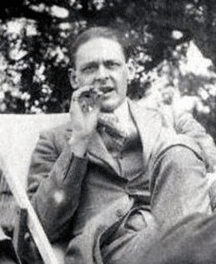


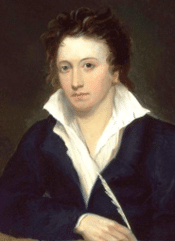

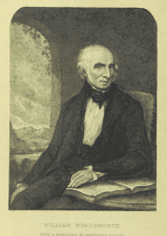

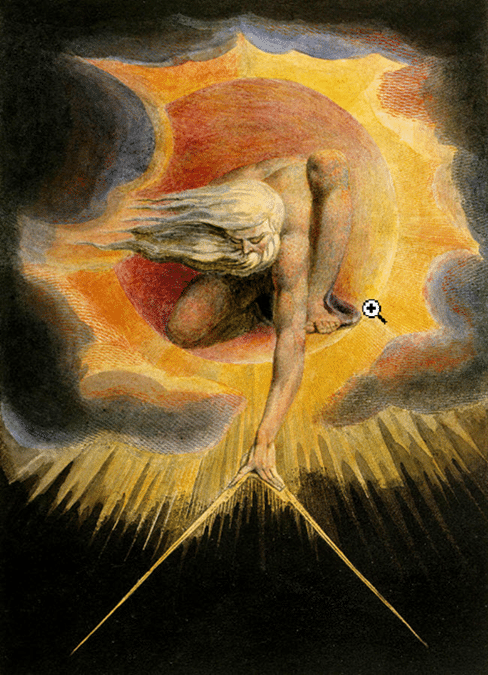
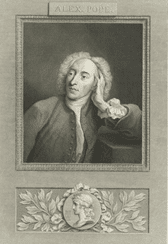

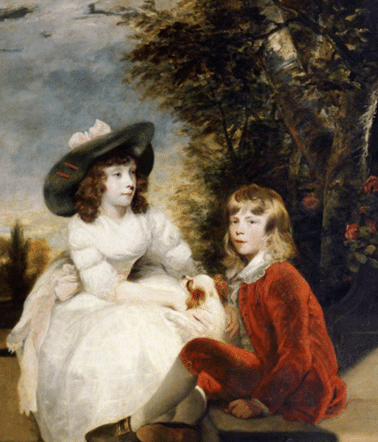
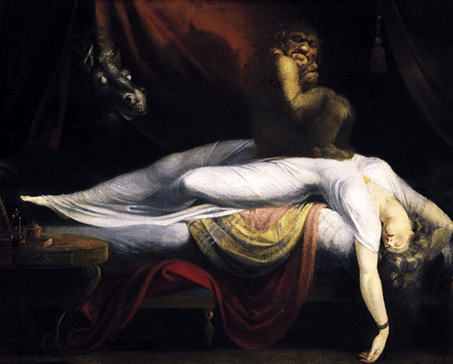


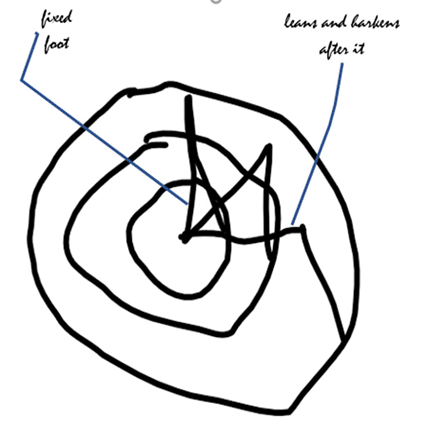


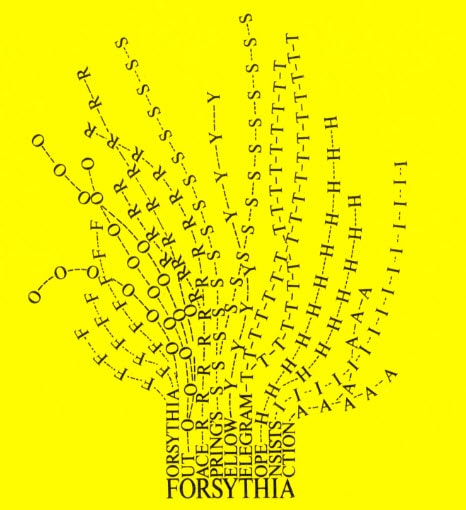



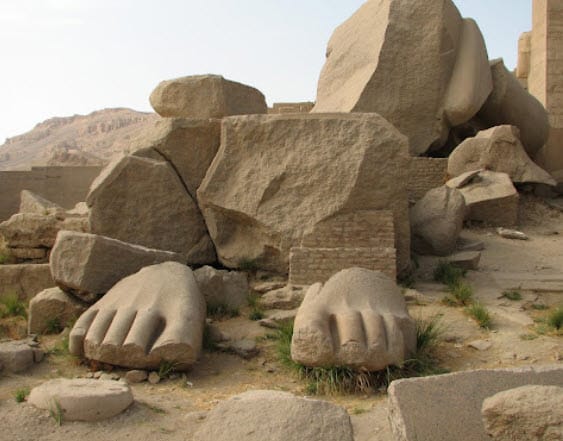




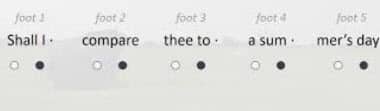


Leave a Reply