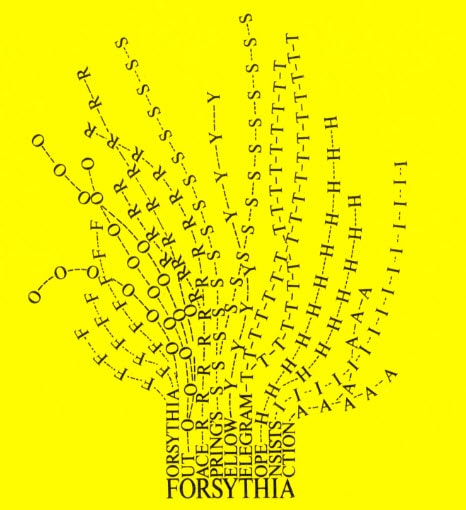
In addition to meter (or no meter), figures of speech, and imagery, a poet can consider form to enhance their intent.
A Limerick utilizes meter and rhyme in short form for humorous–sometimes ribald–effect. It usually relies on word-play and the element of surprise as well. It is often formalized as a five-line poem, with the first, second , and fifth lines having seven to ten syllables and the same rhyme and meter, and the third and fourth lines having five to seven syllables with the same rhyme and meter.
There was a young lady of Niger
Who smiled as she rode on a tiger;
They returned from the ride
With the lady inside,
And the smile on the face of the tiger.
The use of anapests (unstress, unstress, stress) provides a rollicking, musical tone, like the tiger bounding.
There was a young lady of Niger
The humor and the surprise here are typical of limericks, as is the following:
A bather whose clothing was strewed
By winds that left her quite nude
Saw a man come along
And unless we are wrong
You expected this line to be lewd.
There was an Old Man of Nantucket
Who kept all his cash in a bucket.
His daughter, called Nan,
Ran away with a man,
And as for the bucket, Nantucket.
On a more serious note, though not always, is the Haiku, a Japanese poetic form, consisting of three lines, with a format of five units, seven units, and five units. I say units because in Japanese these units are phonetic, but since we have nothing quite comparable in English, our tradition has altered the units to be syllables.
The most famous (not usually argued) haiku poet was Matsuo Basho, a Japanese poet of the 17th Century. Most of us can only know his work in translation, and the translators opt for either a literal translation, a poetic translation, or a formal translation. The following are two examples of poetic translations.
The winds of autumn
Blow: yet still green
The chestnut husks.
A flash of lightning:
Into the gloom
Goes the heron’s cry.
You may notice that haiku are generally intense images meant to convey a specific moment to your senses, not just photographic, but sensory, so you re-imagine the poet’s moment.
Modern poets, typically experimental, often forgo the syllable structure of haiku, and define their haiku only by the use of invocative images:
Birds singing
in the dark
—Rainy dawn.
Jack Kerouac
But the standard tradition still holds as well:
From across the lake,
Past the black winter trees,
Faint sounds of a flute.
– Richard Wright
Writing haiku gives us the opportunity to share our sensuous experiences, to have others ‘see’ the world as we see it.
The Villanelle is a somewhat complex 19-line poetic form, consisting of three tercets and a quatrain, with only two rhymes, and two lines that alternatively repeat at the end of each tercet and often as a couplet at the end of the quatrain. Whew. The rhyme scheme of each tercet is aba, with the quatrain variable. That’s a lot of form to adhere to while trying to convey intent and meaning.
Come hither, Child! and rest:
This is the end of day,
Behold the weary West!
Sleep rounds with equal zest
Man’s toil and children’s play:
Come hither, Child! and rest.
My white bird, seek thy nest,
Thy drooping head down lay:
Behold the weary West!
Now are the flowers confest
Of slumber: sleep, as they!
Come hither, Child! and rest.
Now eve is manifest,
And homeward lies our way:
Behold the weary West!
Tired flower! upon my breast,
I would wear thee alway:
Come hither, Child! and rest;
Behold, the weary West!
Ernest Dowson