“Widely considered a masterpiece and one of the greatest, most innovative poems in the English language. ” AI Overviews.
***
***
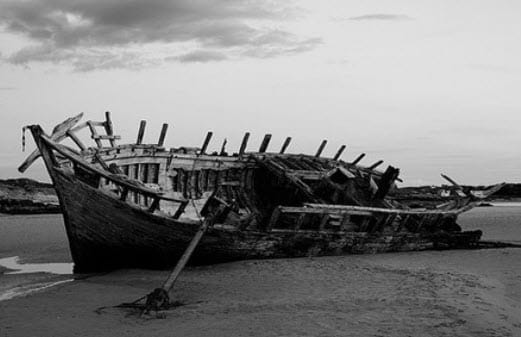
In a snowstorm on 6 December 1875 the Deutschland emigrant ship, outward-bound from Bremen, in Germany, via Southampton for New York, struck the infamous Kentish Knock offshore sandbank at the entrance to the Thames Estuary in England.
She broke her back on the sands and foundered with the loss of about 57 passengers, both men and women; the conditions which had caused the wreck in the first place also prevented her from being seen from shore, and thus any assistance being given. In the immediate aftermath of the wreck, the captain accused passing ships of failing to answer his vessel’s signals of distress.
The loss of any emigrant ship had a strong international dimension and was accordingly extensively reported in English in both the ‘Times’ of London and the ‘New York Times’, for there was a sad irony in the deaths of passengers who had taken ship in search of a better life. Five Franciscan nuns from Salzkotten (now in Nordrhein-Westfalen, western Germany), named Barbara Hultenschmidt, Henrika Fassbender, Norbeta Reinkobe, Aurea Badziura and Brigitta Damhorst, died in the wreck. They were fleeing religious oppression at home as a result of anti-Catholic laws enacted as part of Otto von Bismarck’s ‘Kulturkampf’ (“culture struggle”) that was aimed at building a centralised and unified German state resisting outside influences. One reader moved by the story in the London press was the Jesuit poet, Gerard Manley Hopkins.
Hopkins, then a converted-to-Catholicism Jesuit priest, was deeply moved by the news. His superior at the time suggested someone should write a poem about the disaster (one of the most fortuitous of passing comments ). When Hopkins became a priest in 1868, he burned all his poems because he considered poetry to be incompatible with his vocation. His superior’s suggestion was a kind of imprimatur and opened the suppressed floodgates of Hopkins’ creativity, resulting in The Wreck.. The poem was considered unpublishable at the time due to its difficulty and was not published until 1918, thirty years after Hopkins’ death. While it is long and can be difficult, it has since been referred to as a monumental work of literature.
***
Hopkins referred to The Wreck of the Deutschland as an ode1 , which accounts for the poem’s lyrical rather than strictly narrative approach . It consists of two sections, the first comprised of 10 eight-line stanzas (octets), primarily self-analysis in which Hopkins explores his reaction to the tragedy, the second comprised of 25 octets, primarily concerned with the wreck and what Hopkins perceives as God’s duality. Each stanza has a rhyme scheme of ababcdcb. The meter is Hopkins’ Sprung Rhythm2, with four stresses per line. As for the “difficulty” of the poem (when Hopkins’ friend, Robert Bridges, posthumously published Hopkins’ poems in 1918, he famously referred to WoD, the first poem in the book, as a great dragon to forbid all entrance), that can be alleviated by following Hopkins’ own advice: Take breath and read it with the ears, as I always wish to be read, and my verse becomes all right, and, if the reader finds a stanza obscure, do not bother yourself with the meaning, but pay attention to the best and most intelligible stanzas. (!)
Since the poem itself is so long, as is the exegesis, I have divided the published analysis into two parts, the first, Post One, covering, Stanzas 1-10 (Part I), the second, Post Two, covering Stanzas 11-35 (Part II).
***
The Wreck of the Deutschland
By Gerard Manley Hopkins
To the happy memory of five Franciscan Nuns, exiles by the Falk Laws, drowned between midnight and morning of Dec. 7th, 1875
***
Part I
Thou mastering me
God! giver of breath and bread;
World’s strand, sway of the sea;
Lord of living and dead;
Thou hast bound bones & veins in me, fastened me flesh,
And after it almost unmade, what with dread,
Thy doing: and dost thou touch me afresh?
Over again I feel thy finger and find thee.
I did say yes
O at lightning and lashed rod;
Thou heardst me truer than tongue confess
Thy terror, O Christ, O God;
Thou knowest the walls, altar and hour and night:
The swoon of a heart that the sweep and the hurl of thee trod
Hard down with a horror of height:
And the midriff astrain with leaning of, laced with fire of stress.
The frown of his face
Before me, the hurtle of hell
Behind, where, where was a, where was a place?
I whirled out wings that spell
And fled with a fling of the heart to the heart of the Host.
My heart, but you were dovewinged, I can tell,
Carrier-witted, I am bold to boast,
To flash from the flame to the flame then, tower from the grace to the grace.
I am soft sift
In an hourglass—at the wall
Fast, but mined with a motion, a drift,
And it crowds and it combs to the fall;
I steady as a water in a well, to a poise, to a pane,
But roped with, always, all the way down from the tall
Fells or flanks of the voel, a vein
Of the gospel proffer, a pressure, a principle, Christ’s gift.
I kiss my hand
To the stars, lovely-asunder
Starlight, wafting him out of it; and
Glow, glory in thunder;
Kiss my hand to the dappled-with-damson west:
Since, tho’ he is under the world’s splendour and wonder,
His mystery must be instressed, stressed;
For I greet him the days I meet him, and bless when I understand.
Not out of his bliss
Springs the stress felt
Nor first from heaven (and few know this)
Swings the stroke dealt—
Stroke and a stress that stars and storms deliver,
That guilt is hushed by, hearts are flushed by and melt—
But it rides time like riding a river
(And here the faithful waver, the faithless fable and miss).
It dates from day
Of his going in Galilee;
Warm-laid grave of a womb-life grey;
Manger, maiden’s knee;
The dense and the driven Passion, and frightful sweat;
Thence the discharge of it, there its swelling to be,
Though felt before, though in high flood yet—
What none would have known of it, only the heart, being hard at bay,
Is out with it! Oh,
We lash with the best or worst
Word last! How a lush-kept plush-capped sloe
Will, mouthed to flesh-burst,
Gush!—flush the man, the being with it, sour or sweet,
Brim, in a flash, full!—Hither then, last or first,
To hero of Calvary, Christ,’s feet—
Never ask if meaning it, wanting it, warned of it—men go.
Be adored among men,
God, three-numberéd form;
Wring thy rebel, dogged in den,
Man’s malice, with wrecking and storm.
Beyond saying sweet, past telling of tongue,
Thou art lightning and love, I found it, a winter and warm;
Father and fondler of heart thou hast wrung:
Hast thy dark descending and most art merciful then.
With an anvil-ding
And with fire in him forge thy will
Or rather, rather then, stealing as Spring
Through him, melt him but master him still:
Whether at once, as once at a crash Paul,
Or as Austin, a lingering-out swéet skíll,
Make mercy in all of us, out of us all
Mastery, but be adored, but be adored King.
Part II
“Some find me a sword; some
The flange and the rail; flame,
Fang, or flood” goes Death on drum,
And storms bugle his fame.
But wé dréam we are rooted in earth—Dust!
Flesh falls within sight of us, we, though our flower the same,
Wave with the meadow, forget that there must
The sour scythe cringe, and the blear share come.
On Saturday sailed from Bremen,
American-outward-bound,
Take settler and seamen, tell men with women,
Two hundred souls in the round—
O Father, not under thy feathers nor ever as guessing
The goal was a shoal, of a fourth the doom to be drowned;
Yet did the dark side of the bay of thy blessing
Not vault them, the million of rounds of thy mercy not reeve even them in?
Into the snows she sweeps,
Hurling the haven behind,
The Deutschland, on Sunday; and so the sky keeps,
For the infinite air is unkind,
And the sea flint-flake, black-backed in the regular blow,
Sitting Eastnortheast, in cursed quarter, the wind;
Wiry and white-fiery and whirlwind-swivellèd snow
Spins to the widow-making unchilding unfathering deeps.
She drove in the dark to leeward,
She struck—not a reef or a rock
But the combs of a smother of sand: night drew her
Dead to the Kentish Knock;
And she beat the bank down with her bows and the ride of her keel:
The breakers rolled on her beam with ruinous shock;
And canvass and compass, the whorl and the wheel
Idle for ever to waft her or wind her with, these she endured.
Hope had grown grey hairs,
Hope had mourning on,
Trenched with tears, carved with cares,
Hope was twelve hours gone;
And frightful a nightfall folded rueful a day
Nor rescue, only rocket and lightship, shone,
And lives at last were washing away:
To the shrouds they took,—they shook in the hurling and horrible airs.
One stirred from the rigging to save
The wild woman-kind below,
With a rope’s end round the man, handy and brave—
He was pitched to his death at a blow,
For all his dreadnought breast and braids of thew:
They could tell him for hours, dandled the to and fro
Through the cobbled foam-fleece, what could he do
With the burl of the fountains of air, buck and the flood of the wave?
They fought with God’s cold—
And they could not and fell to the deck
(Crushed them) or water (and drowned them) or rolled
With the sea-romp over the wreck.
Night roared, with the heart-break hearing a heart-broke rabble,
The woman’s wailing, the crying of child without check—
Till a lioness arose breasting the babble,
A prophetess towered in the tumult, a virginal tongue told.
Ah, touched in your bower of bone
Are you! turned for an exquisite smart,
Have you! make words break from me here all alone,
Do you!—mother of being in me, heart.
O unteachably after evil, but uttering truth,
Why, tears! is it? tears; such a melting, a madrigal start!
Never-eldering revel and river of youth,
What can it be, this glee? the good you have there of your own?
Sister, a sister calling
A master, her master and mine!—
And the inboard seas run swirling and hawling;
The rash smart sloggering brine
Blinds her; but she that weather sees one thing, one;
Has one fetch in her: she rears herself to divine
Ears, and the call of the tall nun
To the men in the tops and the tackle rode over the storm’s brawling.
She was first of a five and came
Of a coifèd sisterhood.
(O Deutschland, double a desperate name!
O world wide of its good!
But Gertrude, lily, and Luther, are two of a town,
Christ’s lily and beast of the waste wood:
From life’s dawn it is drawn down,
Abel is Cain’s brother and breasts they have sucked the same.)
Loathed for a love men knew in them,
Banned by the land of their birth,
Rhine refused them, Thames would ruin them;
Surf, snow, river and earth
Gnashed: but thou art above, thou Orion of light;
Thy unchancelling poising palms were weighing the worth,
Thou martyr-master: in thy sight
Storm flakes were scroll-leaved flowers, lily showers—sweet heaven was astrew in them.
Five! the finding and sake
And cipher of suffering Christ.
Mark, the mark is of man’s make
And the word of it Sacrificed.
But he scores it in scarlet himself on his own bespoken,
Before-time-taken, dearest prizèd and priced—
Stigma, signal, cinquefoil token
For lettering of the lamb’s fleece, ruddying of the rose-flake.
Joy fall to thee, father Francis,
Drawn to the Life that died;
With the gnarls of the nails in thee, niche of the lance, his
Lovescape crucified
And seal of his seraph-arrival! and these thy daughters
And five-livèd and leavèd favour and pride,
Are sisterly sealed in wild waters,
To bathe in his fall-gold mercies, to breathe in his all-fire glances.
Away in the loveable west,
On a pastoral forehead of Wales,
I was under a roof here, I was at rest,
And they the prey of the gales;
She to the black-about air, to the breaker, the thickly
Falling flakes, to the throng that catches and quails
Was calling “O Christ, Christ, come quickly”:
The cross to her she calls Christ to her, christens her wildworst Best.
The majesty! what did she mean?
Breathe, arch and original Breath.
Is it love in her of the being as her lover had been?
Breathe, body of lovely Death.
They were else-minded then, altogether, the men
Woke thee with a we are perishing in the weather of Gennesareth.
Or ís it that she cried for the crown then,
The keener to come at the comfort for feeling the combating keen?
For how to the heart’s cheering
The down-dugged ground-hugged grey
Hovers off, the jay-blue heavens appearing
Of pied and peeled May!
Blue-beating and hoary-glow height; or night, still higher,
With belled fire and the moth-soft Milky way,
What by your measure is the heaven of desire,
The treasure never eyesight got, nor was ever guessed what for the hearing?
No, but it was not these.
The jading and jar of the cart,
Time’s tasking, it is fathers that asking for ease
Of the sodden-with-its-sorrowing heart,
Not danger, electrical horror; then further it finds
The appealing of the Passion is tenderer in prayer apart:
Other, I gather, in measure her mind’s
Burden, in wind’s burly and beat of endragonèd seas.
But how shall I . . . make me room there:
Reach me a … Fancy, come faster—
Strike you the sight of it? look at it loom there,
Thing that she … there then! the Master,
Ipse, the only one, Christ, King, Head:
He was to cure the extremity where he had cast her;
Do, deal, lord it with living and dead;
Let him ride, her pride, in his triumph, despatch and have done with his doom there.
Ah! there was a heart right
There was single eye!
Read the unshapeable shock night
And knew the who and the why;
Wording it how but by him that present and past,
Heaven and earth are word of, worded by?—
The Simon Peter of a soul! to the blast
Tarpeian-fast, but a blown beacon of light.
Jesu, heart’s light,
Jesu, maid’s son,
What was the feast followed the night
Thou hadst glory of this nun?—
Feast of the one woman without stain.
For so conceivèd, so to conceive thee is done;
But here was heart-throe, birth of a brain,
Word, that heard and kept thee and uttered thee outright.
Well, she has thee for the pain, for the
Patience; but pity of the rest of them!
Heart, go and bleed at a bitterer vein for the
Comfortless unconfessed of them—
No not uncomforted: lovely-felicitous Providence
Finger of a tender of, O of a feathery delicacy, the breast of the
Maiden could obey so, be a bell to, ring of it, and
Startle the poor sheep back! is the shipwrack then a harvest, does tempest carry the grain for thee?
I admire thee, master of the tides,
Of the Yore-flood, of the year’s fall;
The recurb and the recovery of the gulf’s sides,
The girth of it and the wharf of it and the wall;
Staunching, quenching ocean of a motionable mind;
Ground of being, and granite of it: past all
Grasp God, throned behind
Death with a sovereignty that heeds but hides, bodes but abides;
With a mercy that outrides
The all of water, an ark
For the listener; for the lingerer with a love glides
Lower than death and the dark;
A vein for the visiting of the past-prayer, pent in prison,
The-last-breath penitent spirits—the uttermost mark
Our passion-plungèd giant risen,
The Christ of the Father compassionate, fetched in the storm of his strides.
Now burn, new born to the world,
Doubled-naturèd name,
The heaven-flung, heart-fleshed, maiden-furled
Miracle-in-Mary-of-flame,
Mid-numbered he in three of the thunder-throne!
Not a dooms-day dazzle in his coming nor dark as he came;
Kind, but royally reclaiming his own;
A released shower, let flash to the shire, not a lightning of fíre hard-hurled.
Dame, at our door
Drowned, and among our shoals,
Remember us in the roads, the heaven-haven of the Reward:
Our Kíng back, Oh, upon énglish sóuls!
Let him easter in us, be a dayspring to the dimness of us, be a crimson-cresseted east,
More brightening her, rare-dear Britain, as his reign rolls,
Pride, rose, prince, hero of us, high-priest,
Our hearts’ charity’s hearth’s fire, our thoughts’ chivalry’s throng’s Lord.
***
In the first Part , the first line of each stanza, after a leading stressed syllable, contains none or few unstressed syllables, creating a strong, emphatic tone, none more so than the very first line, personally addressed to God (Thou,God) and asserting God’s relationship to Hopkins, a priest and a pious Catholic, that relationship being, mastery. Hopkins then lists many of God’s attributes: giver of life (breath) and sustenance (bread), lands (strand) and oceans (sea), Lord of living and dead. He is the Creator of Hopkins’ flesh and bones, with the words bound and fastened emphasizing His mastery. Hopkins reflects on a personal struggle that almost unmade him with dread of God’s power. Now, however, he once again (afresh) feels God’s grace (touch) and is reunited (find thee) with Him: Over again I feel thy finger and find thee, similar to Michelangelo’s representation of “life” in the Sistine Chapel. Hopkins’ relationship with God is critical to the understanding of WoD, as he explores the nature of both suffering and salvation. Throughout the poem he is grappling with the horror of the nuns’ deaths, and the concept of God’s grace.
Stanzas 2-5 detail Hopkins’ spiritual struggle, as he is confronted with God’s power (frown of his face, hurtle of hell) and feels trapped (where was a place). But finally, in a metaphor with the peace and love of a dove, he manages to sprout wings (dovewinged), enabling him to flee with a fling (the fl sounds echoing the meaning) of the heart to God, like a carrier bird returning home. And like an hourglass or a well, soft sift and poised, but within is roped with the steadying influence of God’s grace. Christ’s gift.
Stanzas 6 -9 refer to Hopkins’ concept of instress: (The Victorian Web), “Instress: This is the dynamic force that holds an inscape [the essence of something] together, as well as the active, emotional energy that allows an observer to perceive the essence of an object . It is the spark of recognition you feel when you suddenly truly ‘see’ the unique beauty of a flower or a sunset, and the spiritual energy that connects that object to the Creator.” In this case, Hopkins is referring to the essence (inscape) of Christ, his Mystery, and how it must be instressed. it rides time like riding a river, dating from His birth (Warm-laid grave of a womb-life grey. the word “grave” implying His mortality at birth) and then His dense and driven Passion, His instress creating a swelling in Man’s heart that eventually explodes with “understanding”: Is out with it! The heart, when pressed, will eventually reveal itself, for better or worse: only the heart, being hard at bay,/Is out with it! Oh,/We lash with the best or worst Word last! , which, in a famous, strikingly imaginative metaphor, Hopkins compares to eating a berry. The repetition of sh‘s in hyphenated words is almost tongue-tying with the fulness of the berry until it is bitten in a flesh-burst, and Gush!–flush the mouth, sour or sweet,/ Brim, in a flash, full. And that revelation of the heart brings us (Hither then) to Christ (To hero of Calvary, Christ,’s feet).
Stanzas 9-10 lay the theological groundwork of the second section: how to understand God’s dual nature, Thou art lightning and love, I found it, a winter and warm. To overcome Man’s Original Sin (Man’s malice), He must wring man with wrecking and storm. It is after God’s dark descending upon us, when we have been wrung. that Father and fondler of heart is most…merciful. Whether using force (anvil-ding) to forge [His} will, as with Saint Paul3 , or through persuasion (melt him), as with Saint Austin (Augustine)4, Hopkins pleads with God to Make mercy in all of us, but also, Mastery. Thus the groundwork has been laid for the moral, philosophical, and theological arguments that follow.
***
Subscribing only means that you will receive a notice when I publish a new post.
***
(Note: You can view most poems on the website, Poetry Foundation.)
(Note: My Poetry Recordings Playlist: At the very bottom of the post Is a recording. To view my entire playlist of poetry recordings, hover over “1/18” in the upper right corner, then click on ‘My Poetry Recordings Playlist:´and make selection.)
***
Scroll down for comments. **Remember that comments are public. Enter your Comment below.**
Leave a Reply