
In another post, How to Deconstruct Gerard Manley Hopkins’ “No worst….” & Commentary: Despair, we introduced the poems known as Hopkins’ “The Terrible Sonnets,” where “terrible” at the time meant “terrifying.” Generally they are poems of questioning and despair. We might avoid them due to the content if they weren’t so brilliant in construct and so moving in concept. Particularly in these poems the curtain that usually separates us from each other is completely open, and we see into Hopkins’ heart, a heart of darkness. Then there are the words; the words are astounding, relentless, searing. A great moment in poetic achievement.
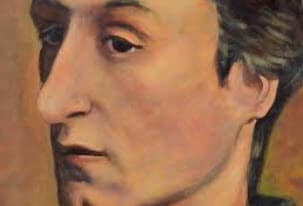
Not, I’ll not, carrion comfort, Despair, not feast on thee;
Not untwist — slack they may be — these last strands of man
In me ór, most weary, cry I can no more. I can;
Can something, hope, wish day come, not choose not to be.
But ah, but O thou terrible, why wouldst thou rude on me
Thy wring-world right foot rock? lay a lionlimb against me? scan
With darksome devouring eyes my bruisèd bones? and fan,
O in turns of tempest, me heaped there; me frantic to avoid thee and flee?
Why? That my chaff might fly; my grain lie, sheer and clear.
Nay in all that toil, that coil, since (seems) I kissed the rod,
Hand rather, my heart lo! lapped strength, stole joy, would laugh, chéer.
Cheer whom though? the hero whose heaven-handling flung me, fóot tród
Me? or me that fought him? O which one? is it each one? That night, that year
Of now done darkness I wretch lay wrestling with (my God!) my God.
The poem begins with one word: Not. One syllable ending in an end-stopped letter “t” for an abrupt pause; emphasized by the following comma; then a repetition for emphasis, I’ll not, a stern refutation But of what? The tension is increased by the answer being further delayed by the apostrophic, Carrion Comfort, an oxymoronic juxtaposition of two words opposite in connotation–dead flesh, and solace; culminating in the heart-wrenching word, Despair. Hopkins is obviously exerting tremendous will to avoid giving in to Despair, or even feasting on it. One line, and the entire painful essence of the poem has been established.
But he refuses to give in to Despair’s siren call1 : not feast on thee. It becomes a test of his willpower. Although he is at the end of his strands of resistance, and though even those strands are weak–slack though they may be–he will not give in completely: untwist these last strands of man in me, nor, weary from the strain, will he cry out, I can no more (perhaps the most identifiable words in the poem, painful reminders to any of us who have been at the point of giving up to the pressure, unable to continue). He then attempts to assert himself with an emphatic contradiction:I can. The pathos becomes unbearable here as he lists the pathetic things he “can” do: hope–just an effort; wish day come–a safe bet; and the ultimate blow to hope–not choose not to be, i.e., not to take his own life. This is deep despair, not just unhappiness or even depression.
That concludes the first stanza.
He then addresses– Despair? God? asking why he is being tested so strongly: being rudely boot-ground into the earth; being crushed by a weight (lionlimb); his bruised bones being fiercely watched by darksome devouring eyes; having the flames of his despair heightened by continuous swirls of wind, tempest. He has been battered into a shapeless mass by the repeated blows and now is just an insignificant heap, heaped, indicating that all of his essence has been beaten out of him. And for him there is no escape, even though he is frantic to avoid thee and flee. He is trapped.
A separate note here. Another whole post could be dedicated just to Hopkins’ word choices: the monosyllabic cadence of wring-world right foot rock, tied together by the “r” alliteration; the cadence of the internal rhymes, Why?, fly, lie; the forceful emphasis of the “ee” sound in sheer and clear,
That concludes the octet of this Petrarchan sonnet.
The sestet takes a complete turn, or volta, wherein Hopkins provides a different answer to the original question, a different take on the Benefits that can be derived from the assault. And it has to do with cleansing, purifying, absolving–Christian concepts of Salvation (Hopkins was a priest). Only through God’s grace of purification through testing could Hopkin’s metaphorical chaff2 fly, leaving his grain, or essence, lie sheer and clear.
Relief finally came when he sought God and acquiesced and pledged to him (kissed the rod, but amends that to the less submissive hand rather), so that now his heart lo! lapped strength, stole joy, would laugh, cheer. The exuberance seems almost forced, an idea re-enforced by an immediate “pulling up” by Hopkins when he asks, Cheer whom though, the hero whose heaven-handling flung me, foot trod me…
This hesitation suggests that the battle still is not over, and Hopkins has lingering doubts. Is the credit for reversal from despair due to God, the hero whose heaven-handling flung me, foot trod me (the alliteration of the “h’s” lending a breathless quality to the lines) or is it due to Hopkins’ own efforts (or me that fought him, introducing a new concept that Hopkins may have been resisting God’s help–did he actually want to be saved?). This dichotomy is left unresolved (O which one? Is it each one?)
The enormity of the struggle is captured in the last two lines: That night, that year (indicating that the struggle has been long-standing) of now done darkness. The words now done have very significant implications–that, with God’s help, the battle over Despair has been won. But with tremendous difficulty, culminating in the shocking realization that he has actually been struggling (wrestling) with God, so that the poem ends in a gasp: (my God! [gasp implied]) my God.
We mentioned in an earlier post that a poem may be seen as the poet’s attempt to closely share a moment of perception so that we see the world as he sees it. “Carrion Comfort” may be among the closest attempts of any poet to do that.
***
- Captivating, bird-women who live on rocky islands and lure sailors to their deaths with their enchanting, arrestable songs, promising secret knowledge ↩︎
- the husks of corn or other seed separated by winnowing or threshing. ↩︎
***
Subscribing only means that you will receive a notice when I publish a new post.
***
(Note: You can view most poems on the website, Poetry Foundation.)
(Note: My Poetry Recordings Playlist: At the very bottom of the post Is a recording. To view my entire playlist of poetry recordings, hover over “1/18” in the upper right corner, then click on ‘My Poetry Recordings Playlist:´and make selection.)
***
Scroll down for comments. **Remember that comments are public. Enter your Comment below.**
Leave a Reply